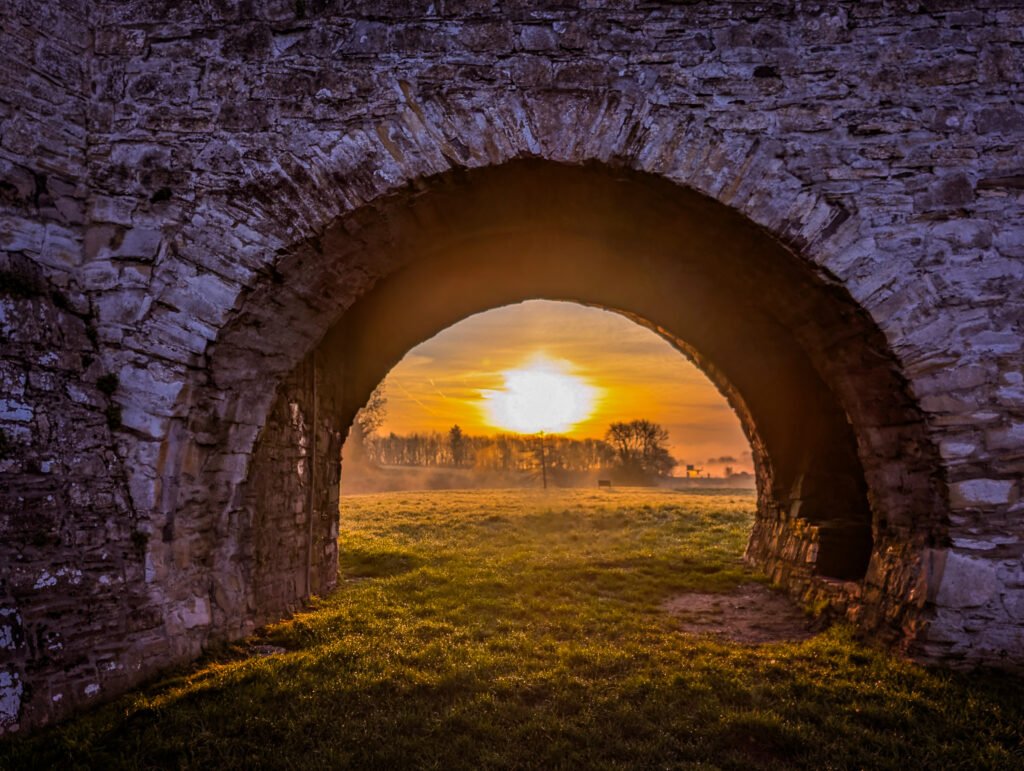
Why Trim Works So Well for Families
Some family days are remembered because everything goes to plan. Others are remembered because nothing ever needs forcing. Here’s why a simple walk through Trim quietly became one of our favourite family days out.
Walking Through Trim Without a Plan
Every family day out begins long before you reach the first attraction.
It begins in that quiet moment after you’ve parked the car and closed the doors. Everyone climbs out full of good intentions, but almost immediately the small decisions start arriving. Someone wants coffee. Someone else has already spotted a sign pointing towards the castle. The playground gets mentioned before you’ve even looked around properly, and almost without thinking a phone appears as Google Maps is opened.
Nobody is frustrated. Nobody is in a bad mood.
But nobody is moving either.
We’ve come to realise that this is often where the shape of a family day is decided. Not by one big choice, but by a series of small ones that arrive all at once. Stand still for too long and the day begins to feel organised rather than enjoyed. You spend more time deciding what to do than actually doing it.
Trim has never felt like that to us.
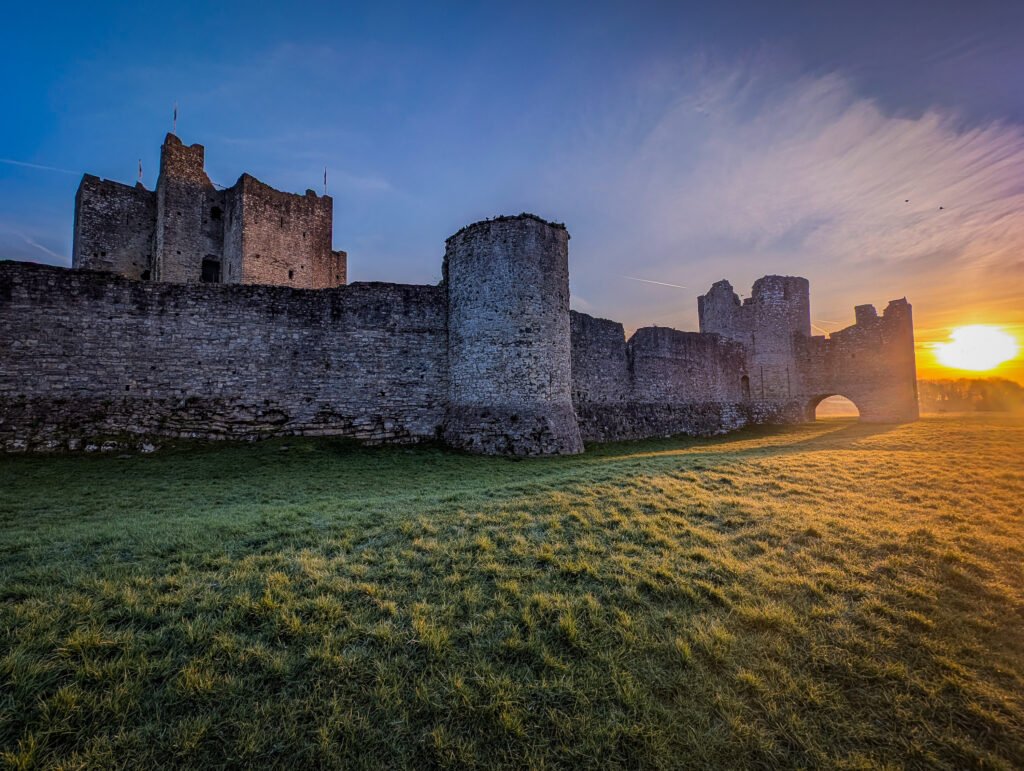
Over the years we’ve walked these streets enough times to notice something different about the town. It has a quiet way of pulling you forward without asking much in return. The River Boyne naturally becomes your route. The playground appears just as younger legs are looking for somewhere to burn energy. Trim Castle never needs searching for, and as the town gradually opens into Porchfields, the pace changes almost without anyone noticing.
Looking back, that’s probably why we keep returning.
We rarely arrive with much of a plan, but we almost always leave feeling as though the day unfolded exactly as it should have.
Sometimes the best family days aren’t the ones with the longest itinerary.
They’re the ones that quietly remove the need for one.
Starting in the Centre
You start in the centre because it gives you options.
The main street is already alive. The fish van is parked up. The butcher is open. Locals move with purpose while visitors stop suddenly, phones out, trying to work out which direction the castle is in.
Everything runs alongside itself. Local life carries on and visitors quietly slot themselves into it.
This is usually where family days hesitate too long. Everyone is trying to get the next decision right before anyone has properly started. In Trim, moving seems to matter more than deciding. Once you’re walking, the town begins doing a surprising amount of the work for you.
Following the River
From there, the pull is towards the River Boyne.
You hear it before you see it and, within seconds, you’re standing beside it. The river removes the need to choose a direction because following it simply feels like the obvious thing to do.
The playground along the riverbanks is already busy. It’s morning, with that soft autumn light sitting low across the grass. Swings, slides, climbing frames, zip lines and see-saws are all in motion without tipping into chaos.
The playground is already doing work for you. Energy that might have turned into complaints an hour later is being spent climbing, running and negotiating turns instead. You’re moving through the town more slowly, but nobody seems to mind.
Coffee comes from Boyneista Coffee Dock.
Not for romance. For position.
It sits exactly where compromise happens: playground for kids, river views for adults.
We take it takeaway so our daughter can keep playing. A proper sit-down coffee sounds relaxing in theory, but with children it often means stopping one activity, waiting around and then persuading everyone to start moving again. Taking it to go costs a little more for convenience and doesn’t give you much of a break, but the rhythm of the morning stays intact.
Snacks appear. Hot chocolate gets negotiated.
At some point you realise nobody has asked what’s next for quite a while.

The Castle, Still in Use
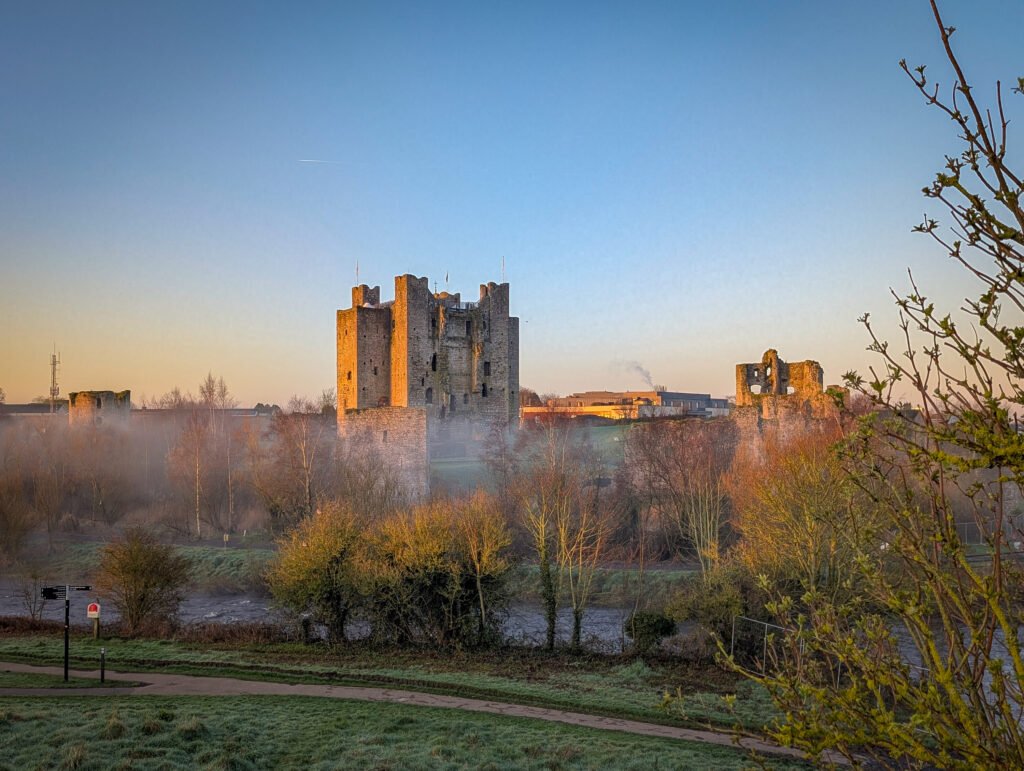
From here, Trim Castle is unavoidable.
It doesn’t announce itself because it doesn’t need to. It’s simply there — huge, intact and unapologetic.
What lands isn’t drama. It’s preservation.
You can imagine it functioning: people moving through the courtyard, guards along the walls, daily life unfolding inside stone that has somehow survived centuries.
This is usually where family days tighten.
Do we go in? Is there a queue? How long will it take?
The castle doesn’t force a decision. You can admire it for thirty seconds or stand there for ten minutes imagining the place in use. Either way, the day keeps moving because nothing says you must do one thing next.
The castle had its modern moment with Braveheart and shifts again during the Púca Festival, when Trim leans into folklore, firelight and stories that feel much older than the town itself.
Walking Straight Through History
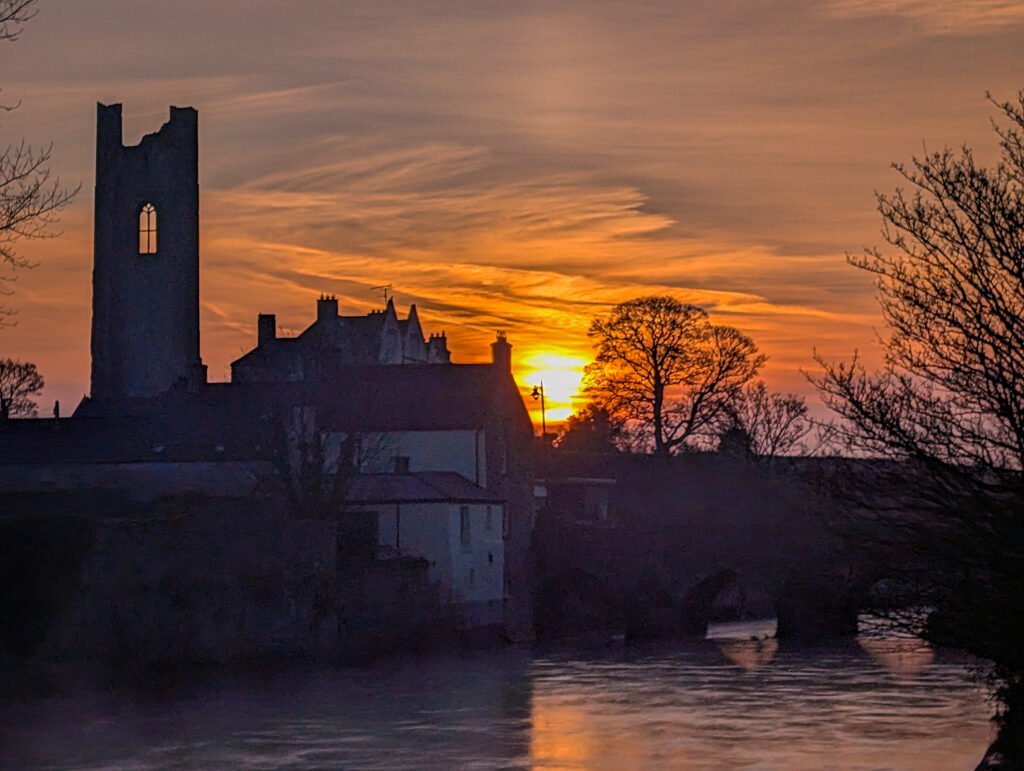
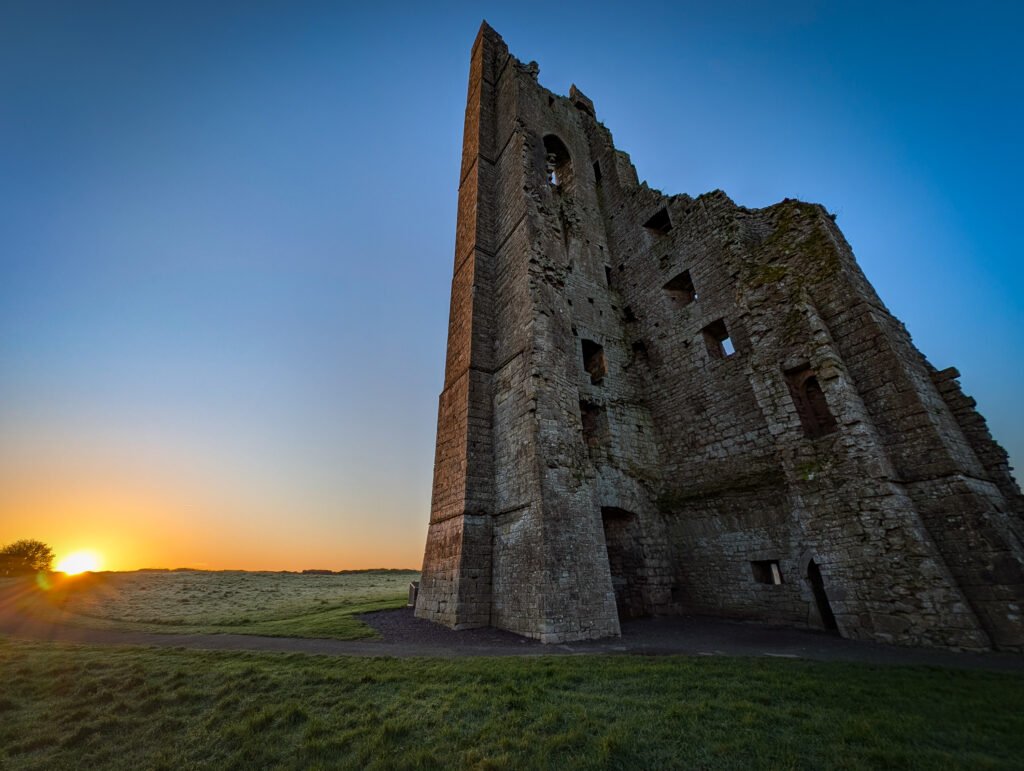
Cross the river and St. Mary’s Abbey rises above the rooftops, its distinctive yellow tower making it almost impossible to miss.
Founded in the 12th century, it was once at the centre of religious life in Trim. Today, it feels less like a separate attraction and more like another part of the walk. You don’t need to plan a visit or set aside an hour for it. It simply becomes part of the landscape, quietly reminding you how much history sits within a few hundred metres of the town centre.
We usually pause for a look, take a couple of photographs and carry on. That’s enough. Trim has a way of letting you experience its history without asking you to interrupt the flow of the day.
Where the Walk Changes
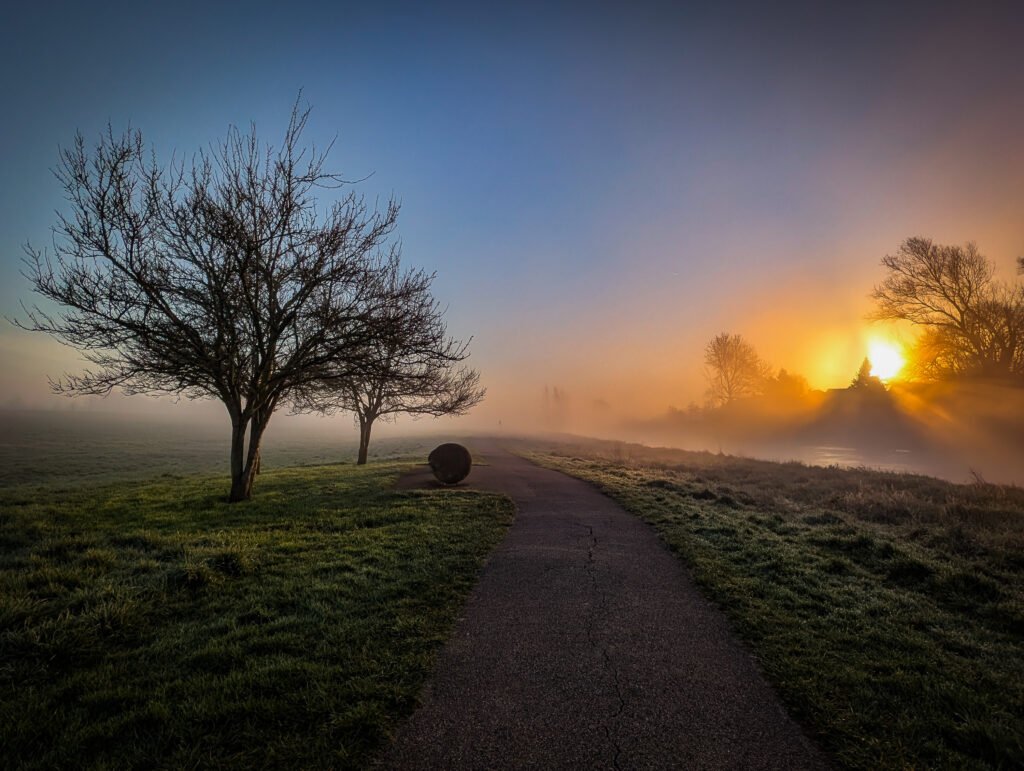
Beyond the abbey, something shifts.
The streets begin to disappear behind you as Porchfields opens out into wide green space beside the River Boyne. The buildings become less important, conversations become quieter and your attention naturally drifts towards the river instead.
Birds lift from the grass. Dragonflies skim low across the water during summer. The traffic that followed you through town fades into the background until you eventually realise you can’t really hear it anymore.
It’s probably the point where Trim stops feeling like a historic town and starts feeling like somewhere to simply spend time outdoors.
There are fewer shops, fewer decisions and very little encouraging you to hurry. Without really noticing, the walk slows to match the surroundings.
When Things Just Happen
Heading towards Newtown Trim, the river stays close enough that you’re rarely out of sight of it.
Dogs wander past, some perfectly behaved, others making their own plans for the afternoon.
On one visit, our daughter took off a shoe so she could practise gymnastics on the grass. Within seconds, an enthusiastic dog decided it looked far more interesting than any tennis ball, grabbed it and disappeared across the field.
For a few moments there was a mixture of chasing, laughing and one slightly embarrassed owner trying to convince the dog that children’s shoes weren’t suitable toys.
Eventually the dog returned, shoe still firmly clamped in its mouth, looking completely pleased with itself.
It’s one of those tiny moments we still laugh about years later.
In another place it might have felt stressful or inconvenient. Here, with open grass all around and nowhere you urgently needed to be, it simply became part of the story of the day.
Different Eras, Same Walk
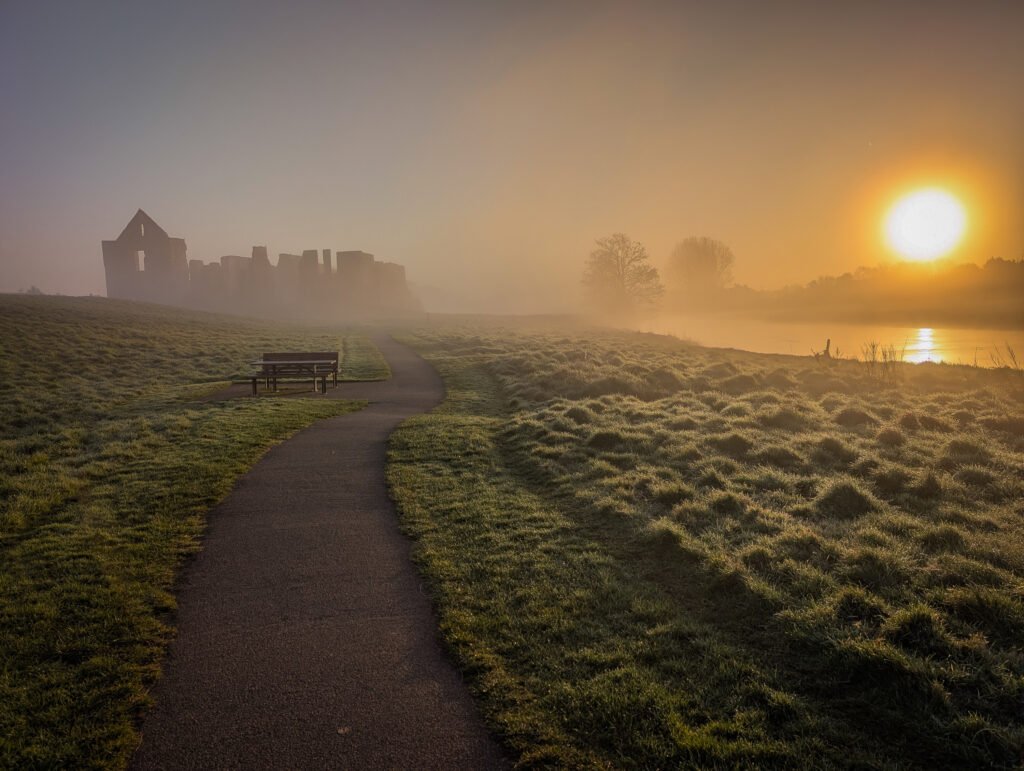
A little further on, the ruins beside St. Peter and Paul Cathedral come into view.
Unlike the towering walls of Trim Castle, these feel quieter and more approachable. The stone steps are worn smooth, the walls are low enough to explore, and it’s the sort of place where children immediately start climbing while adults instinctively slow down to watch.
Our daughter never needed encouraging here. She was already deciding which steps to climb next or peering through gaps in the old stonework, turning the ruins into part of her own adventure.
It’s one of those places that quietly buys parents a few minutes. You’re still keeping an eye on everything, but you’re no longer thinking about how to keep the day interesting. The surroundings have taken over.
A Natural Pause
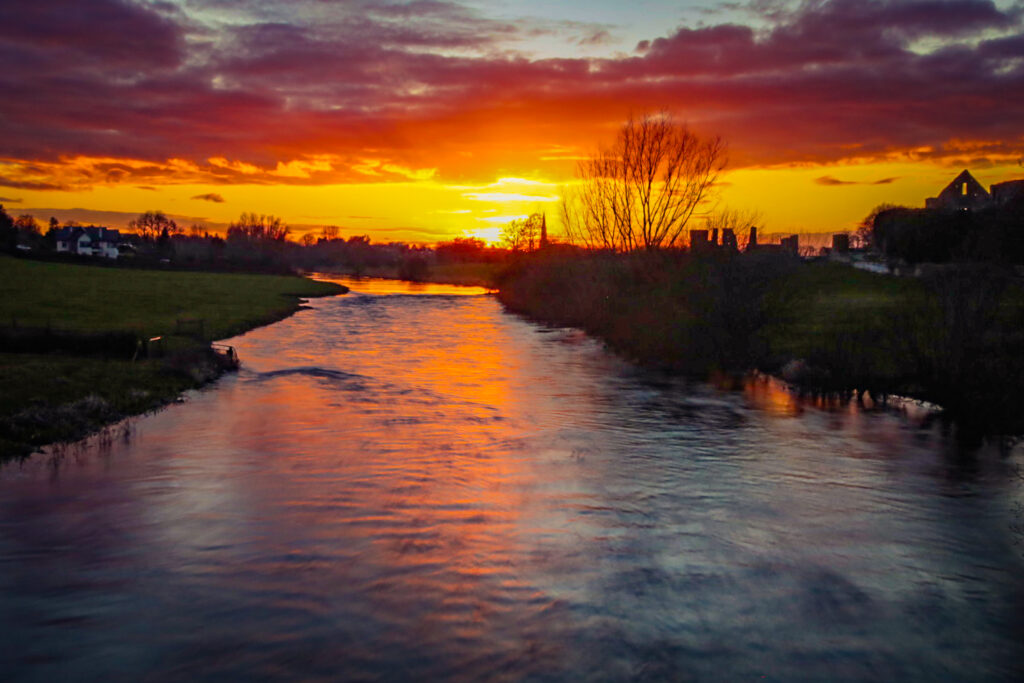
Eventually the path brings you to St. Peter’s Bridge.
By now, the walk has covered far more ground than it feels like it has. Somewhere between the abbey, Porchfields and the riverside, the day has settled into its own pace.
We usually stop here without really discussing it.
Depending on the season, the River Boyne looks completely different. Spring brings fresh greens along the banks, while autumn evenings soften everything as the light drops behind the town. It’s the kind of view that encourages you to stand still for a minute without feeling as though you’re stopping for the sake of it.
Nobody checks the time. Nobody asks what’s next.
For a little while, simply being there is enough.
Knowing When to Stop
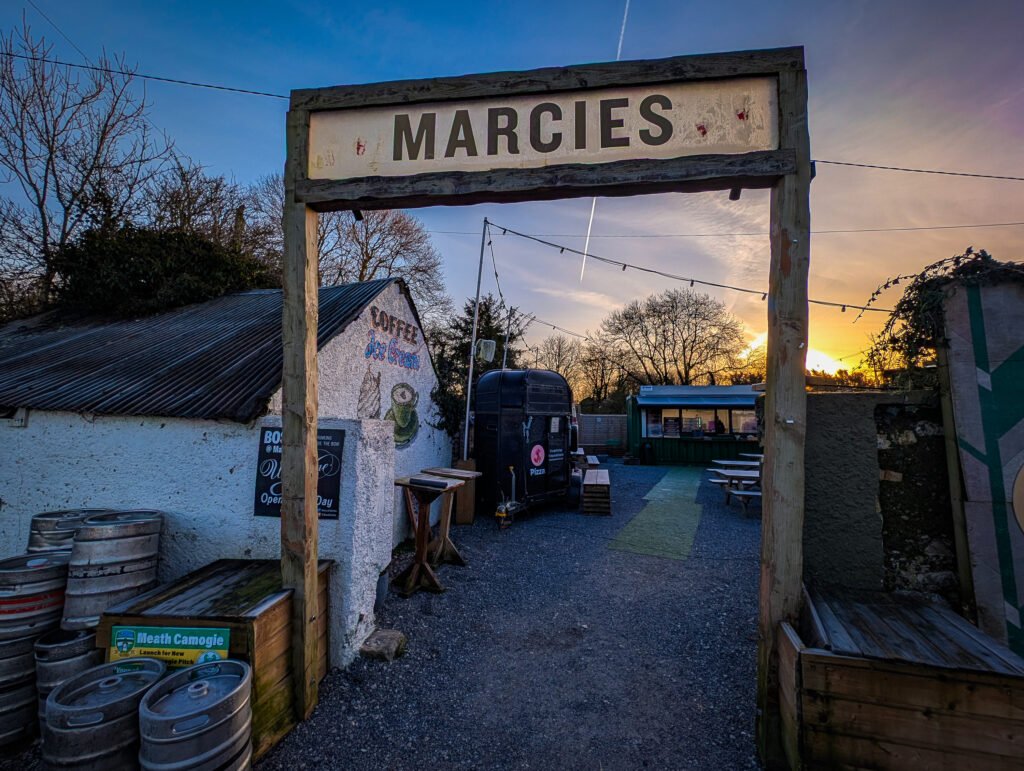
Just beyond the bridge sits Marcie’s.
By this stage, we’ve normally reached the point where another attraction isn’t what anyone needs. The walk has already done its job. Everyone has burned off some energy, seen something different and slowed down without really noticing it happen.
Marcie’s feels like a natural extension of the day rather than another stop on an itinerary.
Sometimes it’s coffee.
Sometimes it’s a pint or a glass of wine while our daughter talks about the best parts of the walk.
If the pizza van happens to be there, even better. Suddenly there’s one less decision to make and one more reason to stay exactly where you are.
It’s an easy place to let the afternoon drift on for a little longer.
One Last Layer
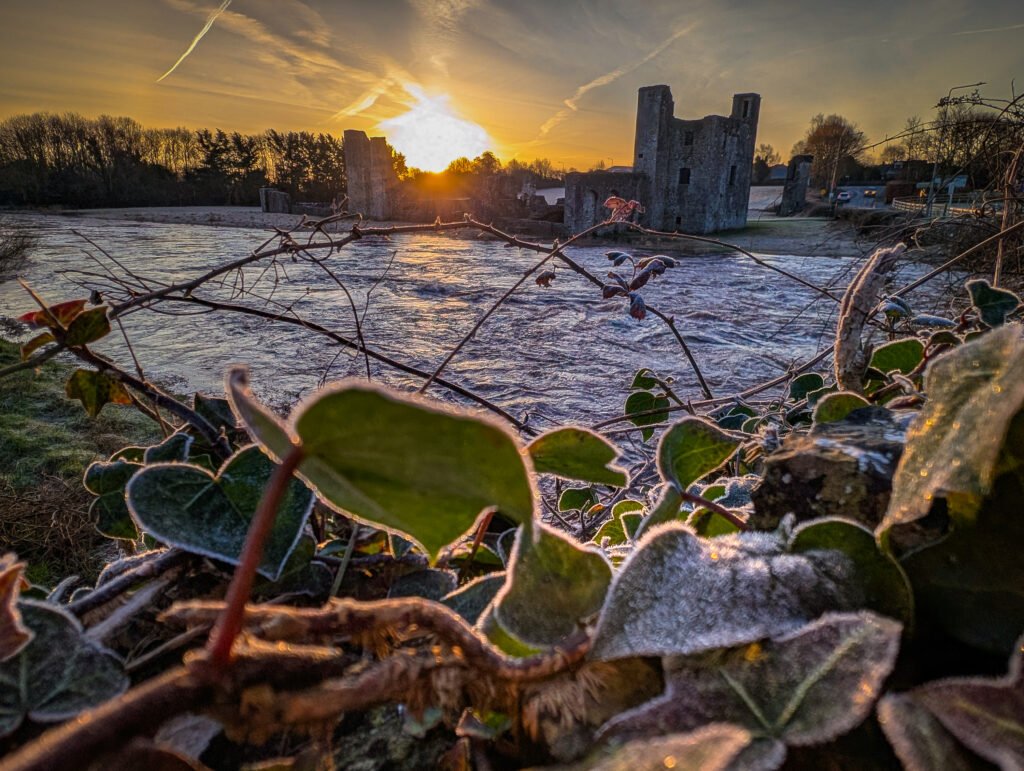
Before heading back, we nearly always pass the Priory of St. John the Baptist. It’s one of those places that’s surprisingly easy to overlook if you’re driving through Trim, yet when you’re exploring on foot it feels like a natural final chapter to the walk.
Sometimes we stop for a closer look, wandering around the old stonework for a few minutes before making our way back. Other times we simply admire it as we pass, happy to leave a little of the town unexplored for another visit.
By then, it rarely feels important whether we’ve seen absolutely everything. Somewhere between the riverside, the open space at Porchfields and the conversations that filled the walk, the pressure to fit one more attraction into the day has quietly disappeared.
The Priory doesn’t feel like something you have to tick off a list. It simply reminds you that Trim still has more stories waiting for the next time you return, which somehow feels like the right way for the day to end.
Practical Notes (If You’re Planning a Visit)
| 📍 Information | Details |
|---|---|
| 📌 Location | Trim, County Meath — around 45 km (28 miles) from Dublin city centre. |
| 🚗 Driving Time | Approximately 45 minutes to 1 hour from Dublin, depending on traffic. |
| 🚌 By Bus | Bus Éireann Route 111 runs regularly from Busáras to Trim. The journey takes around 1 hour. |
| 🚏 Best Bus Stop | Knightsbrook is an ideal place to begin the walk if you’re arriving by bus. |
| ☕ Coffee | At the time of writing, Boyneista Coffee Dock is temporarily closed following planning issues affecting Boyne Valley Activities. Check locally before visiting, or choose one of Trim’s cafés in the town centre instead. |
| 🏰 Trim Castle | Walking around the castle grounds is completely free. Entry to the Castle Keep is by guided tour only. Admission: Adults €5 • Seniors/Groups €4 • Students/Children €3 • Family (up to 2 adults and children) €13. Prices may change. |
| 👨👩👧 Great for Families | Riverside playground, Porchfields, the River Boyne walk and the climbable ruins near St. Peter and Paul Cathedral (with supervision). |
| 🍽️ Where to Finish | Marcie Regan’s Pub or Marcie’s Yard are both lovely places to finish beside the river. Food vendors occasionally appear during busy periods, but availability changes throughout the year, so it’s best to treat them as a bonus rather than part of your plan. |
| 🌿 Best Time to Visit | Spring through autumn offers the liveliest atmosphere, although the riverside walk is enjoyable all year round. |
| ⏱️ How Long to Allow | Allow 2–4 hours for a relaxed family walk with time for the playground, castle grounds, riverside stops and cafés. |
Final Thought
Looking back, we didn’t do everything there is to do in Trim.
We didn’t spend hours inside the castle. We didn’t stop at every ruin. We didn’t try to squeeze every attraction into a single afternoon.
Yet somehow, it never felt as though we’d missed anything.
That’s what has stayed with us after each visit.
Trim doesn’t ask you to keep making decisions. It doesn’t keep pulling you in different directions or leave you wondering what should come next. Instead, the town unfolds at a pace that feels surprisingly natural for families. History appears as you walk, open spaces arrive just as younger legs need somewhere to run, and the River Boyne quietly ties the whole day together.
The day wasn’t perfect. Our daughter still lost a shoe to an overenthusiastic dog for a few minutes.
But that wasn’t the story we came home talking about.
We came home remembering how easy the day had felt.
Over the years, we’ve realised that’s often the difference between a good family day out and one that leaves everyone exhausted. It’s rarely the number of attractions or how much you manage to fit in. More often, it’s whether the small decisions keep building until they become work.
Trim never lets them build for long.
Sometimes the best family destinations aren’t the ones that give you more to do.
They’re the ones that quietly ask you to manage less.
Looking back, we didn’t do everything there is to do in Trim.
We didn’t spend hours inside the castle. We didn’t stop at every ruin. We didn’t try to squeeze every attraction into a single afternoon.
Yet somehow, it never felt as though we’d missed anything.
That’s what has stayed with us after each visit.
Trim doesn’t ask you to keep making decisions. It doesn’t keep pulling you in different directions or leave you wondering what should come next. Instead, the town unfolds at a pace that feels surprisingly natural for families. History appears as you walk, open spaces arrive just as younger legs need somewhere to run, and the River Boyne quietly ties the whole day together.
The day wasn’t perfect. Our daughter still lost a shoe to an overenthusiastic dog for a few minutes.
But that wasn’t the story we came home talking about.
We came home remembering how easy the day had felt.
Over the years, we’ve realised that’s often the difference between a good family day out and one that leaves everyone exhausted. It’s rarely the number of attractions or how much you manage to fit in. More often, it’s whether the small decisions keep building until they become work.
Trim never lets them build for long.
Sometimes the best family destinations aren’t the ones that give you more to do.
They’re the ones that quietly ask you to manage less.