Dublin to Cork with Kids: Best Stops, Breaks & Family Detours
Why This Drive Feels Longer Than It Really Is
You’re about forty minutes from Cork, and on paper the hard part should be over.
The motorway is behind you. You’re close enough to start thinking about what you’ll do when you arrive. Maybe you’re heading into Douglas to see family, maybe you’re already talking about dinner, or perhaps you’ve already started pointing out familiar places as the city gets closer.
And then the car changes.
The questions from the back become more frequent. Someone has their legs pulled up on the seat because they’ve been sitting too long. Another child is asking for a snack that probably should have been eaten half an hour ago. Up front, you’re feeling it too. Your back is tight, your concentration isn’t quite as sharp as it was leaving Dublin, and you’re suddenly very aware that you’ve been driving for the past few hours.
Nothing dramatic has happened.
That’s the thing about this journey.
It rarely goes wrong because of one big event. It starts to slip because lots of small things have been left a little too long.
We’ve had drives where we convinced ourselves we’d just push on because Cork was close enough. Sometimes it worked. More often, we arrived needing a breather before doing anything else.
The irony is that forty minutes isn’t actually very long. But when everyone in the car is a little hungry, a little restless and a little tired, it can easily become the longest part of the day.
Over the years, that’s what changed our thinking about this drive.
We stopped treating Dublin to Cork as one long journey and started treating it as a series of small adjustments. A short break taken slightly earlier. A stop chosen because it’s easy rather than exciting. Ten minutes spent letting everyone move around before getting back in the car.
Individually, none of those things seem important.
Together, they usually decide whether you arrive in Cork ready to enjoy the rest of the day or needing to recover from the journey first.
Quick Answer: Where Should You Stop Between Dublin and Cork With Kids?
If you’re travelling with children, we generally think of Dublin to Cork as three shorter journeys rather than one long drive.
For a straightforward motorway break, Mayfield Services (J14, M7) is usually our default because everything is compact and easy to reach. Portlaoise Plaza (J17) works well if you want a calmer indoor stop, while the Midway Food Court nearby is useful when everyone suddenly wants something different.
Once you’re on the M8, Ballacolla makes a good quick leg-stretch, Cashel works well when energy starts dipping and people need familiar food, and Fermoy can be surprisingly worthwhile when the last stretch into Cork begins to feel longer than it should.
The best stop isn’t necessarily the most interesting one. It’s usually the one that lets you pause before tiredness and restlessness start shaping the rest of the drive.
For Us, the Drive Changes at the M8 Junction
We’ve done this route often enough that there’s a point where the whole journey seems to shift.
For us, it’s usually the M8 junction.
The M7 always feels slightly more demanding. Traffic tends to be denser, there are more lane changes, and it takes more concentration to settle into a rhythm. You don’t necessarily notice the effort while you’re doing it, but by the time you reach the junction, it has usually left everyone feeling just a little less patient.
Then you join the M8.
The road opens up, the driving becomes smoother, and the entire atmosphere in the car often relaxes. The kids don’t suddenly become perfectly behaved, and nobody magically becomes less tired, but it feels like you’ve moved from the busiest part of the drive into something calmer and more manageable.
That shift matters because it’s often where you start thinking ahead. You’re no longer simply driving. You’re starting to judge whether you need another stop or whether everyone can comfortably make it the rest of the way.
Why This Has Always Been a Must-Stop Drive for Us
This has never been a drive we try to do in one go.
Not because it’s an exceptionally long journey, but because we’ve learned that trying to squeeze just another hour out of everyone rarely pays off.
The difficult thing about tiredness in the car is that it doesn’t announce itself. It builds gradually.
The kids are fine until they suddenly aren’t. The adults are comfortable until they’re shifting around in their seats and becoming less patient with small things. Nobody feels particularly hungry until someone mentions food and then everyone realises they’re hungry.
We’ve found it’s much easier to stop slightly too early than slightly too late.
A thirty-minute break usually costs very little.
Arriving in Cork with everyone tired and irritable tends to cost much more.
Motorway Breaks That Actually Work
These are the stops we’ve used repeatedly over the years because they’re predictable.
That matters more than it might sound.
When everyone needs a break, uncertainty becomes another thing to manage. You don’t want to pull in somewhere and spend ten minutes looking for toilets, trying to decide where to eat, or wondering whether there is enough space for the kids to move around.
Easy stops remove decisions.
And sometimes that’s exactly what you need.
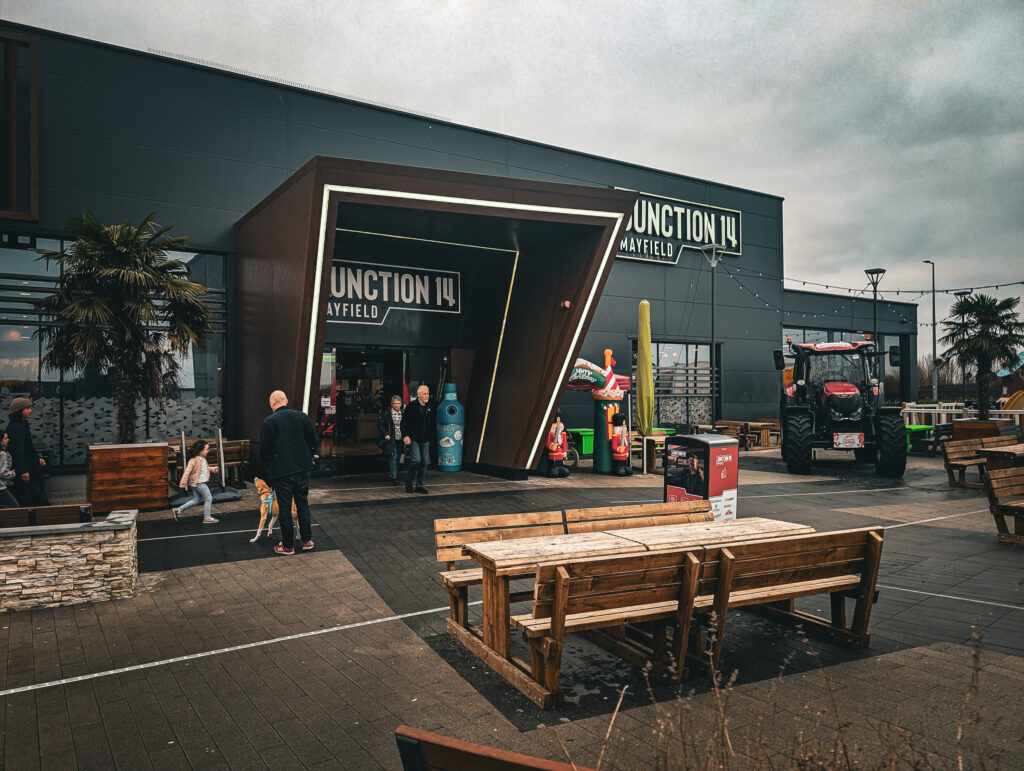
Mayfield Services (J14, M7)
Mayfield has become our default southbound stop for one simple reason: there isn’t much to think about when you pull in.
Everything is close together. The toilets are easy to find, the food options are immediately visible, and the layout is compact enough that you can see where everything is within a minute or two of arriving.
You’ll usually find:
- SPAR for snacks and drinks
- Subway
- A hot deli counter
- Supermac’s
- Chopped
- Ice cream
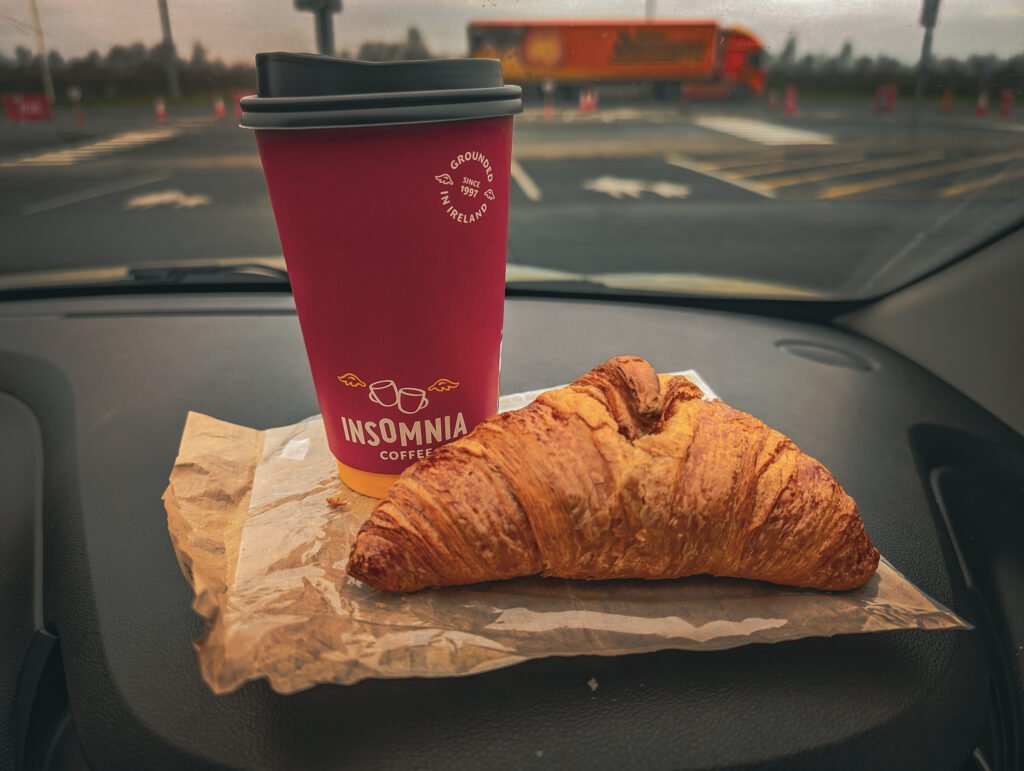
- Insomnia Coffee
There’s also a small outdoor play area.
It’s nothing elaborate, but it doesn’t need to be. After an hour or two in the car, even a few minutes of movement can make a surprising difference to the next stretch of the drive.
We’ve occasionally been tempted to push beyond Mayfield because everyone seemed fine.
Usually, we discovered twenty or thirty minutes later that everyone was simply about to hit their limit at exactly the same time.
Typical stop time: around 30 minutes.
Midway Food Court (J17, M7)
Midway comes into its own when everyone wants something different.
We’ve all had those stops where one person wants a burger, another wants noodles, and someone else only wants a snack.
Trying to force one option on everyone can quickly turn a straightforward stop into an unnecessary negotiation.
Midway usually solves that.
You’ll generally find:
- Burger King
- Chopstix
- M&S Food
- Coffee options
We’ve also had stops where we waited slightly too long before pulling in.
Everyone gets out of the car already tired. Food decisions seem to take forever. The queues feel longer than they really are. You’re technically stopped, but nobody actually feels reset.
That’s usually the difference timing makes.
The stop itself hasn’t changed.
You’ve just arrived at a different point in everyone’s day.
Portlaoise Plaza (J17, M7)
Portlaoise Plaza works well when you want a calmer stop.
Compared with some motorway services, it feels more contained. The indoor seating makes it easier to sit down properly, and the layout doesn’t feel quite as busy.
You’ll generally find:
- SPAR
- Supermac’s
- Papa John’s
- Bewley’s Coffee
- Good indoor seating
This is often the point where the decision becomes clearer.
You’re no longer looking for the most interesting stop. You’re simply trying to get ahead of the day before it starts slipping.
The main trade-off here is timing.
Outside peak periods, Portlaoise works really well.
During lunch rushes, queues can build surprisingly quickly, and standing around waiting isn’t usually the reset you had in mind.
Once You’re on the M8
The M8 generally feels easier.
The driving is calmer and the miles seem to pass more quickly.
But the second dip still comes.
It simply arrives later.
Ignoring it is usually what turns the final stretch into the part that feels surprisingly long.
Circle K Ballacolla (J3, M8)
Ballacolla is a useful stop precisely because it doesn’t ask much of you.
You’ll typically find:
- Supermac’s
- Papa John’s
- Toilets
- A garden centre
- Space for a quick stretch
This is often the stop we use when nobody is struggling yet but everyone could benefit from a short pause.
Sometimes ten minutes is enough.
Not every stop needs to become an event.
Circle K Cashel (J8, M8)
Cashel tends to work best when energy has started to dip more noticeably.
You’ll usually find:
- Circle K shop
- Deli counter
- Subway
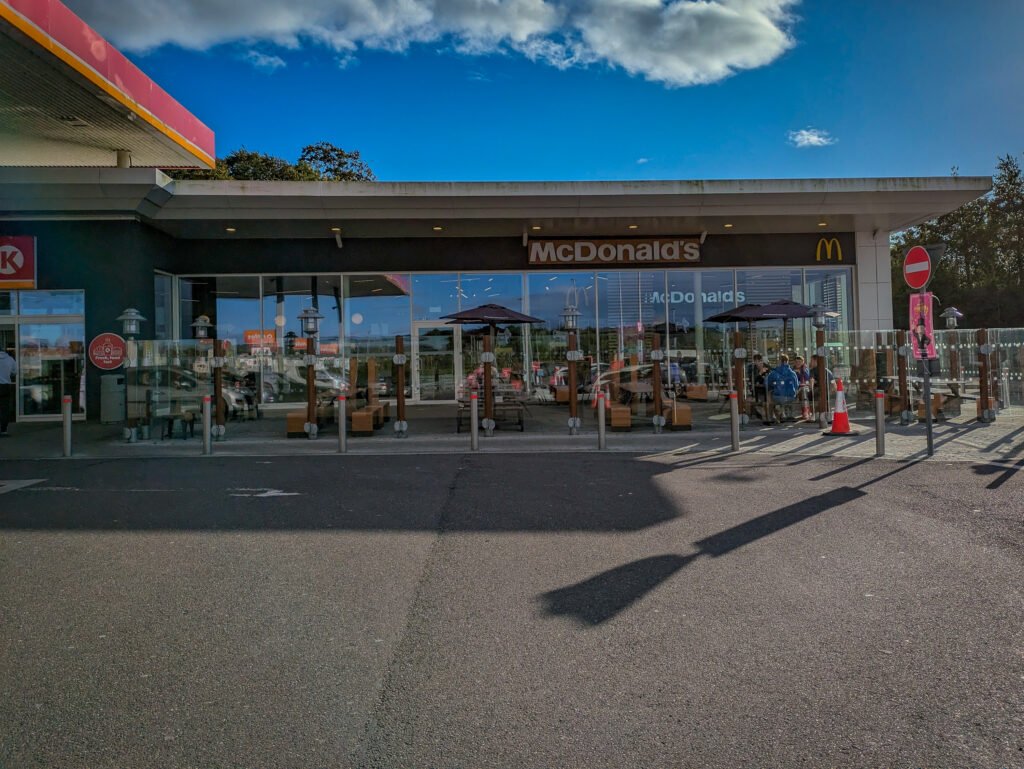
- McDonald’s
The familiarity helps.
When everyone knows what they’re getting, decisions happen faster and the stop tends to feel easier.
The only thing to watch is timing.
Cashel can become extremely busy. Parking fills up, queues form, and the stop becomes less relaxing than you expected.
The same place can either reset the journey or extend the low point, depending entirely on when you arrive.
Circle K Fermoy (J14, M8)
This is probably the decision point most people get wrong.
By the time you reach Fermoy, Cork feels close.
You’re tempted to push on.
And sometimes you absolutely should.
Other times, everyone in the car is just starting to tire again and that final stretch feels much longer than the distance suggests.
You’ll generally find:
- Circle K shop
- Deli counter
- Subway
- McDonald’s
- Ice cream
- Small outdoor play area
It’s often busy and can require a little patience.
The trade-off is simple.
Stopping here means delaying arrival slightly.
Skipping it means gambling that everyone still has enough left for the final stretch.
Town Stops (When Time Allows)
Most days, motorway services are enough.
But occasionally stepping away from the motorway changes the feel of the entire day.
Instead of simply managing the journey, it starts to feel like you’ve actually been somewhere.
Thurles Leisure Centre
If timing works, Thurles can provide a genuine reset.
A well-maintained 25-metre pool gives everyone a chance to move properly after sitting in the car.
This isn’t simply a leg stretch.
It’s a complete change of pace.
The trade-off is time.
You need around 45 to 70 minutes to make it worthwhile, and checking public swimming times in advance is essential.
But if everyone needs a proper break rather than another service station, it can completely change the mood of the day.
Cashel
Cashel works because it feels like a stop without becoming a project.
Park in town and you can be walking within minutes.
The cafés are close together, there are short walks available, and the Rock of Cashel rising above the town gives you a sense of place without needing tickets or half a day.
Time needed: around 45 to 90 minutes.
Cahir Castle
Cahir is one of those places that respects your time.
Parking is straightforward, the river walk starts immediately, and the castle provides a clear focal point without demanding a major detour.
Everything is close together.
That simplicity matters because nobody has to work out what happens next.
Time needed: around 60 to 90 minutes.
Fermoy
Fermoy is worth stopping in at least once.
The River Blackwater, playgrounds, green spaces, and riverside walks offer something motorway services simply can’t.
It feels settled.
Local.
Less like a pause button and more like stepping out of travel mode altogether.
The challenge is psychological.
By this point, Cork feels close enough that continuing often seems easier than stopping.
We’ve done both.
And sometimes taking that extra twenty or thirty minutes in Fermoy has made the final stretch feel significantly shorter.
At-a-Glance Guide: Family Stops Between Dublin & Cork
| 📍 Stop | 🚗 Approx. Distance from Red Cow (M50 J9) | ⏱️ Approx. Driving Time* | 👍 Best For | ⚖️ Trade-Off | ⏳ Typical Stop |
|---|---|---|---|---|---|
| Mayfield Services (J14, M7) | ~52 km | ~35 mins | First proper family break before anyone starts getting restless | More functional than memorable | 20–30 mins |
| Portlaoise Plaza (J17, M7) | ~78 km | ~50 mins | A calmer indoor stop with good seating | Can become busy around lunch | 20–40 mins |
| Midway Food Court (J17, M7) | ~78 km | ~50 mins | When everyone wants something different to eat | More choice usually means a longer stop | 30–45 mins |
| Circle K Ballacolla (J3, M8) | ~102 km | ~1 hr 5 mins | Quick leg stretch without losing momentum | Limited facilities compared with larger services | 10–20 mins |
| Circle K Cashel (J8, M8) | ~153 km | ~1 hr 35 mins | The second energy dip when familiar food helps | Parking and queues can build at busy times | 20–40 mins |
| Circle K Fermoy (J14, M8) | ~207 km | ~2 hrs 5 mins | Last chance reset before Cork when the finish line feels close | Easy to convince yourself to keep driving | 20–30 mins |
| Thurles Leisure Centre | ~123 km | ~1 hr 20 mins | A proper reset with a swim and time to move around | Requires planning and around an hour | 45–70 mins |
| Cashel Town | ~154 km | ~1 hr 35 mins | Stretch the legs while enjoying a proper town break | Adds more time than a motorway stop | 45–90 mins |
| Cahir Castle | ~172 km | ~1 hr 50 mins | A scenic stop with river walks and a historic castle | Requires leaving the motorway | 60–90 mins |
| Fermoy Town | ~208 km | ~2 hrs 5 mins | Riverside walks, playgrounds and one final family reset | Hard to stop when Cork feels so close | 30–60 mins |
*Driving times are approximate from Red Cow (M50 Junction 9) and assume normal motorway traffic conditions.
How the Drive Usually Ends
By the time we reach Douglas, everyone is usually settled.
Not because the journey was effortless.
Simply because nothing was left long enough to build into a bigger problem.
That’s the quiet success of this drive.
Not arriving quickly.
Arriving with enough left in the tank to actually enjoy being there.
Final Thought
The Dublin to Cork drive doesn’t usually go wrong because of one big mistake.
It changes through small decisions that feel insignificant at the time — skipping a stop, pushing a little further, waiting a little longer.
Each one seems manageable on its own.
Together, they shape the entire experience of the day.
Handle those moments early, and the drive holds together remarkably well.
Leave them too late, and you don’t always notice it immediately — but you carry it with you all the way to Cork