Glendalough with Children: Upper vs Lower Valley – Which Is Best for Families?
Planning a family day out in Glendalough? Here’s how choosing the right valley can remove the small pressure points that quietly build throughout the day, helping you spend less time managing tired legs and more time enjoying one of Ireland’s most beautiful landscapes.
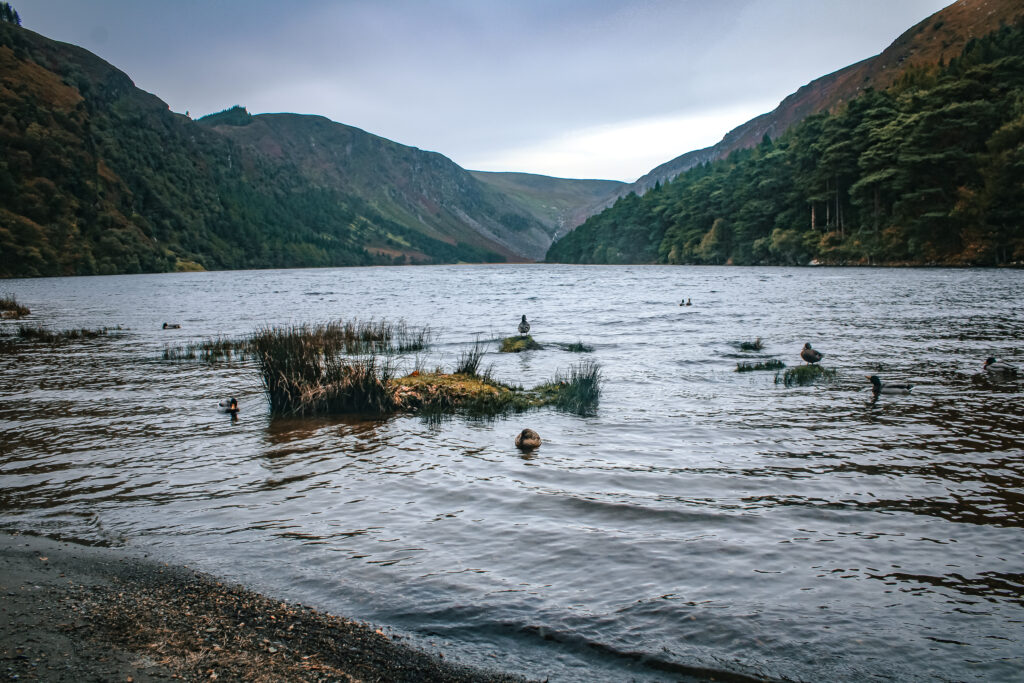
Glendalough with children exploring the Upper Lake
The Valley
Glendalough looks straightforward when you’re planning it at home. There are two lakes, a handful of marked walks, and plenty of photographs online showing families beside the water or standing at viewpoints high above the valley. It gives the impression that you’ll park up, wander around for a few hours, and gradually work your way from one highlight to the next before heading home.
With children, the day usually doesn’t unfold quite so neatly.
You arrive thinking you’ll see a bit of everything. The monastic ruins first, then perhaps the Lower Lake, maybe the waterfall afterwards, and if energy still feels good, one of the viewpoints overlooking the valley. None of those decisions sounds unreasonable on its own, but each one quietly asks for a little bit more than the last. Another kilometre doesn’t seem particularly far, another climb feels manageable, and another section of path before stopping for snacks appears perfectly sensible until you realise you’ve spent most of the day asking tired legs and shortening attention spans for just a little bit more.
Nothing has gone badly wrong and nobody is having a meltdown, but the atmosphere of the day has quietly changed because you’re no longer wandering and exploring at your own pace. Instead, you’re checking the map, thinking about distances, negotiating over snacks, and wondering whether everyone still has enough energy for one final stop.
At that point, you’re no longer enjoying Glendalough as much as you’re managing it.
We’ve been to Glendalough many times over the years, always as day trips and always by car. Different seasons brought different weather, and our daughter being four years old felt completely different from visiting a few years later, but one thing stayed remarkably consistent. The days we remember most fondly weren’t the ones where we squeezed in the most walks or reached the highest viewpoints. They were the days when we decided early what kind of visit we wanted and stopped negotiating with ourselves every time another path or viewpoint appeared.
Quick Answer: Upper or Lower Valley?
Lower Valley: Best for younger children, buggies, shorter walks, and a relaxed day with plenty of flexibility.
Upper Valley: Best for older children who enjoy walking and can comfortably manage hills and longer routes.
Our advice: Pick one valley and enjoy it properly. Trying to fit both into one visit is usually what turns a relaxing day outdoors into a long day of managing tired legs, hunger, and constant questions about how much further everyone has to walk.
Why Valley Choice Matters at Glendalough
Glendalough isn’t one experience. In reality, it’s two very different family days out sitting beside one another.
The Lower Valley is forgiving, gentle, and easy to adapt as the day unfolds, while the Upper Valley is steeper, more dramatic, and asks considerably more from everyone involved. Neither is better than the other, and the challenge for families is simply choosing the version that matches the age and energy levels in front of them.
Most family stress here doesn’t come from the weather or the crowds. It usually starts when a day that was supposed to be relaxed quietly becomes more ambitious than anyone originally intended. The waterfall sounds manageable, the viewpoint doesn’t seem that much further away, and suddenly the family is committed to a longer and harder day than anyone expected.
Choosing your valley early removes a surprising amount of decision-making later on because you’re no longer constantly reassessing whether everyone has enough energy for one more stop. The trade-off is accepting that you probably won’t see everything in one visit, but our experience has been that seeing slightly less usually means enjoying considerably more.
The Lower Valley: Where Family Visits Should Begin
Our first visits were when our daughter was around four years old and we still had a buggy with us. The Lower Valley was the obvious choice because almost everything we needed sat within comfortable reach of one another.
You have the Lower Lake, the monastic ruins, flat and wide paths, picnic areas, and enough open space for children to move around without every decision leading immediately into another walk.
This is where the Lower Valley quietly works so well for families because you can change your mind without feeling as though you’ve ruined the day. You can stop for snacks beside the lake, spend twenty minutes watching ducks, wander through the ruins, or simply sit on the grass for a while, and the day never feels as though it’s constantly asking for more distance, more climbing, or more decisions.
The trade-off is that it doesn’t immediately feel as dramatic as the Upper Valley, but for younger children that gentler pace is often exactly what makes the experience enjoyable rather than exhausting.
Miner’s Road (Purple Route)
The Miner’s Road is one of the most family-friendly walks in Glendalough and, in our experience, one of the most overlooked.
The route is relatively flat, well surfaced, and buggy-friendly for most of its length. At around two kilometres each way, it feels like a proper walk without immediately becoming overwhelming.
What makes this route work particularly well with children isn’t necessarily the scenery but the fact that you’re never committed to a loop, which means there isn’t a moment where you suddenly realise you’re still facing another few kilometres because the car is somewhere on the other side of the lake. You can simply turn around whenever the energy in the day begins to change.
Beyond the Miner’s Village, the surface becomes stonier and the climb becomes steeper, creating a natural point to reassess.
What worked for us was deciding in advance where “enough” was.
Sometimes that meant stopping for a snack and sitting on a rock watching other walkers pass by. Nothing particularly exciting was happening, but nobody was asking how much further there was to go and nobody felt under pressure to keep moving. Those moments ended up becoming some of our favourite memories.
Turning back early can sometimes feel like you’re cutting the day short, but more often than not you’re protecting the rest of it because everyone still has enough energy to enjoy lunch, explore the ruins, or simply sit beside the lake instead of spending the afternoon recovering from one extra stretch of path.
Why the Landscape Feels Bigger Than It Looks
Glendalough sits within a classic U-shaped glacial valley carved during the last Ice Age. The broad valley floor and steep sides create some of the scenery that makes the area feel so dramatic.
The same landscape also creates one of the easiest ways for families to accidentally underestimate the day because distances here are deceptive. What appears close across the lake often involves considerably more walking once you’re actually on the paths, and those extra minutes quickly add up when you’re already carrying snacks, taking breaks, and managing different energy levels.
Understanding this early removes the temptation to keep saying, “Let’s just go a little further,” because that sentence has probably created more tired legs and more negotiations at Glendalough than almost anything else.
The Upper Valley: Earned, Not Automatic
We didn’t tackle the Upper Valley on our earlier visits and, looking back, that was absolutely the right decision.
The scenery is spectacular and the photographs are tempting, which is exactly why families often attempt it too soon. The reality is that the Upper Valley asks much more from everyone. The climbs are steeper, the distances feel longer, and there are fewer opportunities to casually shorten the day once you’ve committed.
When we returned a year or two later with our daughter older and fully walking, the entire experience felt different because we were no longer spending the day carrying, lifting, encouraging, and negotiating. Instead, we were able to enjoy the walks themselves.
The trade-off was accepting that some of Glendalough’s most impressive views would have to wait for another visit, but waiting until our daughter was genuinely ready meant we experienced those walks together rather than spending the day managing our way through them.
Poulanass Waterfall & the Spinc (Short Route)
The walk towards Poulanass Waterfall is probably one of the best introductions to the Upper Valley because it delivers a sense of achievement quite quickly.
There is a short but steep climb at the beginning, which is often where the first signs of resistance appear. Legs begin slowing down, questions about distance start arriving, and children suddenly become much more interested in stopping.
The waterfall arrives relatively early in the walk, and that small sense of achievement changes the mood because it feels as though everyone has already accomplished something before energy starts dipping and attention begins drifting elsewhere.
From there, sections of the shorter Spinc route open into elevated viewpoints overlooking the valley. Seeing the full U-shaped landscape spread out below is one of those moments that genuinely lands with children because they can actually see how far they’ve climbed.
We stopped regularly during these walks, not because we had carefully planned rest points but because the route naturally demanded them. Breaking the walk into smaller goals removed the feeling that there was one long climb ahead and made the entire experience feel considerably more manageable.
📝 Practical Notes (Worth Knowing)
| Topic | What to Know | Why It Matters for Families |
|---|---|---|
| 🅿️ Upper Lake Car Park | Limited spaces • €5 • Toilets, food vans, coffee, ice cream, and chips available. Spaces usually turn over, so waiting a short while is often worthwhile. | Parking here removes a longer walk at the beginning and end of your visit, helping everyone save energy for exploring rather than simply getting to the lakes. |
| 🚗 Lower Lake / Visitor Centre Car Park | €5 with good access to the Lower Valley, although you’ll need to walk further if you plan to visit the Upper Lake. | A great choice if your day is centred around the monastic ruins, Lower Lake, and shorter family walks. |
| 💰 Laragh Free Car Park | Free parking, but it adds a significant amount of extra walking. | Saving €5 may not be worth the additional distance if you’re visiting with younger children or anyone whose energy is likely to fade during the day. |
| 🚻 Toilets | Clean, functional toilets are available at the Upper Lake Car Park. | It’s worth using them before setting off, particularly if you’re heading towards the Upper Valley where facilities are limited. |
| 👨👩👧👦 Crowds | Glendalough is popular with hikers, tourists, and local visitors throughout the year. | Arriving earlier usually means easier parking, quieter paths, and a more relaxed start before the busiest part of the day. |
| 🌦️ Weather | Conditions can change quickly, and wind often funnels through the valley even on warm, dry days. | Packing an extra layer removes one of the easiest pressure points to avoid and helps keep everyone comfortable if the weather changes unexpectedly. |
🍦 How Our Days Usually End
Our visits to Glendalough almost always end the same way.
We pick up chips and ice cream from the food vans at the Upper Lake car park, find somewhere to sit for a few minutes, and let everyone slow down before climbing back into the car.
It’s become a small family tradition, but it also marks the point where the day naturally winds down. Nobody is rushing to squeeze in one last walk or wondering if we’ve missed something. The decisions are finished, everyone is happily tired, and the day feels complete.
The drive home through the Wicklow Mountains becomes part of the experience too. Traffic slows, campervans and cyclists appear, and the mountains gradually soften behind you as you make your way back towards the N/M11. After a full day outdoors, the journey home feels less like the end of the trip and more like a gentle chance to reflect on it.
Sometimes we half-joke and call Glendalough the “Lake Louise of Ireland.” Not because it’s the same, but because it gives families that same feeling of spending an entire day surrounded by nature. Children can paddle at the lake edge, watch ducks glide across the water, explore ancient ruins, climb a little, walk a little more, and still have enough energy left to enjoy an ice cream before heading home.
Looking back, that’s probably the biggest lesson Glendalough has taught us. The best family days aren’t the ones where you manage to fit everything in. They’re the ones where everyone climbs back into the car already talking about when they’ll come back.
Our Biggest Lesson from Glendalough
We’ve learned that family travel rarely falls apart because of one big decision.
It’s the small pressure points that quietly stack up until the day starts revolving around tired legs, snacks, and negotiations instead of the place you’ve come to enjoy.
Glendalough is no different. Choose the right valley, remove those pressures before they build, and you’ll spend far more of the day exploring one of Ireland’s most beautiful landscapes instead of simply managing your way through it.
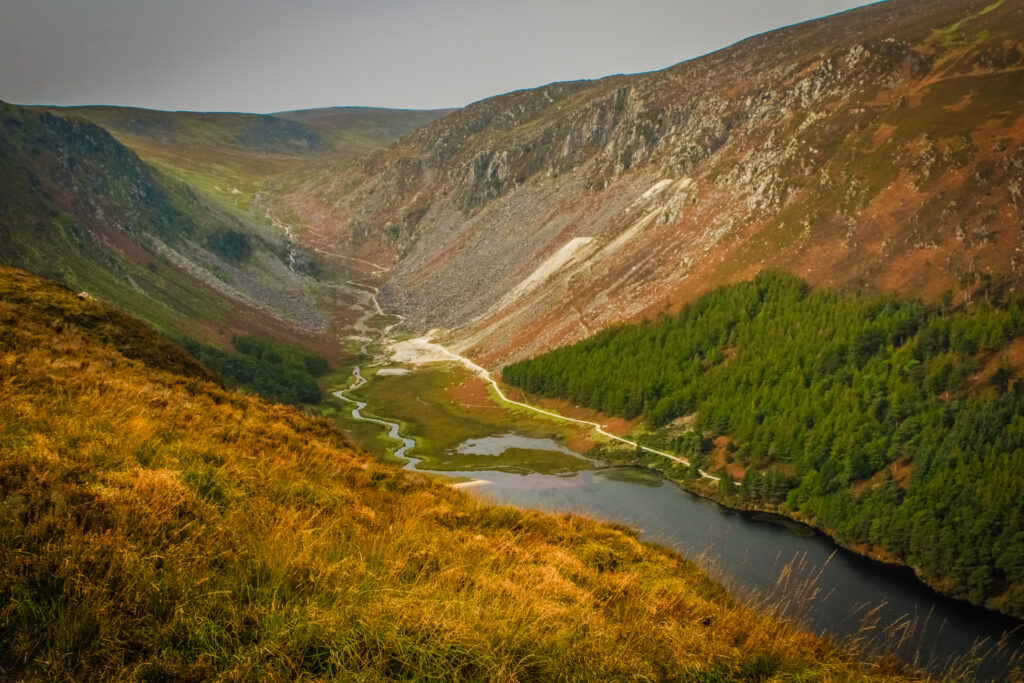
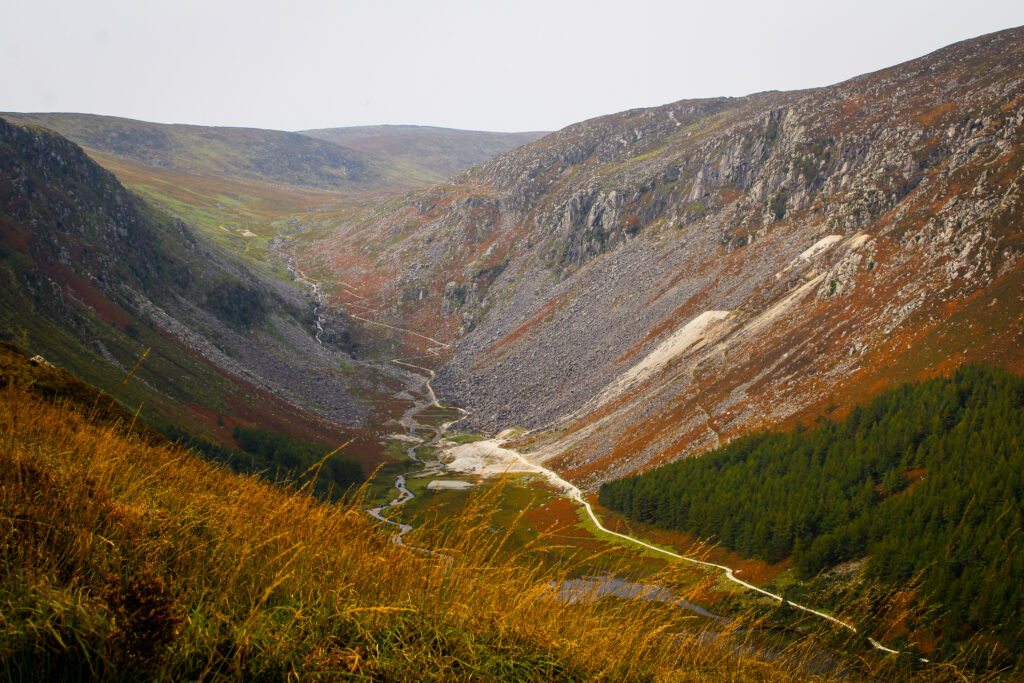
The view from Glendalough Viewpoint and looking down on Miners Village
