Is Saigon’s New Metro Worth Using With Kids? The Transport Change That Made the City Easier
How avoiding traffic, delays and endless recalculating gave us more energy for the places we actually wanted to visit
By Michael Graham | OurPixelPassport
Before the Journey Even Begins
You step out into the heat in Ho Chi Minh City and feel it straight away. Traffic is already building, the noise level is rising, and the pavements feel tighter than they did an hour ago.
Your child slows slightly beside you. Not complaining, just taking it all in while you’re already doing the calculation every parent does in a city like this: how much of this are we going to deal with today?
Taxi? Walk? Or something else?
You’ve done this before. Standing roadside after a shower has passed through, refreshing Grab and watching drivers accept, cancel, or simply disappear. Twenty, twenty-five, sometimes thirty minutes can pass before the journey has even started.
By that point, everyone is already a little tired, a little hot, and a little less patient than they were when they left the apartment.
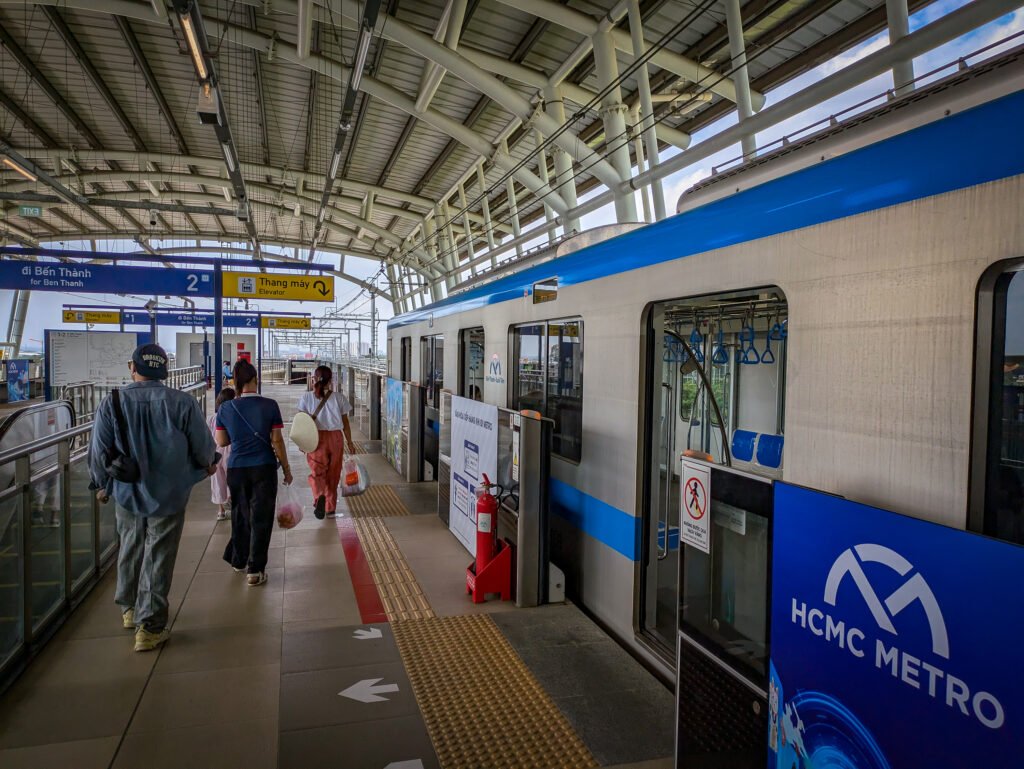
We chose the metro.
And within minutes, something shifted.
Not because it was faster.
But because the part of the day where everyone starts getting a little tired, a little hot, and a little less patient… never really arrived.
It stopped being a problem… and became the activity.
That shift matters — because once something becomes play, you stop losing energy to it.
Quick answer: yes — and not for the reason you might expect
Quick Answer: Yes — the Saigon Metro is worth using with kids, especially if you’re travelling across the city or visiting places beyond the main tourist areas.
✅ Clean, air-conditioned stations and trains
✅ Predictable journey times regardless of traffic
✅ Significantly cheaper than long taxi journeys
✅ Removes much of the waiting, heat, and uncertainty before a day out even begins
The biggest benefit isn’t speed.
It’s that you’re no longer spending the first part of the day managing traffic, taxi availability, delays, and rising costs before you’ve even reached your destination.
In a city where family energy can disappear long before the sightseeing starts, that small shift can make a surprisingly big difference.
Watching it Take Shape (2015–2024): The Project That Became Folklore
For years, the Saigon Metro felt like something that was always going to happen — just not anytime soon.
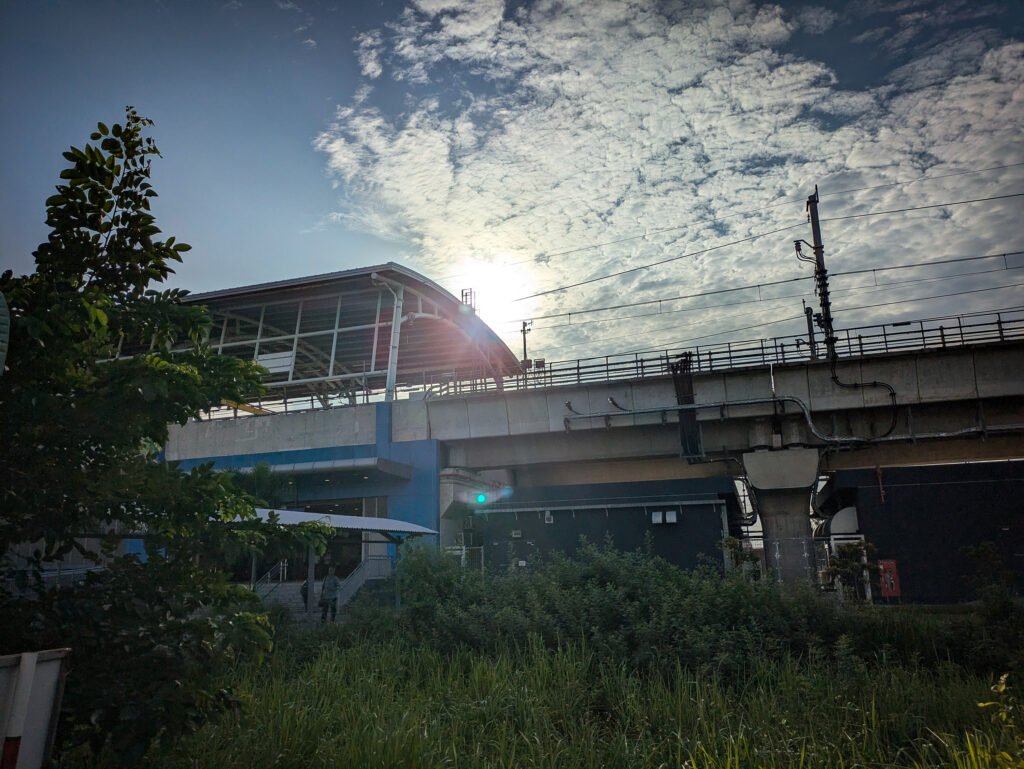
When we were living in the city in 2015 and 2016, the first signs appeared as concrete pillars rising above familiar streets. They looked permanent enough, but nobody seemed entirely convinced a working metro would follow.
Each visit back to Saigon brought another small change. A station taking shape. More fencing. A stretch of track where there hadn’t been one before. Progress was visible, but never quite enough to stop the jokes about when it might finally open.
Over time, the metro became part of the background conversation of the city. Everyone knew about it. Everyone had an opinion on it. Few people seemed willing to guess when they would actually ride it.
Then, almost quietly, Line 1 opened.
Riding it for the first time felt slightly surreal. After nearly a decade of watching the project inch forward, we were suddenly travelling through the city on something that had spent years feeling more like a promise than a piece of infrastructure.
Saigon hadn’t changed overnight.
But it felt like the city had finally caught up with a future it had been talking about for years.
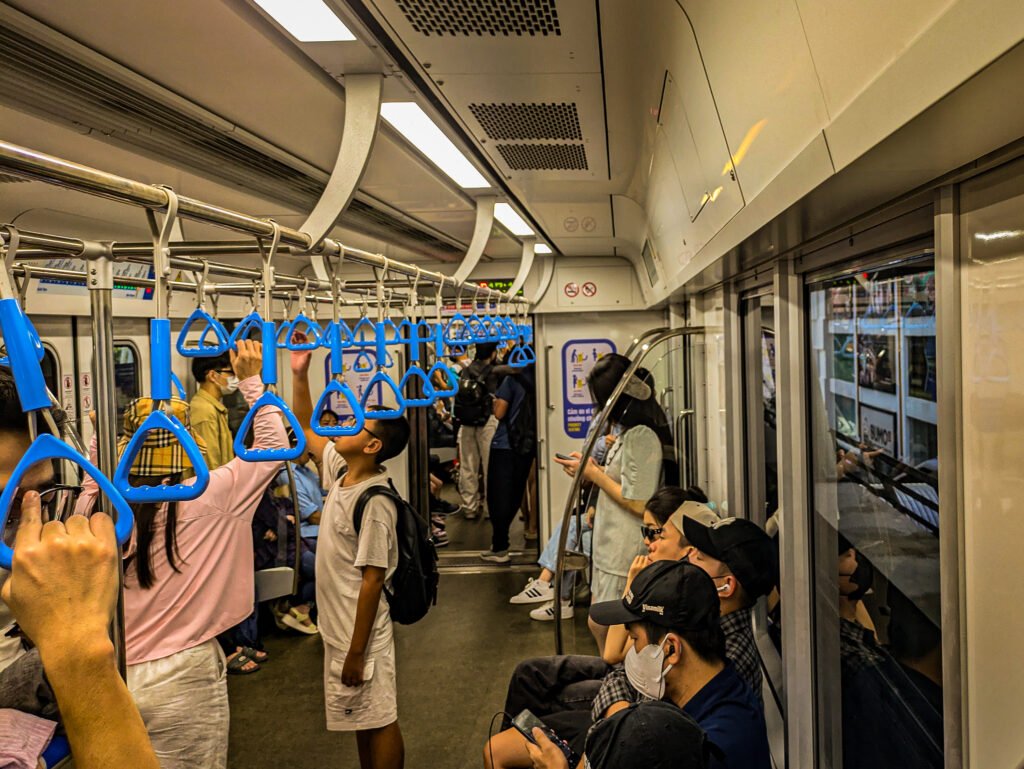
First Ride, New Perspective (Bến Thành Station)
First Ride, New Perspective (Bến Thành Station)
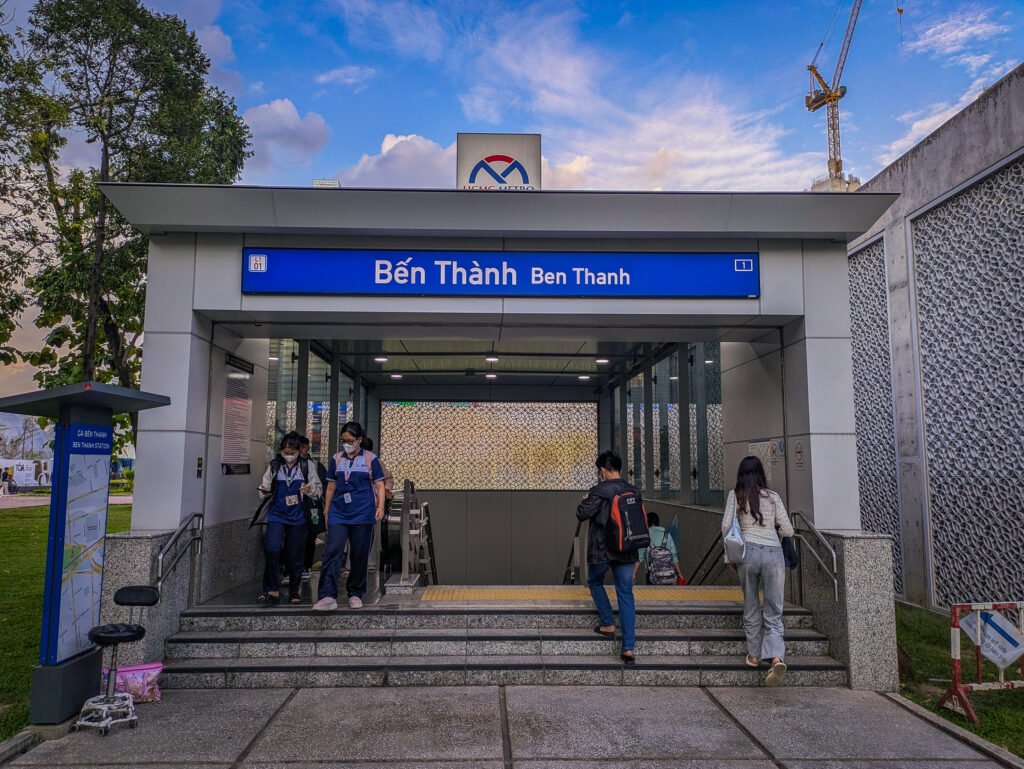
We started at Bến Thành Market, where the entrance to the metro feels surprisingly different from the streets above. District 1 is usually defined by movement, noise, and people constantly finding a way through gaps that don’t really exist. Down here, everything felt calmer.
The ticket machines weren’t working that day — they normally offer both Vietnamese and English — but there was no queue at the counter. We bought three adult tickets, since children over 100 cm, including our seven-year-old, need their own. At 20,000 VND per adult each way, the cost was fixed before we even reached the platform.
That sounds like a small thing, but in Saigon it’s often the beginning of a much bigger difference. Normally you’re still making decisions at this stage. How long will the journey take? Is traffic building? Should we have left earlier? Is there a better route?
Here, there was very little left to manage. You scan your ticket, head through the barriers, and wait for the next train, which arrives roughly every ten minutes.
Travelling as a family adds its own choreography. At the terminus the train waits with its doors
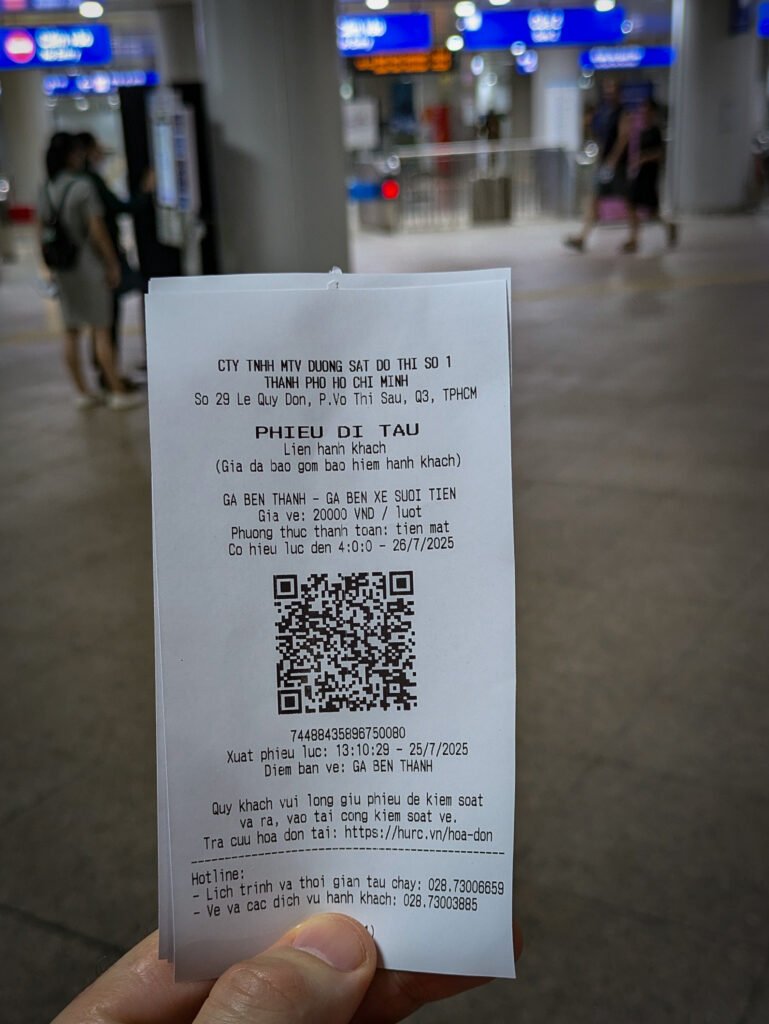
open, while stations further along the route allow only a brief stop before moving on. We kept our daughter close, especially during the evening rush, but the whole system felt surprisingly easy to navigate.
What struck me most wasn’t the speed or the technology. It was the absence of constant adjustment. We weren’t checking traffic, recalculating arrival times, or wondering if we’d made the right choice. Once we stepped onto the platform, the journey felt largely decided.
Staff were always nearby, watching the platforms and helping passengers when needed. That small presence changes the atmosphere more than you’d expect. When you’re travelling with children, it’s rarely the journey itself that becomes tiring. It’s the feeling of constantly having to stay one step ahead of the next problem.
For the first time that day, that feeling simply wasn’t there.
The Moment Saigon Opens Up
The biggest surprise comes once the train leaves the underground section and begins crossing the Saigon River.
For years, we’d experienced the city from street level, moving through the same traffic as everyone else. Junctions, red lights, motorbikes filtering through impossible gaps — that’s how Saigon normally feels.
From the metro, you suddenly see a different version of the city.
Traffic still stretches across the roads below, but you’re no longer part of it. Instead of wondering how long a junction will take to clear, you’re looking down on it as the train continues east. The river opens out beside you, clusters of high-rise apartments appear in the distance, and parts of the city that once felt disconnected begin to make more sense.
It isn’t necessarily the best view in Saigon. t’s just a perspective that didn’t exist before.
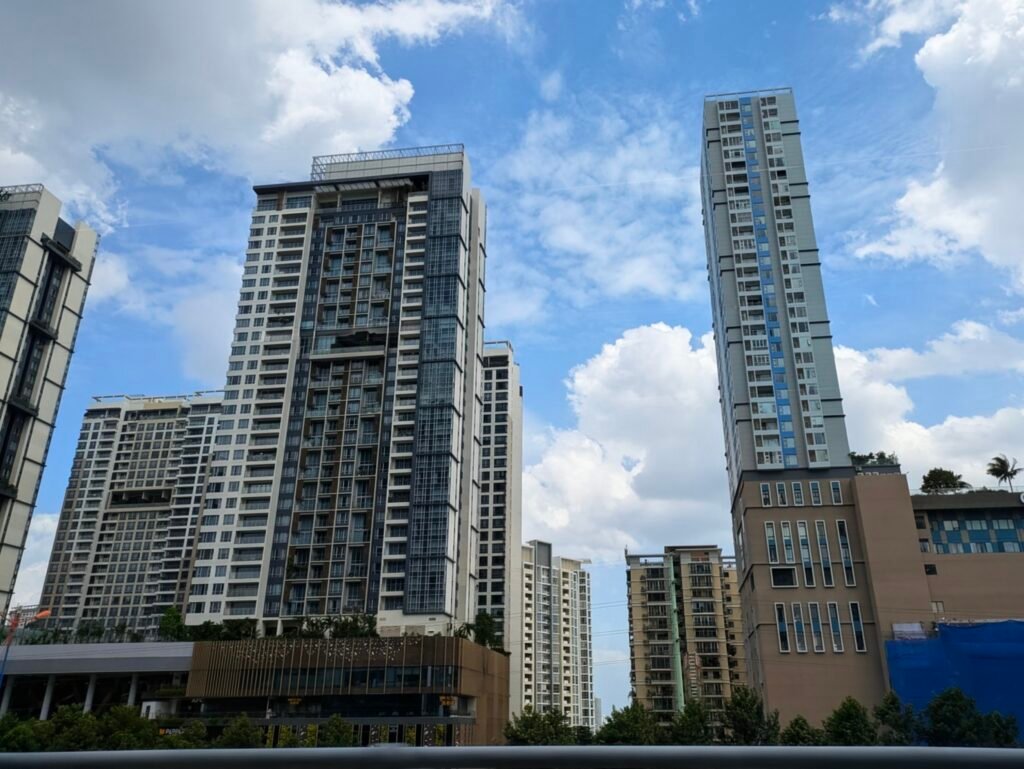
Riding It End to End (Bến Thành → Suối Tiên Terminal)
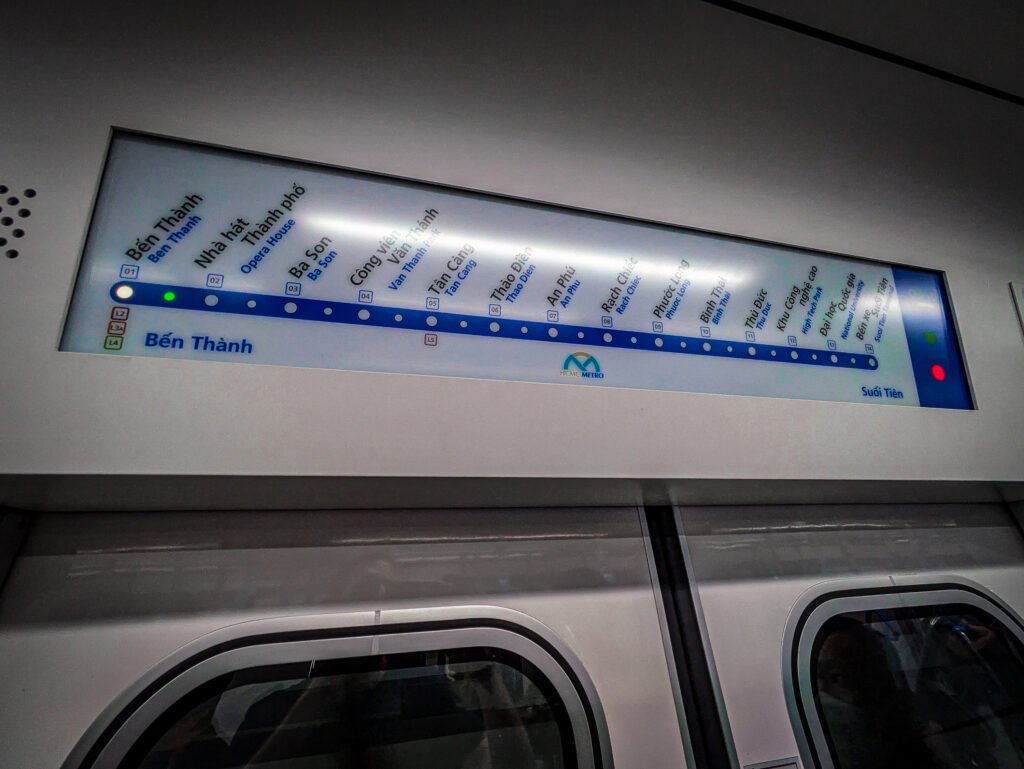
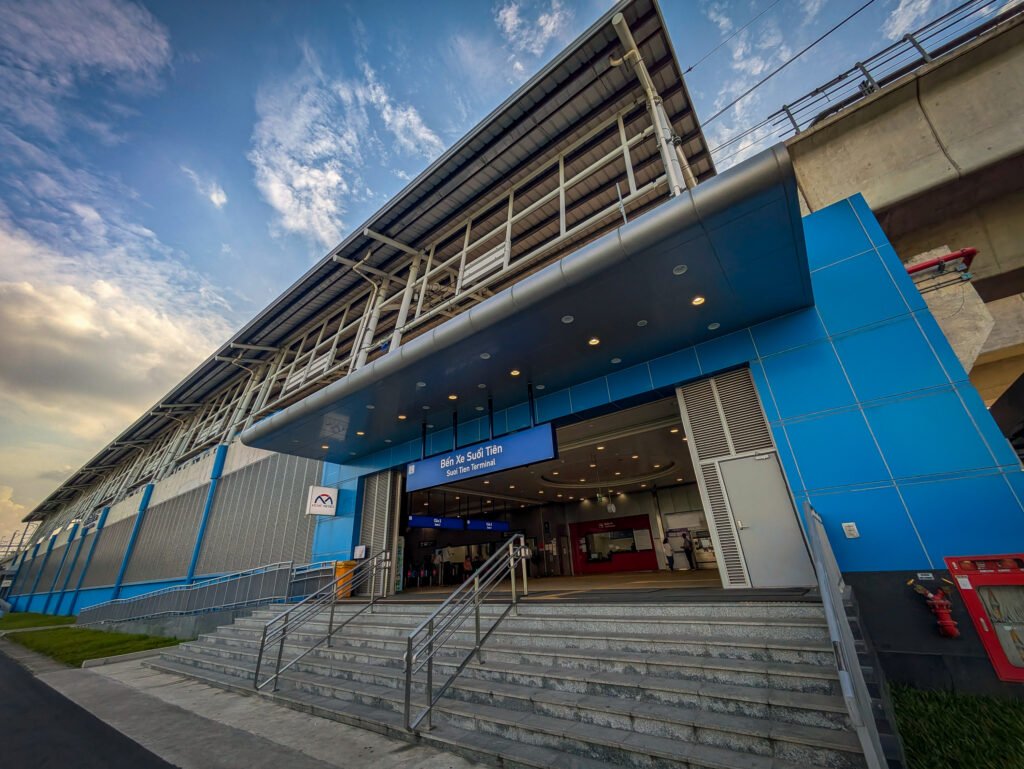
We stayed on all the way to Suối Tiên Terminal, partly out of curiosity and partly because we wanted to understand what the line actually felt like from beginning to end.
The entire journey took less than half an hour. That might not sound remarkable until you think about how cross-city travel in Saigon normally works. Journey times tend to be estimates rather than promises. Forty minutes can easily become an hour once traffic starts to build, and anyone travelling with children knows that the uncertainty is often more tiring than the journey itself.
On the metro, none of that really entered our thinking.
As the stations passed quietly on the digital screen, we found ourselves looking at them less as stops and more as possibilities. Ba Son with its river views. District 2 and its quieter cafés and neighbourhoods. The university and technology park stations further east. Eventually, Suối Tiên and the water park beyond.
We weren’t planning to visit any of them that day.
Instead, we stayed on until the end, watching parts of the city we’d normally rush through reveal themselves one station at a time.
For the first time, travelling across Saigon felt less like getting somewhere and more like understanding how the city fits together.
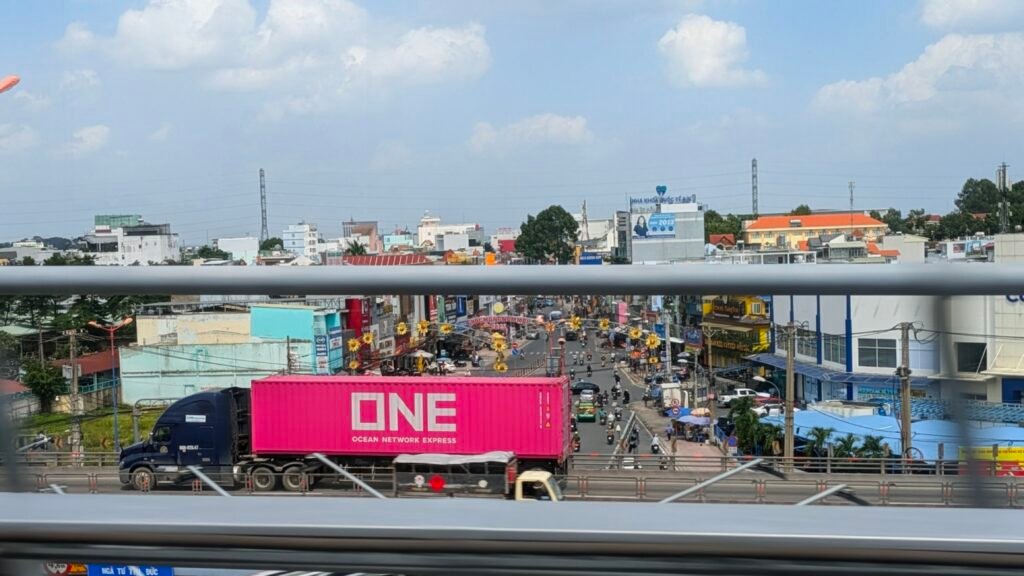
A Different Kind of Movement
The metro has a few simple rules:
🍜 No eating on trains (water is fine).
👀 Staff are visible throughout the stations and platforms.
🚇 What stayed with us, though, wasn’t the rules. It was how different the whole experience felt compared with moving through the city by road.
What actually feels different on the Saigon Metro
| What you notice | What it replaces | Trade-off | What it changes |
|---|---|---|---|
| 🚇 Air-conditioned stations and trains | Waiting in heat and humidity for transport | Less street-level atmosphere | Everyone starts the journey with more energy |
| ⏱️ Trains arrive roughly every 10 minutes | Unpredictable taxi availability and traffic delays | Fixed routes and stations | Less time spent checking apps and recalculating |
| 🤫 Quiet carriages | Constant horns, engines and traffic noise | A less immersive street experience | Easier conversations and a calmer environment |
| 🎫 Fixed ticket prices | Variable taxi fares, surge pricing and long-distance taxi costs | Requires a short walk to stations | Costs are known before the journey begins and are often far lower than taking a taxi |
| 👀 Staff visible throughout the system | Managing unfamiliar transport alone | Less flexibility than a private taxi | Makes travelling with children feel easier |
| 🚉 Clean, organised stations | Crowded roadside pickup points and waiting for rides to accept | Need to enter and exit through stations | Removes much of the waiting before movement starts |
| 🌉 Elevated sections across the river and suburbs | Sitting inside traffic | No door-to-door convenience | Makes parts of the city feel closer and more connected |
The Real Game-Changer: Access (and the Cost Difference)
What the metro really changed for us wasn’t sightseeing.
It was access.
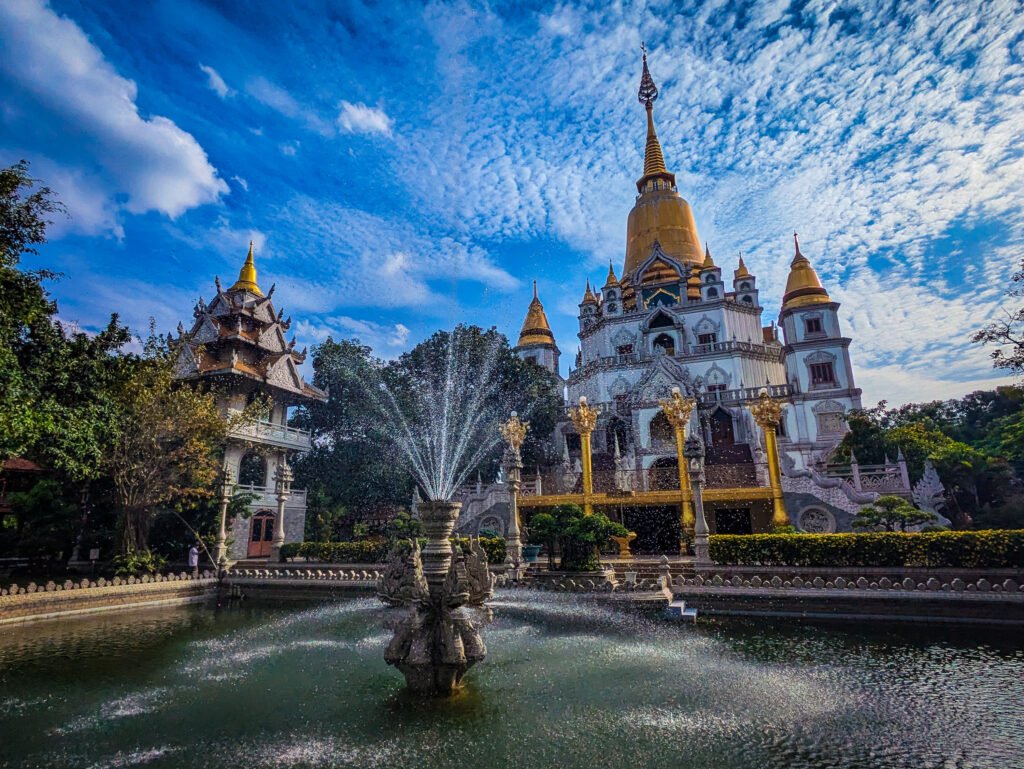
Bửu Long Pagoda in District 9 is an important place for my wife’s family and somewhere we visit every time we’re in Saigon. The distance itself was never the issue. It was everything wrapped around getting there.
On bad days, traffic could swallow ninety minutes each way. Before that, there was often time spent trying to secure a taxi in the first place, refreshing apps and hoping something accepted the journey. By the time you added the return fare, costs could creep towards 1.5 million VND.
You hadn’t even reached the pagoda and part of the day was already gone.
The metro changes that calculation completely.
Our New Route (and What It Costs)
✅ Return metro ticket from Bến Thành: 40,000 VND
✅ Grab from the terminus to the pagoda: ~56,000 VND each way
For a family of three, the entire journey comes to roughly:
230,000 VND in total
More importantly, the day begins differently.
You head underground, step into air-conditioned stations and know you’re

already moving. You’re not standing at the side of the road after rain has passed through, feeling the humidity rise again while checking whether another driver has cancelled.
The journey now takes around 40–45 minutes.
What once felt like something you had to commit yourself to has become somewhere we can simply decide to go.
And when you arrive, you still have the energy to enjoy being there.
Final Verdict: Saigon Is Still Saigon — but Your Starting Point Changes
The metro doesn’t change Saigon.
Traffic still builds. The streets are still noisy, energetic and occasionally exhausting. Crossing the city still takes time.
What changes is how the day begins.
You’re not standing roadside after a shower, feeling the humidity rise again while refreshing Grab. You’re not watching waiting times creep upwards or wondering whether the journey is really worth the effort.
You go underground.
You cool down slightly.
You get on.
And you’re already moving.
That sounds like a small thing, but family days rarely unravel because of one big problem. They usually wear down gradually, with everyone becoming a little hotter, a little more tired and a little less patient before you’ve even arrived.
The metro doesn’t make every journey easier.
But if your destination sits on Line 1, or close enough to connect from it, the whole calculation changes. Places that once felt like a commitment suddenly feel local again. And when a destination sits on Line 1, or close enough to connect from it, you spend less of the day managing Saigon and more of it actually enjoying why you went there in the first place.