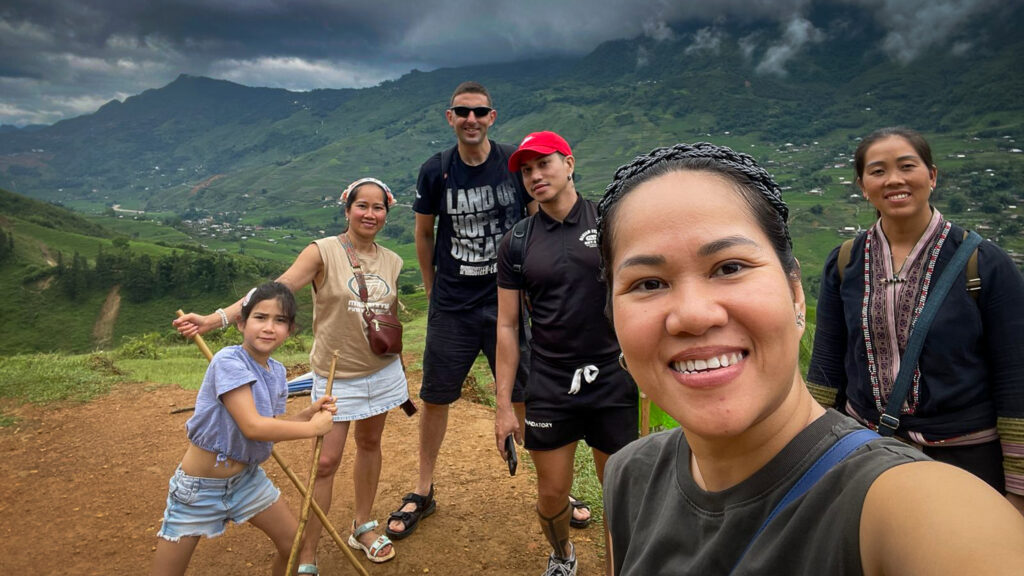
Hiking Sa Pa With Kids: The 10km Trek That Nearly Fell Apart (And What Actually Kept It Together)
How a simple family hike turned into a test of energy, pacing — and small decisions that change everything
By Michael Graham | OurPixelPassport
What it’s really like trekking Sa Pa with a child
It’s the end of a long day in the valley.
Your 7-year-old has done incredibly well… but now the energy is gone.
The climb back up is steep. The heat is sitting on you.
Shoulders aren’t an option anymore — they’re too heavy, you’re too tired, and everyone’s running low.
This is where a great family day can quietly unravel.
Not because anything went “wrong”…
but because everything has slowly built up.
For us, this was that moment.
Instead:
we slowed it down on the river road,
stopped for a cold drink at a small stall,
turned the final stretch into a game of tag,
and called ahead so fries and water were waiting at the homestay.
Not luck.
Just reading the moment early — and adjusting before it tipped.
If you’re wondering whether hiking in Sa Pa with kids is worth it… this is what it really comes down to.
Quick answer: it looks chaotic — but it’s controlled chaos
Quick Answer: Yes — Sa Pa hiking with kids is worth it (if you choose the right trek)
✅ Yes, hiking in Sa Pa with kids is worth it — especially if you choose a manageable route, go with a local guide, and accept that your family will not stay clean.
The difference between “worth it” and “never again” isn’t the distance — it’s how you handle dips in energy, mood, and focus along the way.
Days like this don’t fall apart suddenly — they fade when small things aren’t managed early.
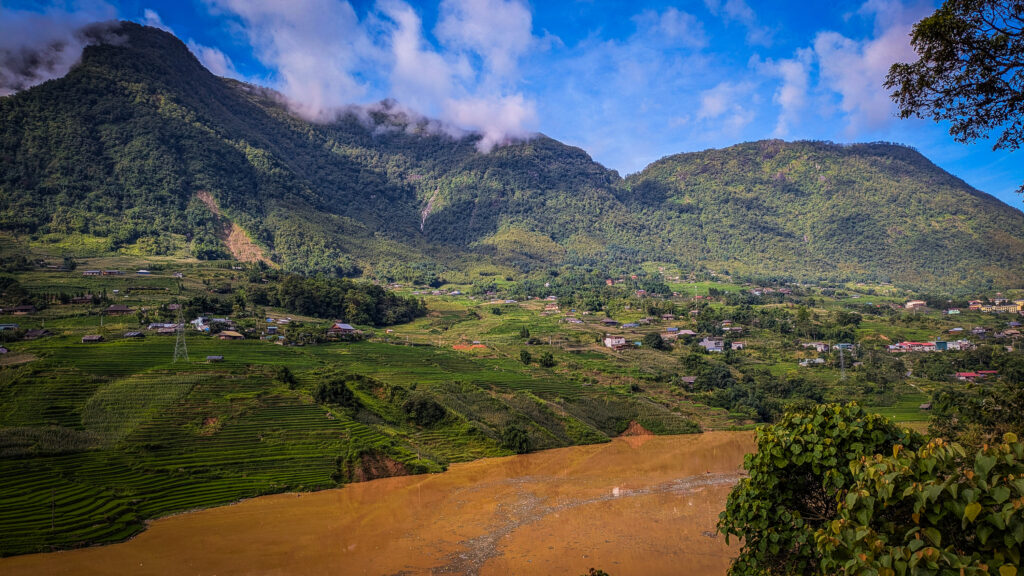
Our Trek Summary (for parents who want the facts fast)
- When: July 2025
- Child age: 7 years old
- Distance: ~10km
- Total time: ~6 hours
- Difficulty: Moderate (with a few harder sections)
- Start/Finish: Peace Homestay (Sa Pa Valley)
- Guide: May Lai
- Cost: $22 USD per person
- Included: Guide + lunch
- Toilets: Only at lunch (otherwise nature)
On paper, this looks very doable.
In reality, with a child, it becomes a steady test of pacing, energy management, and small decisions that either keep the day moving — or slowly drain it.
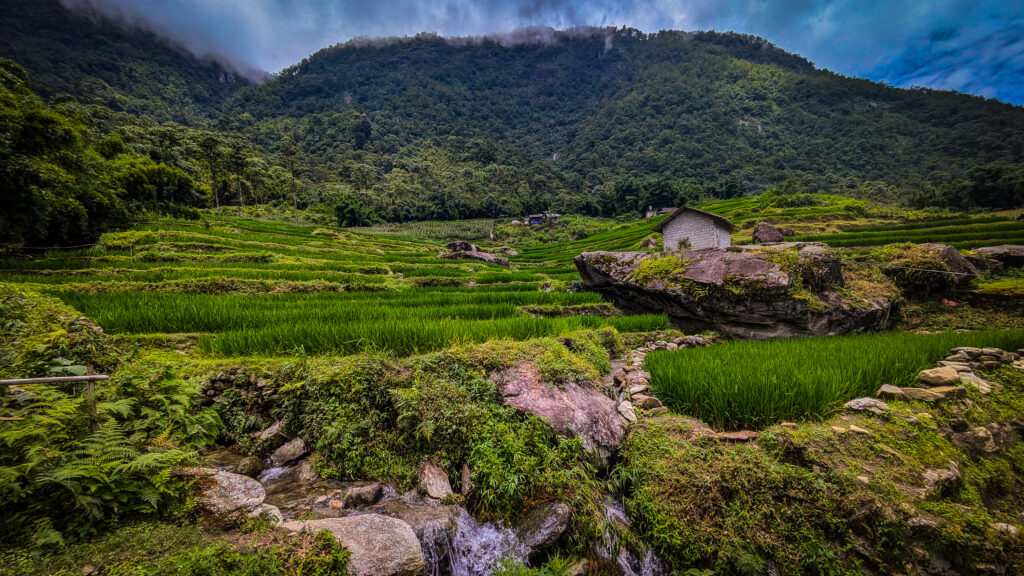
The Weather Reality: Sa Pa doesn’t care about your plans
This was attempt number two.
After an overnight storm, the river was high and our guide couldn’t reach us at first.
We waited — which avoided starting the day under pressure — but the trade-off was uncertainty and a restless child.
We nearly filled the gap with a craft activity.
Then the call came: she’d made it through.
And the day started properly.
Why your guide matters more than your shoes
Our guide, May Lai, was calm, warm, and excellent with our daughter.
She kept her engaged — which removed the need for constant encouragement from us.
In Sa Pa conditions, that matters.
The terrain changes quickly.
Water levels change.
Paths change.
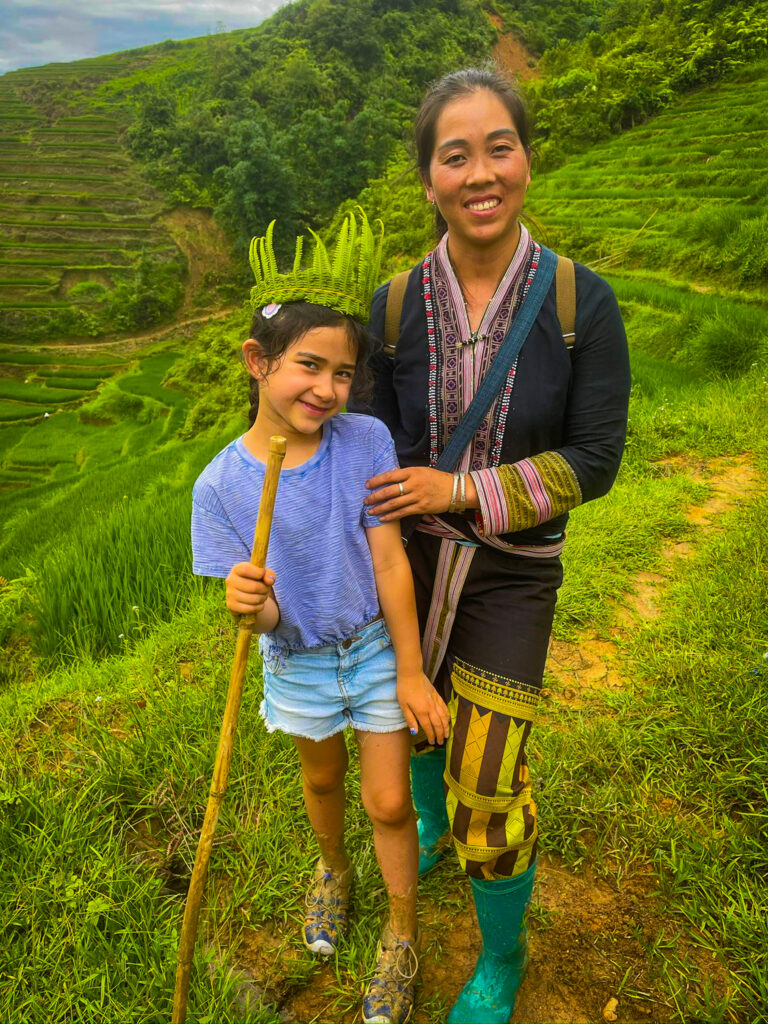
A guide doesn’t just lead — they remove the mental load of figuring it out as you go.
The Trek Experience: waterfalls, valleys, and proper muddy chaos
The hike doesn’t ease you in.
Within minutes, you’re dealing with wet ground, narrow terraces, and footing that changes step to step.
It forces attention straight away — not because it’s difficult, but because you can’t switch off.
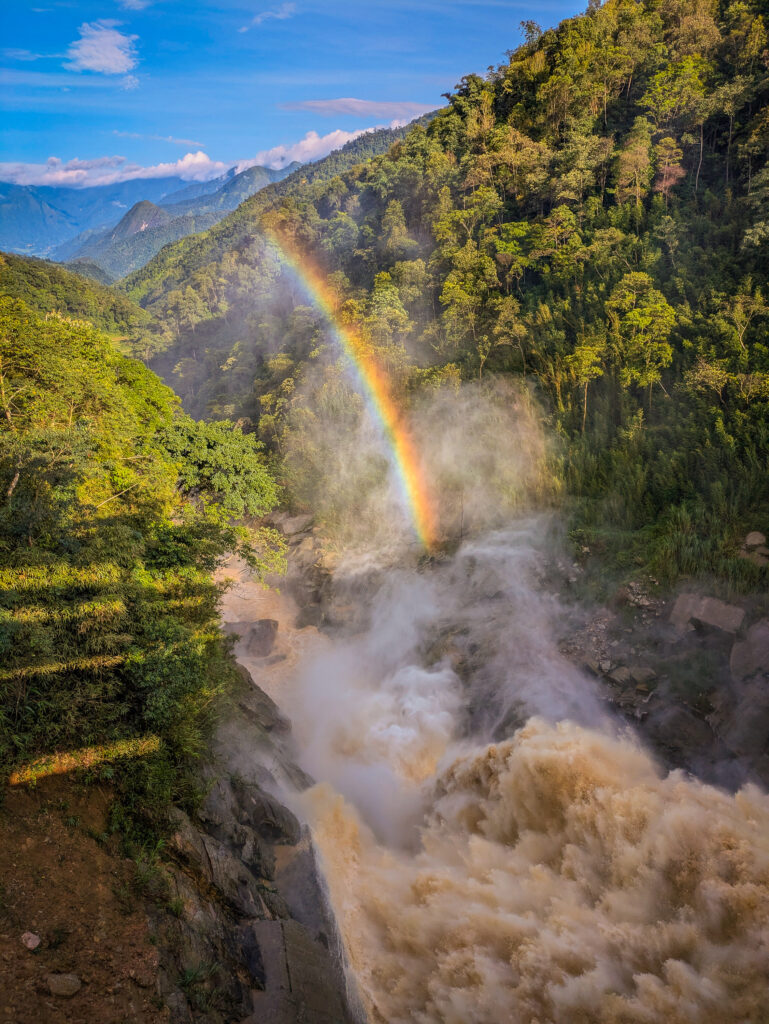
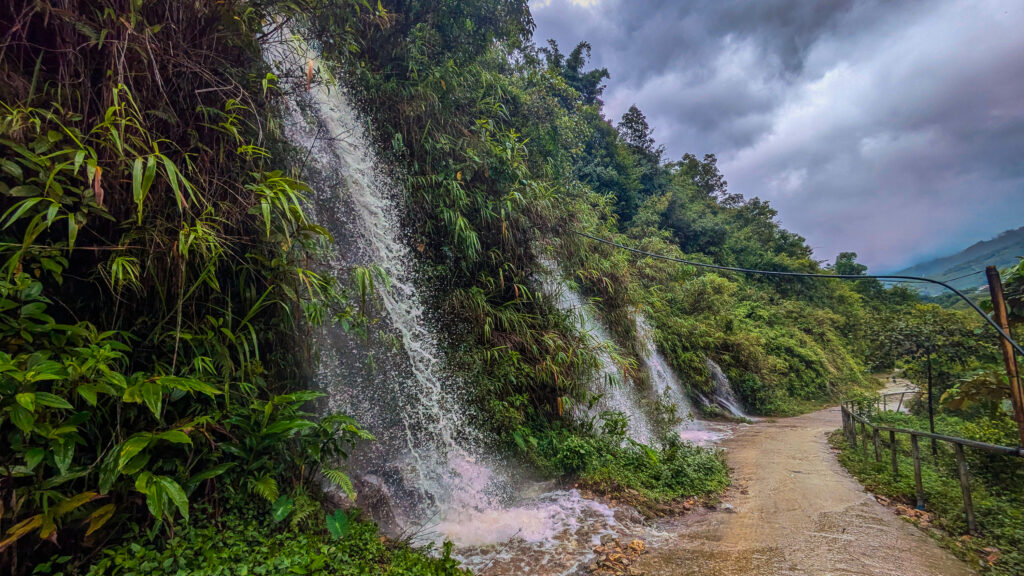
The Su Pan weir hits early — loud, fast-moving water cutting through the valley.
It grabs attention, especially for kids, and gives the start of the hike a bit of energy.
First third:
Energy is high at the start — everything feels new, and that carries you through the early sections.
But it doesn’t stay that way.
You start to notice the shift quietly —
pace slows slightly,
more questions,
more stops.
That’s the point where you either wait too long… or step in early.
We introduced a simple target: a cold Fanta waiting at lunch.
Not as a reward — as direction.
It gave her something immediate to move towards,
instead of thinking about how far was left.
The souvenir sellers: yes, the pressure is real (but manageable)
This is part of Sa Pa trekking.
They joined us along the route and set up at lunch.
Yes — there’s pressure to buy, and if you don’t handle it early, it can linger — especially with kids watching.
But they were friendly, not aggressive.
We kept it simple:
- polite
- clear
- bought something small
- moved on
That kept the interaction positive without letting it drag.
Lunch with a local family (one of the best parts of the day)
Lunch came just as things were starting to wobble.
Not fully off — but you could feel it:
slower steps, less focus, more “how much longer?”
It was set overlooking the valley, with a clear view back toward the homestay — which helped more than expected.
You could see where you’d come from, and roughly where you were in the day.
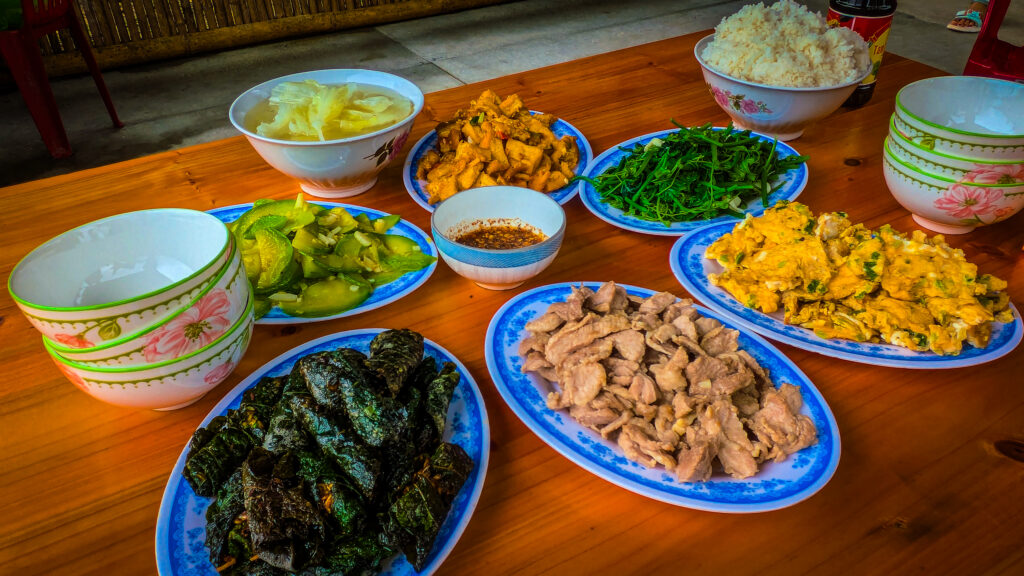
And the food wasn’t basic — it was properly good.
Fresh, home-cooked Vietnamese dishes, served by a local family who were warm and welcoming from the start:
- pork
- omelet
- tofu
- vegetables
- fruit
It hit exactly right — not just in taste, but in timing.
That matters more than it sounds.
Because when the food is good and the setting is calm,
everyone settles quicker.
The cold Fanta wasn’t just a treat — it was the target she’d been working towards since the first dip.
So instead of arriving drained,
she arrived ready.
Energy came back.
Good food at the right moment doesn’t just feed you — it stabilises the day.
And the second part of the hike started from a stable place — not a recovery.
And it set us up for the next phase.
What happened after lunch (the real turning point)
After lunch came the moment:
“Can we go back to the homestay now?”
The problem — we were only about a third of the way in.
This is where most days start to slip.
Everyone’s fed, but not fully recovered.
Energy is unstable.
The harder terrain is still ahead.
We were already thinking about how to manage it.
Then the environment stepped in.
Second third:
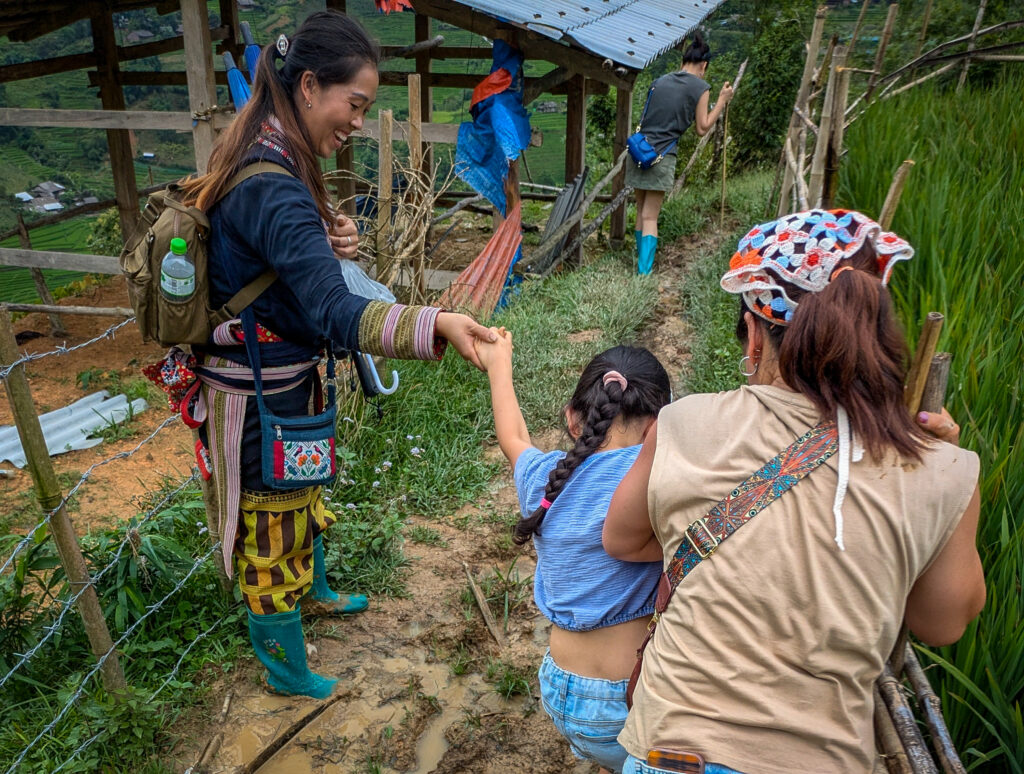
Once we got moving again, the mud took over — but in a good way.
It stopped being a problem… and became the activity.
That shift matters — because once something becomes play, you stop losing energy to it.
Stuck in the mud turned into a challenge.
At one point:
my wife got stuck shin-deep
our daughter lost her shoes four times — and started laughing about it
we all slipped around like it was part of the experience
It was messy. It could have gone the other way.
But instead, it gave the middle section exactly what it needed:
energy, engagement, and momentum.
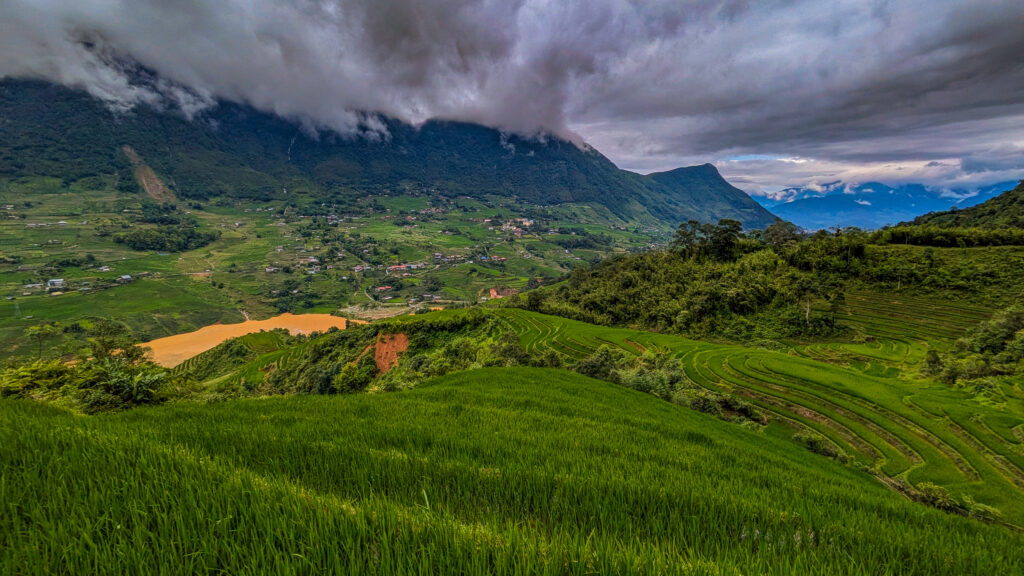
The hardest part: the final third (the climb back up the valley)
The final third is where everything you did earlier either pays off — or catches up with you.
The climb is steep.
The heat builds.
Energy dips again.
Right on cue — complaints start.
What worked:
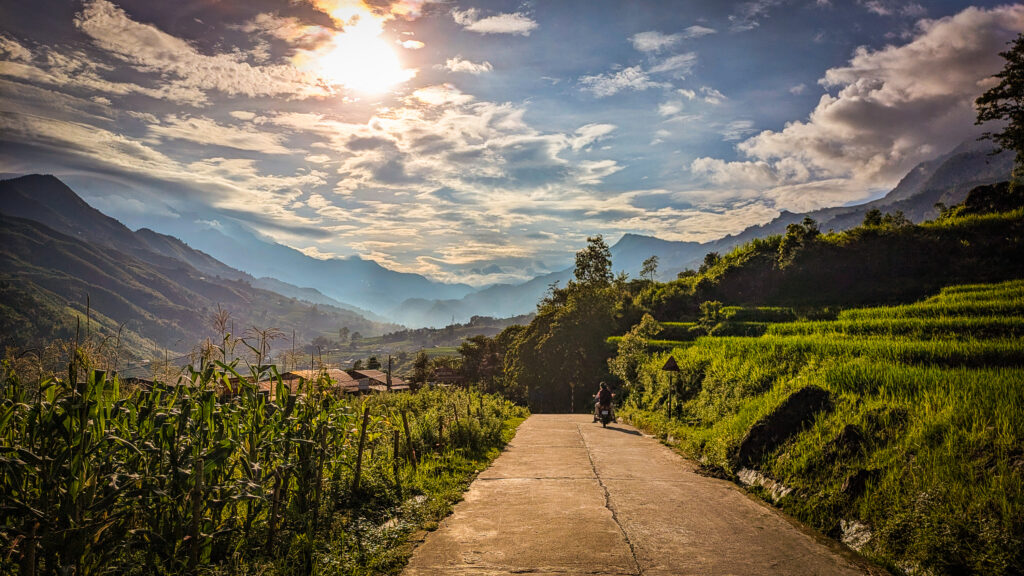
- shifting onto the river road (fun walking up a road with an overflowing stream splashing your feet )
- stopping for a drink at local vendor to cool down
- turning the last steep part of the climb into a game of tag
- having food ready at the end by calling the homestay in advance
By this point, it wasn’t about pushing through.
It was about breaking the final stretch into small, manageable moments.
What actually matters on a Sa Pa hike with kids (quick decisions that change the day)
| Moment | Adjustment | Trade-Off | Outcome |
|---|---|---|---|
| 🥾 When the trail turned to deep mud | Wore sandals instead of shoes | Less grip on steeper sections | Avoided heavy, soaked footwear slowing us down |
| 🦟 When we slowed near water and greenery | Applied mosquito protection early | Slight hassle before it felt needed | Prevented irritation building later when energy was low |
| 🧃 As energy dipped before lunch | Set a clear target (cold drink at lunch) | Small cost + relying on a stop point | Gave a short-term goal and prevented early drop-off |
| ⚖️ As energy started to dip mid-hike | Changed pace and adjusted early | Required constant attention | Prevented rushing — where slips actually happen |
| 🧠 Before the hike even started | Treated the hike in thirds | Needed to think ahead, not react | Helped anticipate dips instead of being caught by them |
| 🎯 When the mud became constant | Turned terrain into a game | Let go of a “clean” experience | Stopped frustration building in the middle section |
| ⛰️ During the final climb back up the valley | Switched to river road + used drinks + games | Added stops and slight detours | Made the final stretch manageable instead of a struggle |
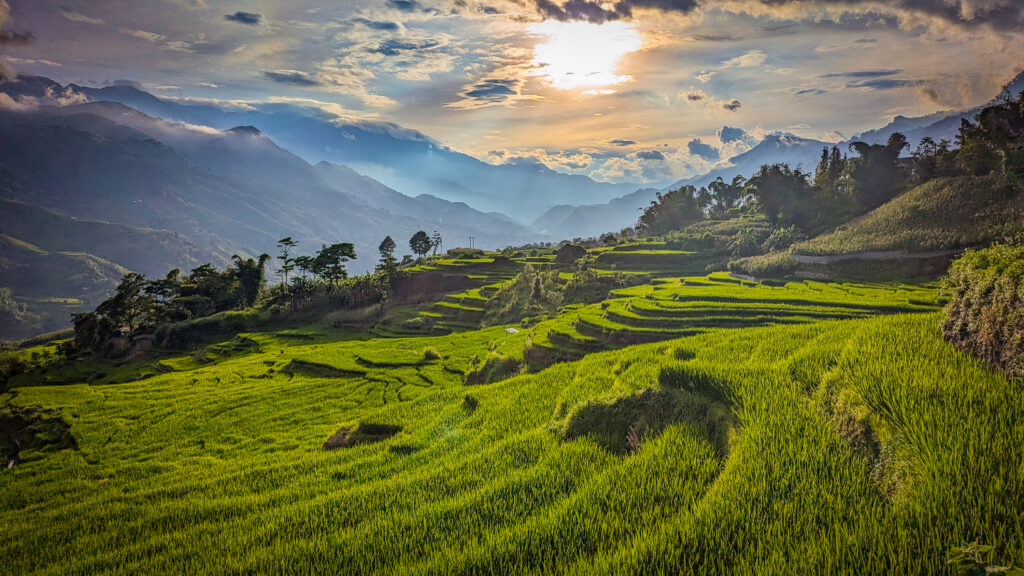
Final Verdict: Sa Pa hiking with kids is a muddy masterpiece
Trekking in Sa Pa doesn’t fall apart because the trail is too hard.
It shifts when small things are left too long.
Energy dipping.
Breaks delayed.
Pace pushed just a little further than it should be.
Handle those early, and the walk holds together.
Leave them too late — and the distance doesn’t change,
but the last few kilometres start to feel heavier than they should.
Because with kids, it’s never the full hike that causes the problem.
It’s the point where you realise you should have stopped ten minutes earlier.
And once you pass that point, you’re no longer walking through it —
you’re managing it.
But when you get it right, it feels completely different.
The path opens. The pace settles.
You’re not counting distance anymore.
You’re just moving through it — and that’s when Sa Pa actually starts to feel easy.