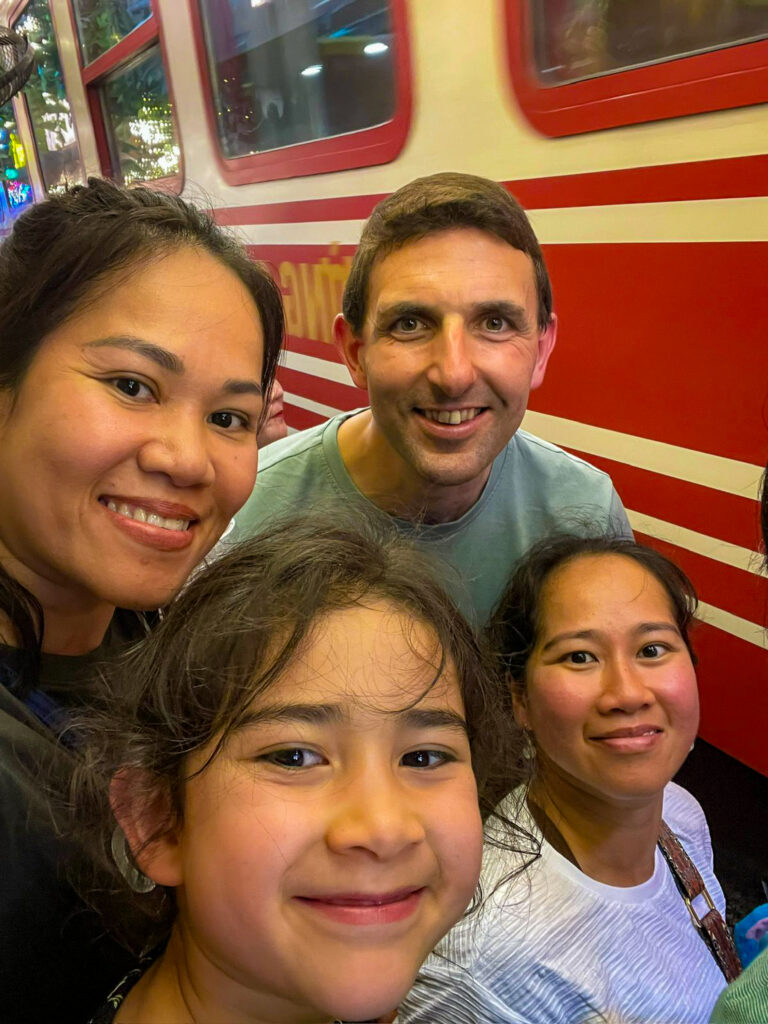
Arriving at Hanoi Train Street With Kids: What Actually Matters
It’s not the train that makes this difficult — it’s the moment you arrive and have to decide quickly
By Michael Graham | OurPixelPassport
Too much happening, not enough time to think clearly
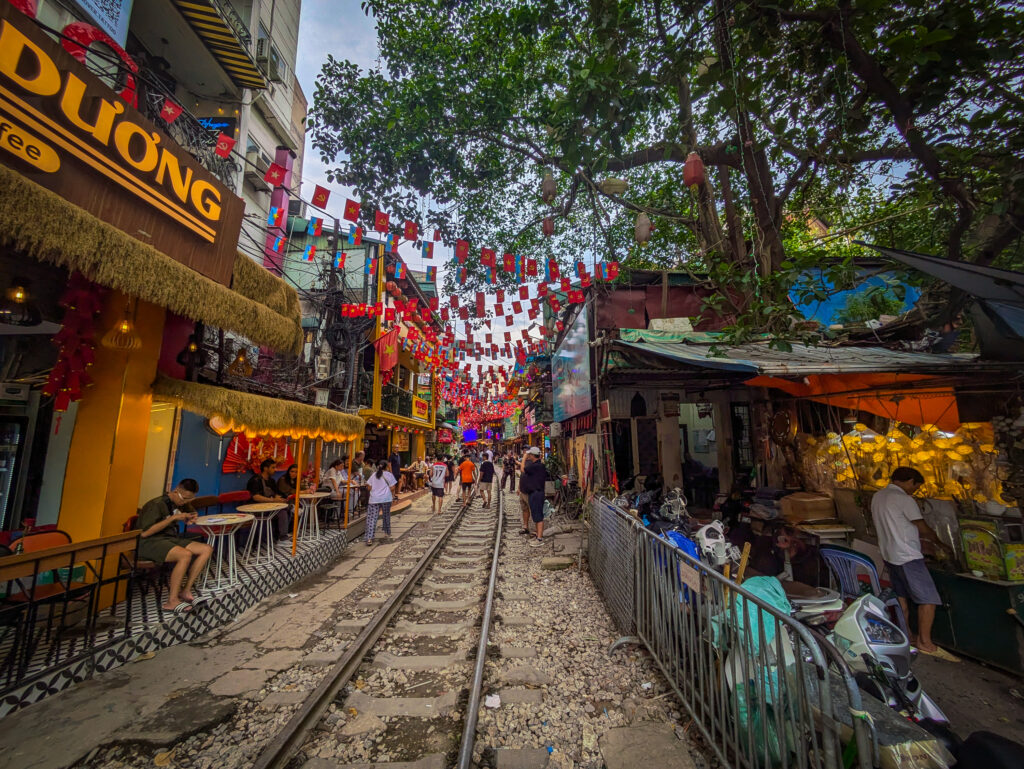
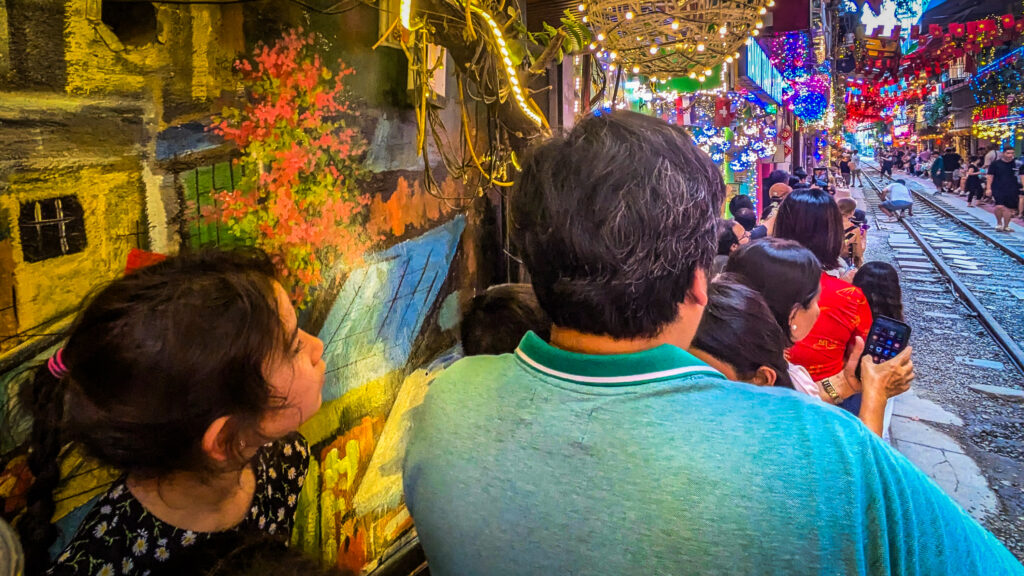
You reach the level crossing at Train Street and everything hits at once.
Traffic thundering past just metres away. Heat rising off the road. People stepping into your path, calling you over, pointing toward cafés, offering seats, drinks, the “best view.”
Your attention is being pulled in five directions at the same time.
Your child tightens their grip on your hand.
“Where are we going?”
And the honest answer is… you don’t know yet.
“Train coming in 10 minutes!
You hear it — but you don’t fully trust it.
Because you’ve read the reviews. You’ve seen the stories. Cafés saying “train soon” just to get you seated… and then nothing comes.
So now you’re trying to decide.
Who to trust.
Where to go.
Whether to wait or move.
And while you’re figuring that out, everything around you keeps pulling for your attention.
Nothing has gone wrong.
But you can feel how it could. This isn’t a controlled attraction — it’s a live railway running through people’s homes.
So instead of trying to get it right, we made a call and moved.
Not because we were sure — but because standing still was already making it harder.
That one decision changed everything.
The noise dropped. The pressure eased. Our daughter settled almost immediately.
And that’s really what Train Street tests.
Not the train.
How quickly you deal with the moment before it builds.
We visited in July (early afternoon on a Sunday) with our 7-year-old, and this is what it was really like — what felt controlled, what didn’t, and how to handle it properly if you decide to go.
Quick Answer: Yes… but only if you do it the right way
Yes — Train Street can be safe to visit with kids.
But only if you deal with that first moment properly.
What catches people out isn’t the train — it’s hesitation. Standing there too long, trying to figure it out while everything around you keeps pushing for a decision.
Once we committed to a café, the whole experience shifted from reactive to manageable.
The trade-off is you give up the chance to compare or find the “best” spot.
But with kids, removing that pressure early matters more.
It’s also true that it’s not for everyone.
It can feel:
- busy
- cramped
- a bit claustrophobic
- overwhelming if your child doesn’t like crowds
For us, it was a one-off “tick the box” moment — and honestly, it was worth it.
What is Train Street in Hanoi?
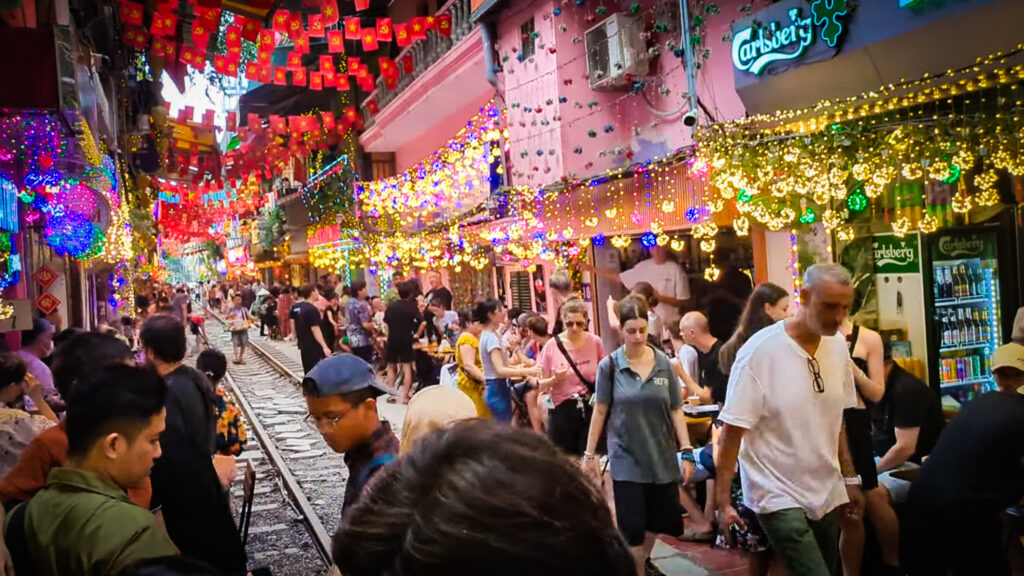
Train Street is a residential lane where the railway line runs directly through a narrow street, with cafés and homes pressed tight against the track.
When the train comes, the whole street shifts in seconds:
- chairs disappear
- people are repositioned
- café owners take control
From the outside, it looks chaotic.
But once you’re settled somewhere, it feels structured.
The key thing to understand is this:
There’s no real public space to stand.
If you don’t anchor yourself somewhere, you’re constantly adjusting — and that’s where it starts to feel uncomfortable.
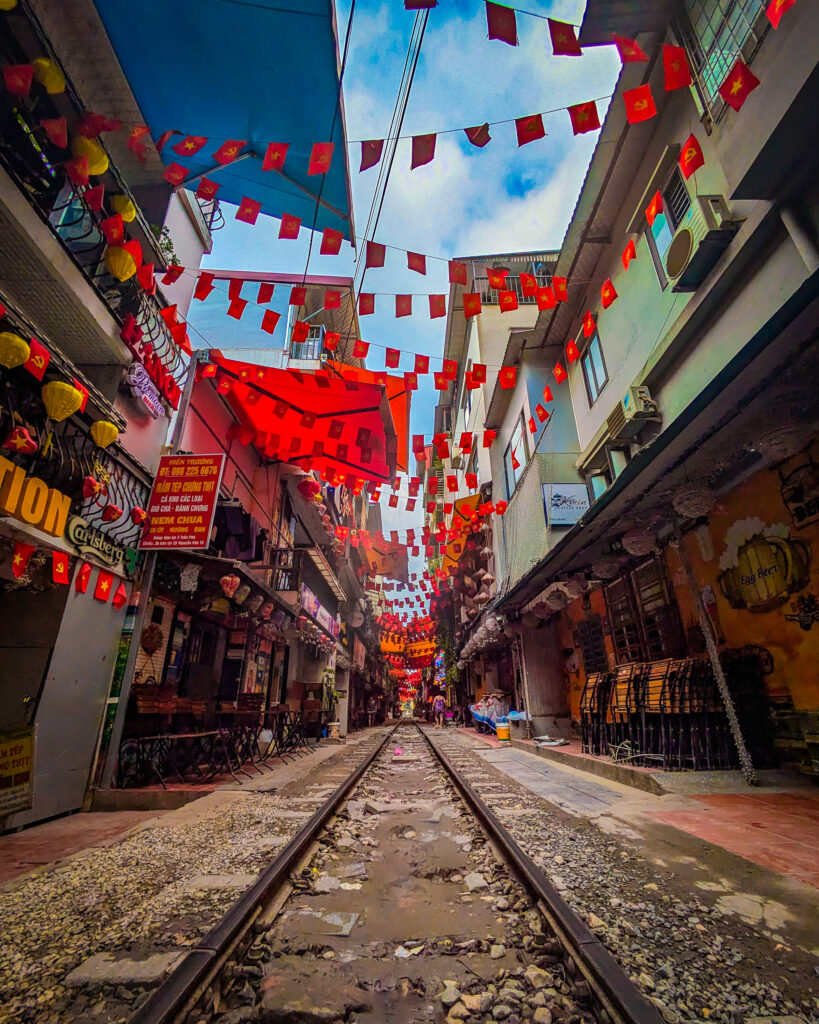
Our First Impressions (July 2025, Sunday Afternoon)
It had been 10 years since I’d last been in Hanoi, so I was excited to get moving again.
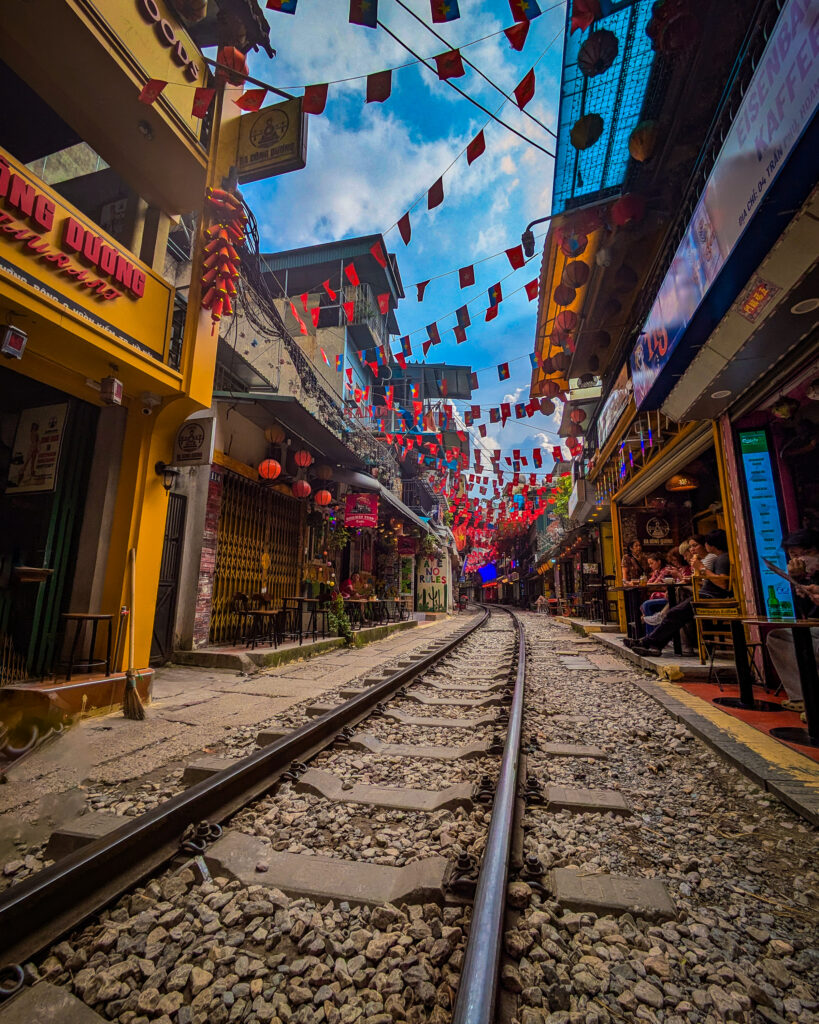
But Train Street doesn’t ease you in.
It was already busy:
- tourists everywhere
- cafés packed
- people trying to pull you in
It’s the kind of place where, if you pause, you’re suddenly in multiple conversations at once.
That’s what started happening to us.
Different people telling you different things. You’re trying to read the situation while also keeping your child close and calm.
We could feel it building.
So we stopped trying to get it perfect — and just chose.
That decision settled everything down almost instantly.
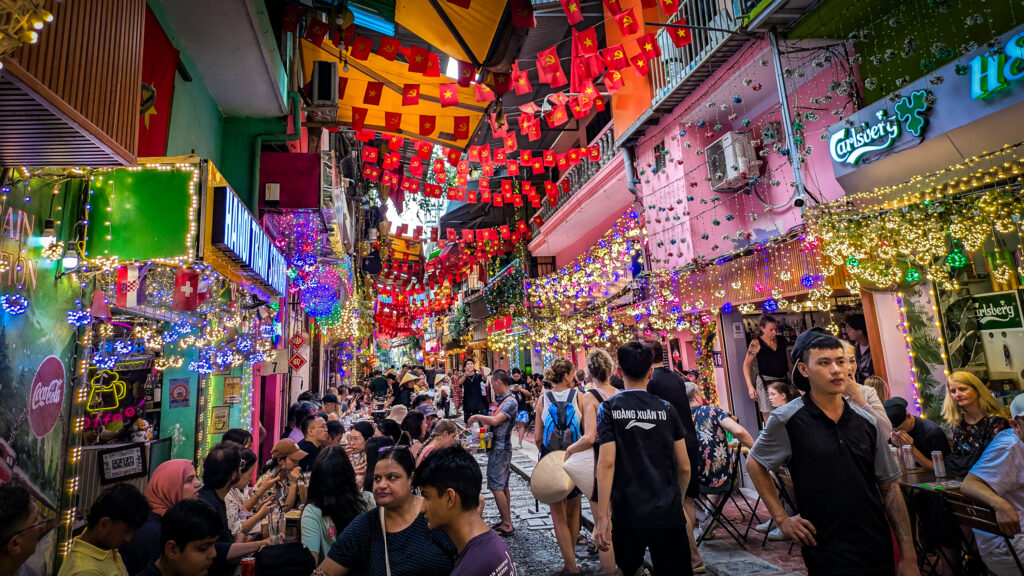
The Café Rule: You can’t just stand anywhere (and yes, it’s enforced)
One thing becomes clear quickly:
If you’re not buying something, you don’t really have a place to be.
We saw a group stopped for photos and politely moved on.
At first, it feels restrictive.
But once you’re seated, everything changes.
You’re no longer shifting position or negotiating space.
You’ve traded a bit of money for stability — and in this environment, that’s a good trade.is simple: be predictable.
Stopping or speeding up mid-crossing creates uncertainty.
Once you move at a steady pace, traffic adjusts.
Movement becomes continuous.
With a child beside you, this matters more.
If you hesitate, they hesitate.
If you move, they follow.
The trade-off is giving up the idea of full control.
But in return, the situation works.
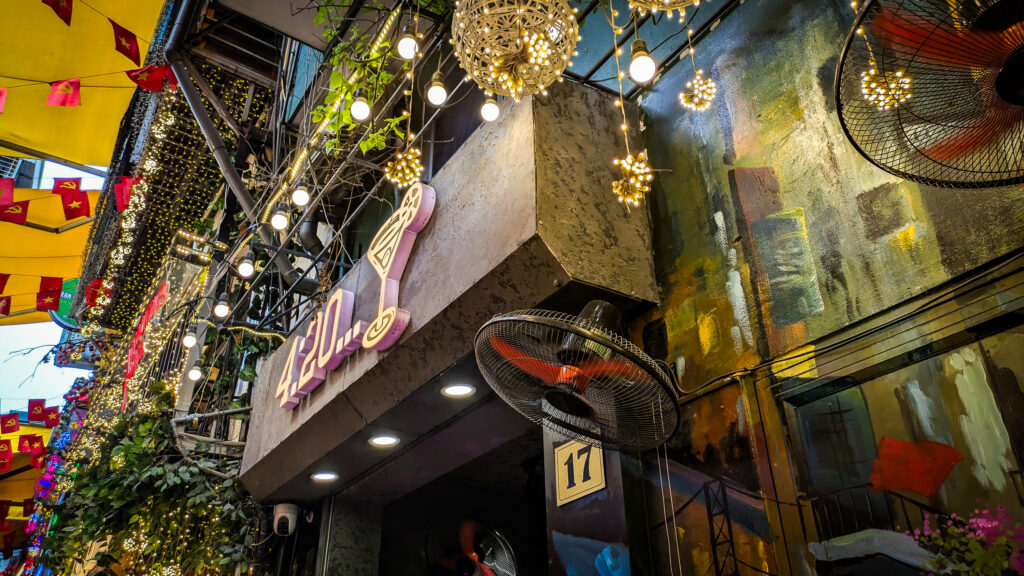
The café we chose (and why it mattered)
We ended up at 4:20 Bar near the level crossing.
A rep told us the train would come soon — and this time, it actually did.
We sat down, ordered drinks, and took a breath.
Up until that point, we were managing the environment.
After that, it felt controlled.
Our daughter relaxed almost immediately — not because anything dramatic changed, but because we stopped moving and deciding.
Honest review:
- food was average
- drinks were better
- prices were fair
- overall, a pleasant experience
There was a small mix-up on the bill, but it was corrected quickly without issue.
Would I go there for the food? No.
But that wasn’t why we were there.
When the train came: the street changed instantly
A bell rang — and everything shifted.
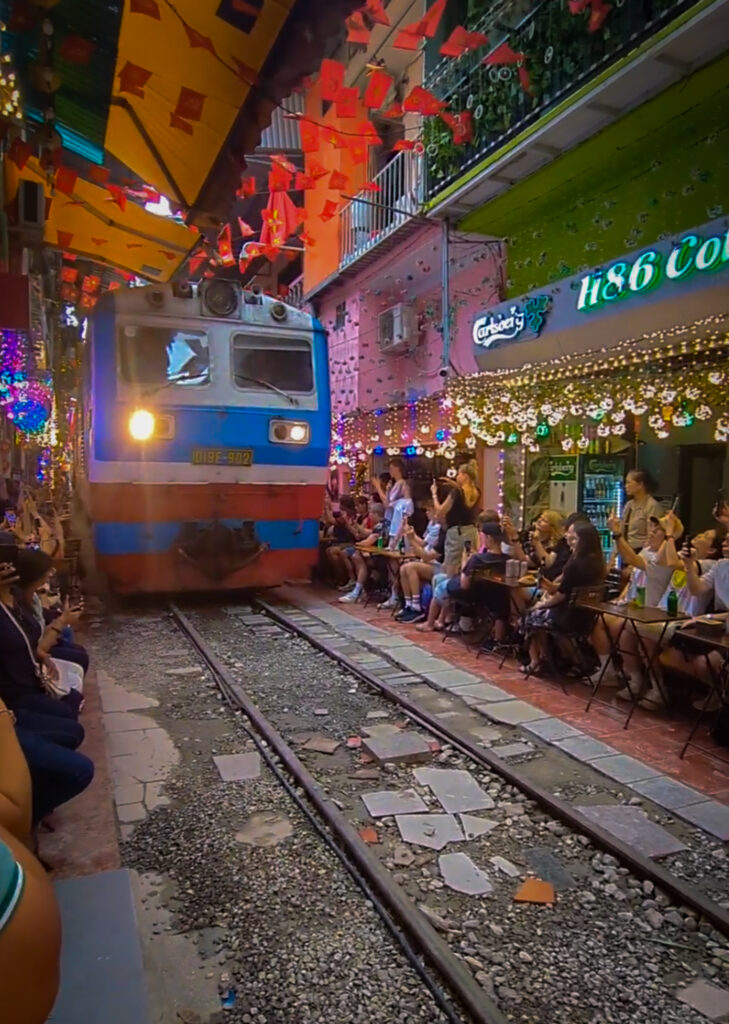
Chairs were pulled back fast. People repositioned. Café staff became direct and focused.
The tone changed. When the train is coming, you don’t decide where to stand — you follow exactly where café staff place you.
Our daughter noticed it straight away.
She looked up — not scared, just checking.
That moment matters.
Because it feels intense, and if you hesitate, it can feel chaotic.
But if you follow instructions, it actually feels controlled.
What looks chaotic from the outside is what keeps it safe in reality.
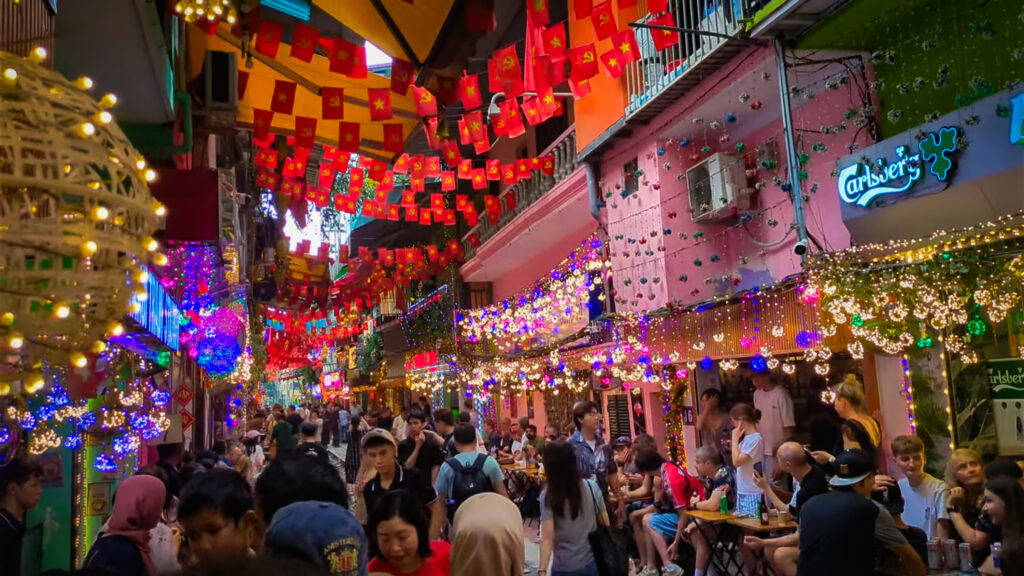
So… is it safe with kids?
With kids, this isn’t something you manage casually — it’s something you stay fully in control of the entire time.
It’s safe when controlled — but not forgiving if you get it wrong.
We kept it simple:
- she stayed against the wall
- we kept people between her and the track
- she stood on a chair to see
- one of us held her hand the whole time
No running. No stepping out. No “just for a photo.”
That’s the difference.
You’re not there to relax — you’re there to manage the moment properly.
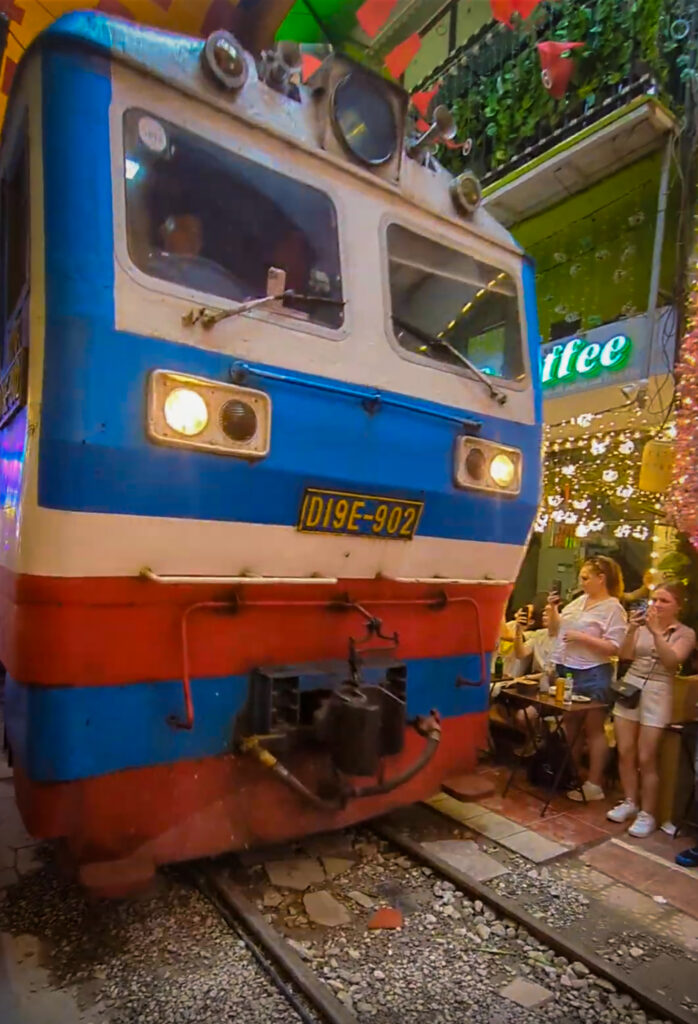
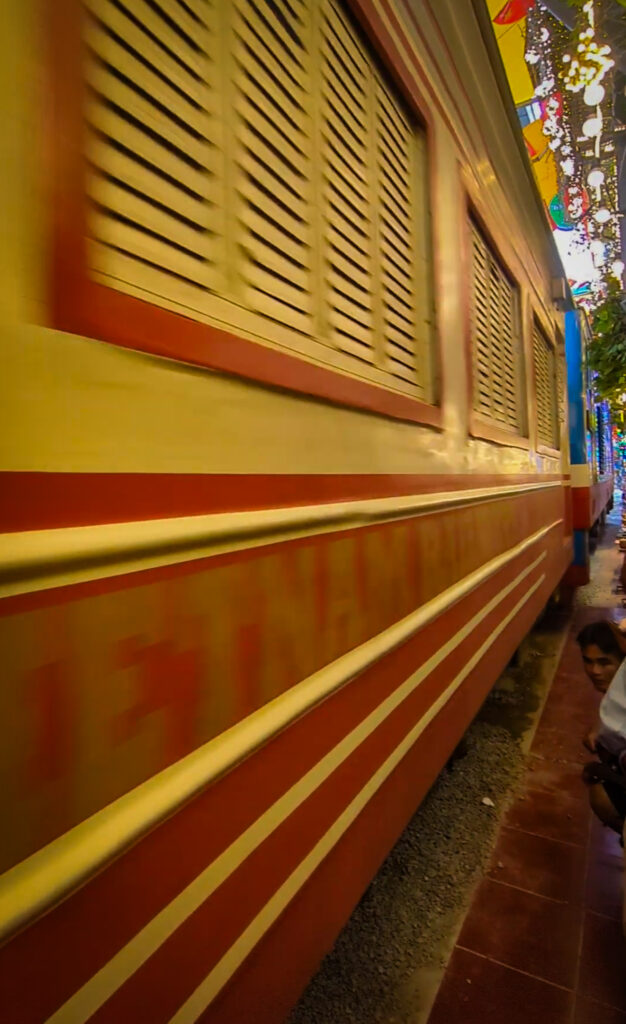
How close is the train really?
Closer than you expect.
That’s what makes it feel surreal.
But it also forces you to stay aware.
Even moving slowly, it’s close enough that any sudden movement would matter.
That’s why the structure around it is so important.
What Parents Need to Know Before Going
| Situation | What it Means in Reality | What to Do |
|---|---|---|
| Your child is curious, calm, and follows instructions | They’re more likely to stay in position when things get busy and intense | This can work well — as long as you stay consistent with positioning and rules |
| Your child is anxious or easily overwhelmed | The noise, crowds, and sudden shifts can build quickly | Expect stress to rise fast — this is where the experience can turn |
| Your child moves unpredictably or doesn’t follow instructions | Close proximity to the track leaves no margin for sudden movement | This isn’t the right environment — skipping it avoids a difficult situation later |
Reality check:
Skipping Train Street isn’t missing out — it’s avoiding a situation that doesn’t suit your child.
Practical note:
Strollers are not practical here. Space is tight, movement is constant, and you’ll be repositioning quickly.
in Timing: What to Expect
| Situation | What Happens | How to Handle It |
|---|---|---|
| You arrive and the train comes quickly | Everything flows — decisions feel validated | This is the ideal scenario (we got it in ~10 minutes) |
| The train is delayed or unclear | Waiting starts to drag, kids lose patience, second-guessing kicks in | Ask upfront — but don’t rely on exact timing |
| You start reconsidering your choice | Momentum drops, frustration builds | Stay put once you commit — moving resets the whole process |
My Hard Rules (Non-Negotiable)
| Rule | Why It Matters | What It Prevents |
|---|---|---|
| Child stays against the wall | Keeps maximum distance from the train | Sudden movement into risk space |
| Hand held at all times | Maintains control in a busy, shifting environment | Losing position in a critical moment |
| No stepping onto the tracks | Removes false sense of safety when it’s “quiet” | Risky behaviour creeping in before the train arrives |
| Follow instructions instantly | Staff control the timing and positioning | Hesitation when speed matters |
Bottom line:
No negotiation in the moment — clarity here is what keeps it controlled.
Day vs Night
| Option | What Changes | Trade-Off |
|---|---|---|
| Daytime | More visibility, easier to manage positioning | Less dramatic atmosphere |
| Night | More people, tighter space, more noise | Harder to control with kids |
Call:
Day works better for families — night increases pressure across the board.
Better Alternative: Early Morning
| Option | What You Gain | What It Costs |
|---|---|---|
| Early morning visit | Fewer crowds, more space, simpler decisions | Requires an early start |
Reality:
This removes most of what makes Train Street difficult — but only if the timing works for your family.
Train Street doesn’t fall apart because something goes wrong.
Train Street doesn’t fall apart because something goes wrong.
It slips when small decisions are delayed.
Where you stand.
How long you hesitate.
Whether you commit or keep second-guessing.
Handle those early, and everything settles into place.
Leave them too late — and hesitation doesn’t just slow things down.
It puts you in the wrong place at the wrong time.
Because in family travel, it’s never the big moment that breaks — it’s the small ones you didn’t deal with early.
And when it’s done, you feel it straight away.
The train passes. The noise drops. Chairs come back out. People start talking again.
Your child relaxes. You finally take a breath.
Nothing dramatic changed.
But everything feels different — because you stayed ahead of the moment instead of reacting to it.