The Moment Crossing the Road in Vietnam Stops Feeling Impossible (And What Actually Makes It Work)
Why crossing the road feels overwhelming at first — and how small decisions make it manageable, especially with kids beside you
By Michael Graham | OurPixelPassport
The moment it stops being simple — standing at the side of the road
You’re standing at the edge of the road in Hanoi, trying to cross over to Hồ Hoàn Kiếm Lake.
It should take seconds.
It doesn’t.
The heat builds first — no shade, no breeze, just constant exposure.
Scooters stream past in every direction, engines buzzing, horns cutting through.
You look for a gap. There isn’t one.
A small hand presses into yours.
“Can we go now?”
You wait. Then wait again.
Nothing changes.
So you adjust.
Instead of waiting for a gap, you step forward slowly.
Not rushed. Not hesitant. Just steady.
The first few steps feel wrong.
Then traffic bends around you.
You keep moving, you reach the other side.
And just like that, the situation holds
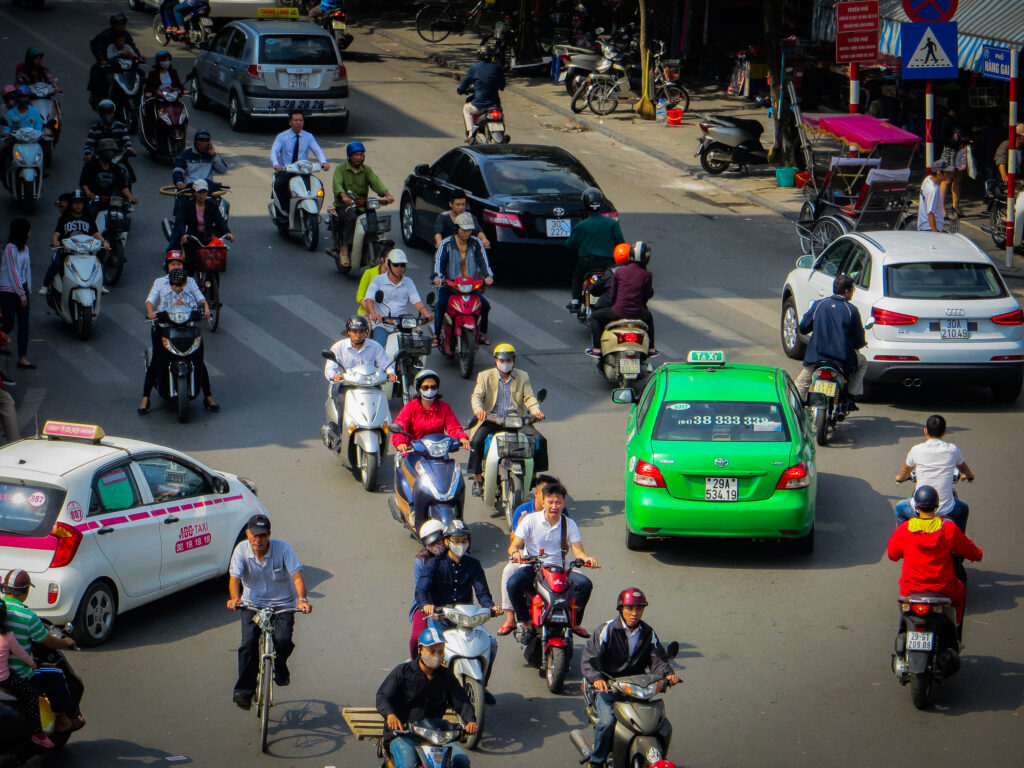
Quick answer: it looks chaotic — but it’s controlled chaos
It looks chaotic — but it runs on predictability.
The instinct is to wait for a clear gap — but that gap doesn’t come.
The shift happens when you stop waiting and start moving.
The trade-off is committing earlier than feels comfortable.
But that early movement removes the standstill that delays everything else.
With a child beside you, hesitation doesn’t just slow things down — it transfers pressure straight onto them.
Once you understand what drivers expect, the situation becomes manageable.
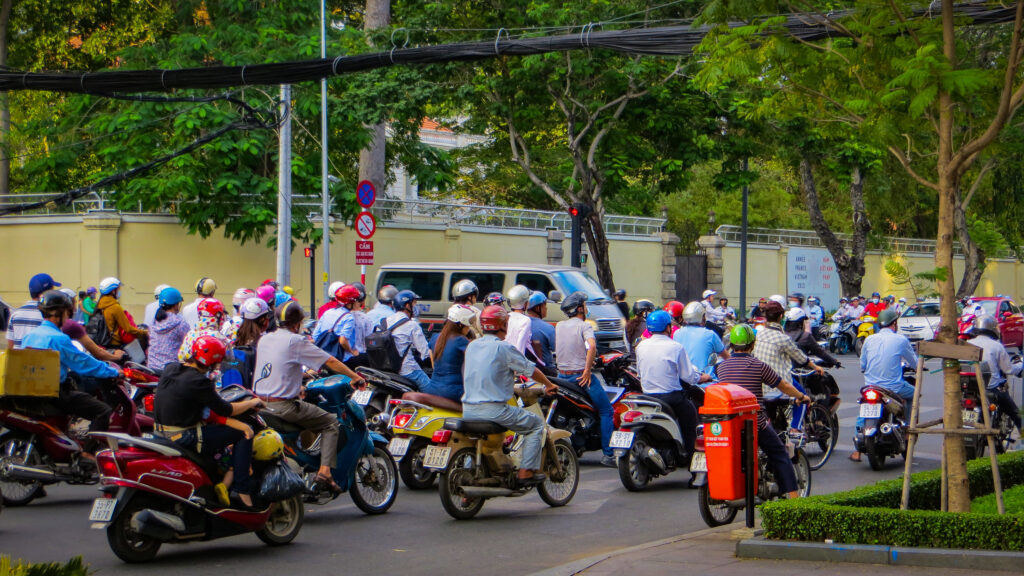
My first crossings: Hanoi (2011) to Saigon (2013)
For me, it started in Hanoi in 2011, trying to cross toward Hồ Hoàn Kiếm Lake.
Back then, hesitation didn’t carry consequences beyond the moment.
If I waited too long, nothing really changed.
The first time in Saigon in 2013 was much the same — step forward and trust something you don’t fully understand yet.
What changes over time isn’t the traffic — it’s your timing.
Act earlier, and the situation settles faster.
Wait too long, and it becomes harder than it needs to be.
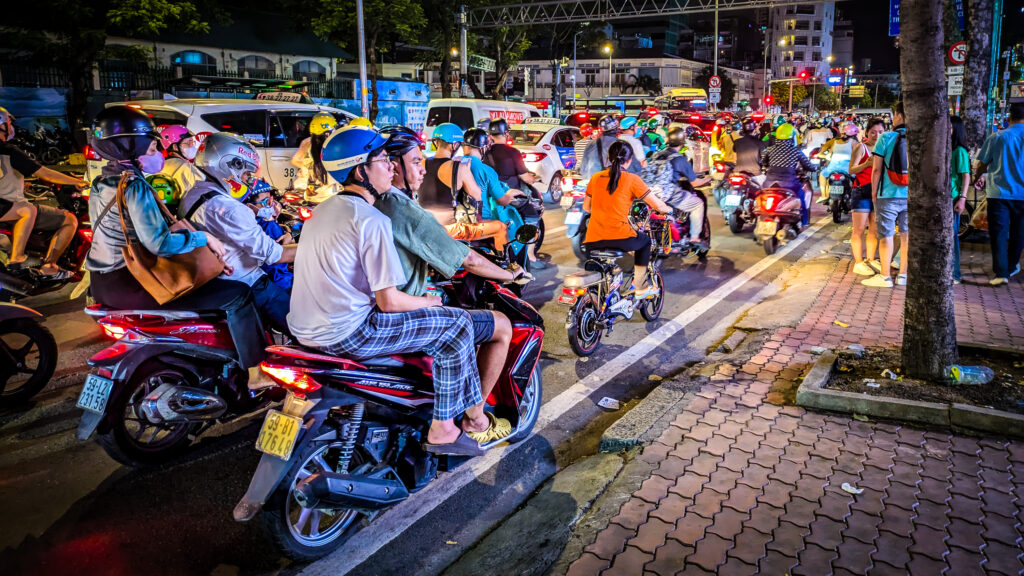
The rhythm you have to trust
You’ll hear it said:
“Walk at a steady pace, don’t stop, don’t panic.”
The rule is simple: be predictable.
Stopping or speeding up mid-crossing creates uncertainty.
Once you move at a steady pace, traffic adjusts.
Movement becomes continuous.
With a child beside you, this matters more.
If you hesitate, they hesitate.
If you move, they follow.
The trade-off is giving up the idea of full control.
But in return, the situation works.
The funny part? You eventually become the “expert”
At some point, it flips.
You’re no longer the one waiting — you’re the one stepping out and expecting others to follow.
Friends and family pause in the same place you did.
You’re not braver.
You’re deciding earlier.
And that’s what keeps things moving.
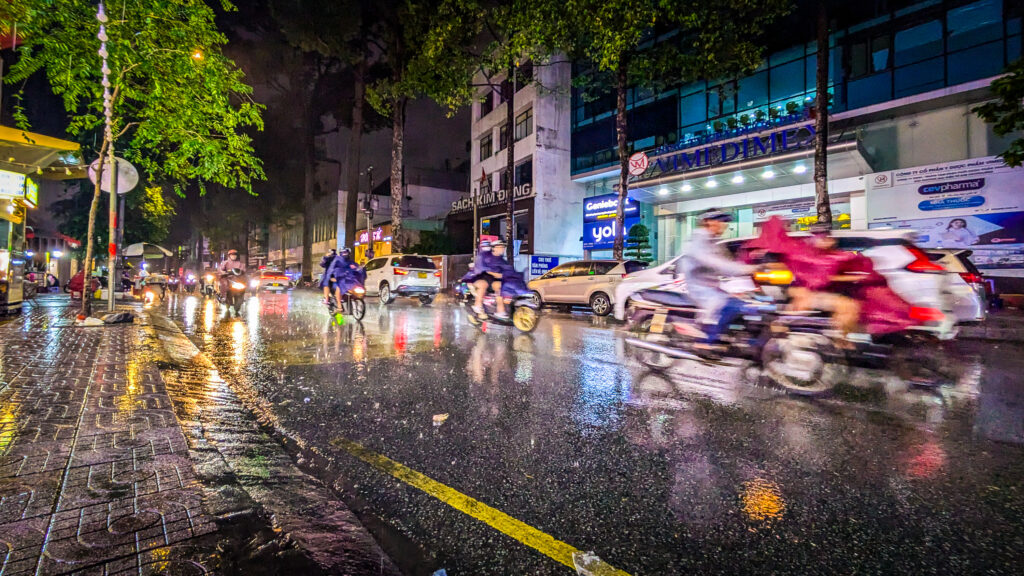
The moment that reminded me: confidence isn’t enough
The scariest encounters are always the buses.
In 2019, trying to manoeuvre our daughter’s buggy onto the pavement in heavy rain, one passed close enough to stop your heart for a second.
Everything tightens.
You’re not just crossing anymore.
You’re managing space, weight, timing — knowing you can’t adjust quickly if you get it wrong.
The decision isn’t to move — it’s to wait.
That pause costs time.
But it resets control.
Confidence would push you forward.
Judgement holds you back just long enough to stabilise the situation.
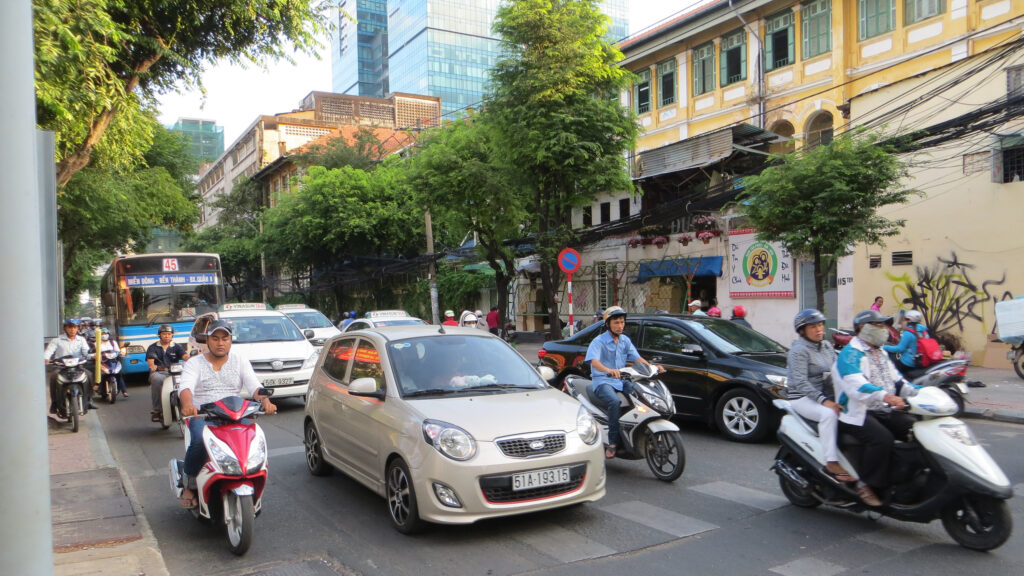
How to cross the road in Vietnam without panic (what actually works)
With children, this isn’t about getting across quickly.
It’s about removing uncertainty early so the moment stays controlled.
✅ Use pedestrian lights where they exist — but don’t rely on them completely
They reduce the initial decision, but traffic doesn’t fully stop.
✅ Step out at a steady, predictable pace
This is the key shift — from waiting to moving.
✅ Scooters will flow around you if you hold your line
✅ Avoid crossing when buses or fast-moving traffic dominate the road
This is one of the few moments where waiting is the better choice.
✅ Blind faith helps — but judgement matters more
✅ With children, you set the pace and position
They follow your movement. Hand held at all times
✅ Respect the rhythm of the road
Drivers respond to movement.
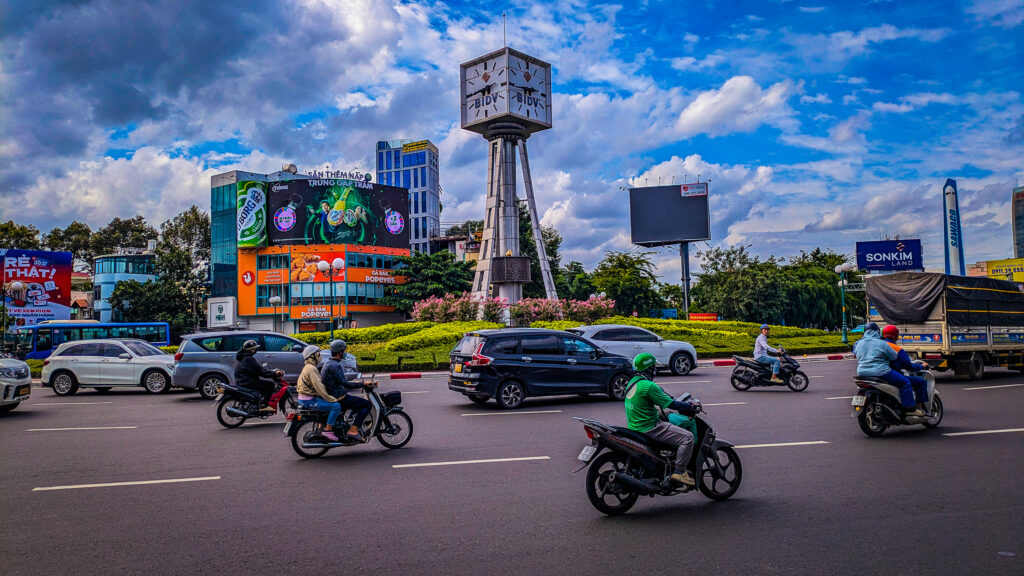
Final thought: over time, the chaos becomes readable
When you reach the other side, there’s always that brief pause.
Because what felt unclear a moment ago now makes sense.
The traffic didn’t change.
Your timing did.
Wait too long, and everything builds.
Act early, and the situation holds.
And that’s the wider pattern.
It’s not the big moments that shape a day.
It’s the small ones where nothing happens — until too much has built.
Handle those early —
and everything else moves without needing to be fixed later.