The Taxi We Should Never Have Taken in Saigon (And What It Taught Us About Arriving Right)
How a simple airport transfer turned into a situation we couldn’t control — and why it happens to tired arrivals
By Michael Graham | OurPixelPassport
The moment you stop thinking clearly — right after you land
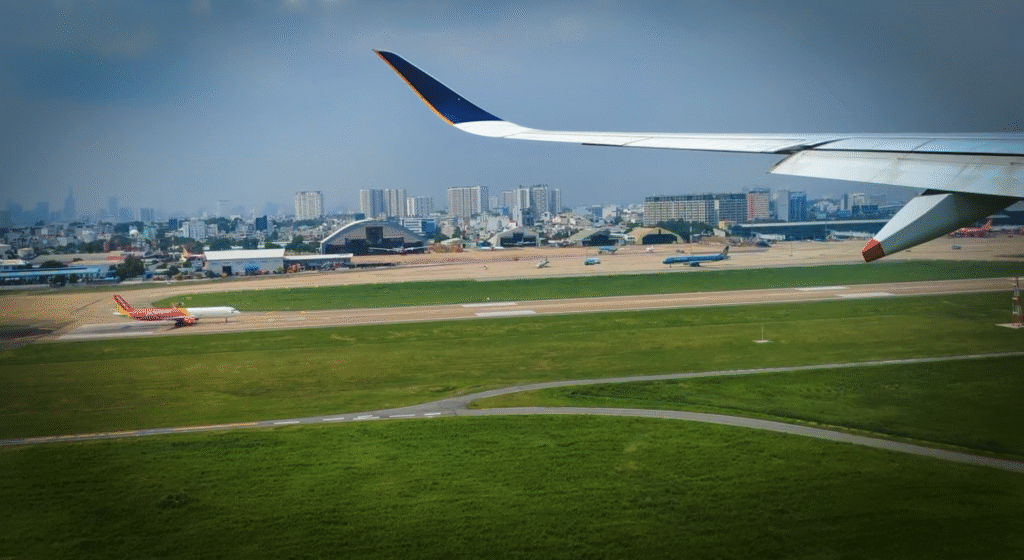
It’s your first time landing in Saigon.
A long-haul flight behind you, followed by over an hour inching through passport control. By the time you’re through, your child is half-asleep on the floor beside you — something we’ve stood through ourselves.
At the baggage belt, your bags are already sitting in a growing pile — a quiet signal you’re now moving slower than everything around you.
You lift them. Onto trolleys. Through customs. Off again.
Everything takes effort.
And then the doors open.
Heat. Noise. People — all at once.
This is the part no one really prepares you for.
Not because you don’t know what to do —
but because you don’t have the headspace to do it properly anymore.
You’re not choosing transport — you’re choosing the fastest way to end the moment.
And anything that offers an exit, quickly, starts to feel like the right answer.
The taxi we absolutely should not have taken
That mistake didn’t happen with kids.
It happened years earlier — our first time landing in Saigon, arriving with a friend, thinking we had it covered.
We didn’t.
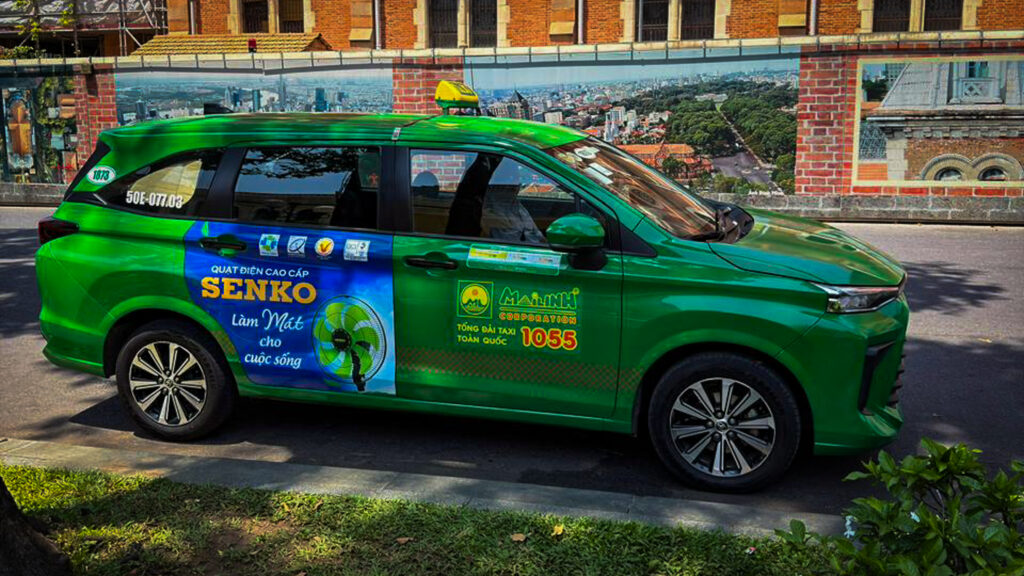
We’d been told to look for Vinasun or Mai Linh taxis — bright, official, regulated, with meters that don’t play games.
But there we were, bags hanging off us, the heat softening everything, when a man stepped forward, pointed to a car, and said the one word you’re waiting to hear:
“Taxi?”
It looked right.
It had a meter.
The driver smiled.
That was enough — because at that point, anything that moved us forward felt right.
Not because we didn’t know better —
but because “close enough” felt easier than thinking any harder.
We didn’t have kids with us then — which is probably why we thought we could figure it out on the fly.
But the conditions were already there: heat, noise, fatigue, and the need to just move.
Getting into that car didn’t solve anything.
It just meant the problem hadn’t started yet.
When the price starts moving
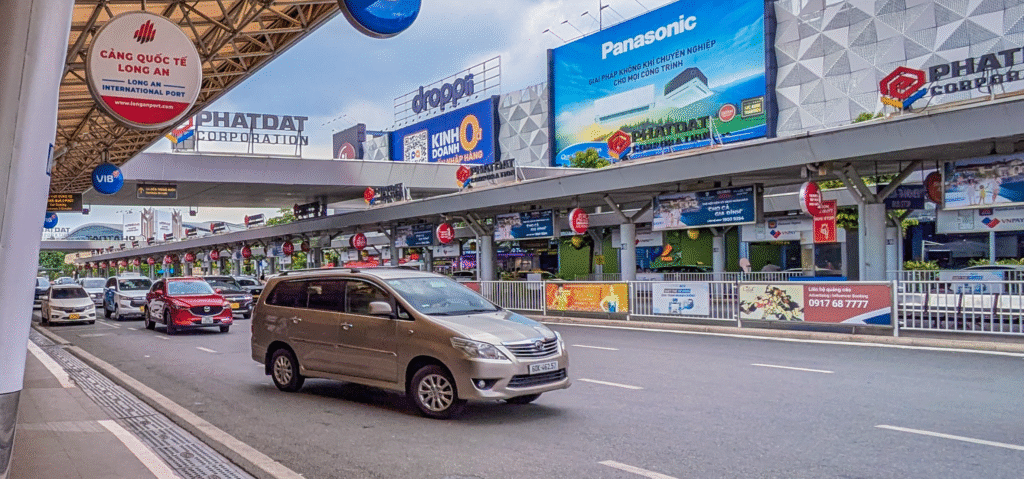
TIt began at the airport toll booth — the first moment where things started to tilt.
What should have been a small, fixed charge — around 10,000 VND — suddenly became:
“Five dollars.”
A pause. A glance between us.
Before we had time to question it, it shifted again:
“Ten dollars.”
That was the shift — from a normal journey to one where we were no longer sure what was real.
When you don’t know what’s normal, almost anything can sound plausible enough to keep things moving.
So we paid.
Not because we agreed —
but because ending the situation mattered more than questioning it.
When control shifts
This is where it changes.
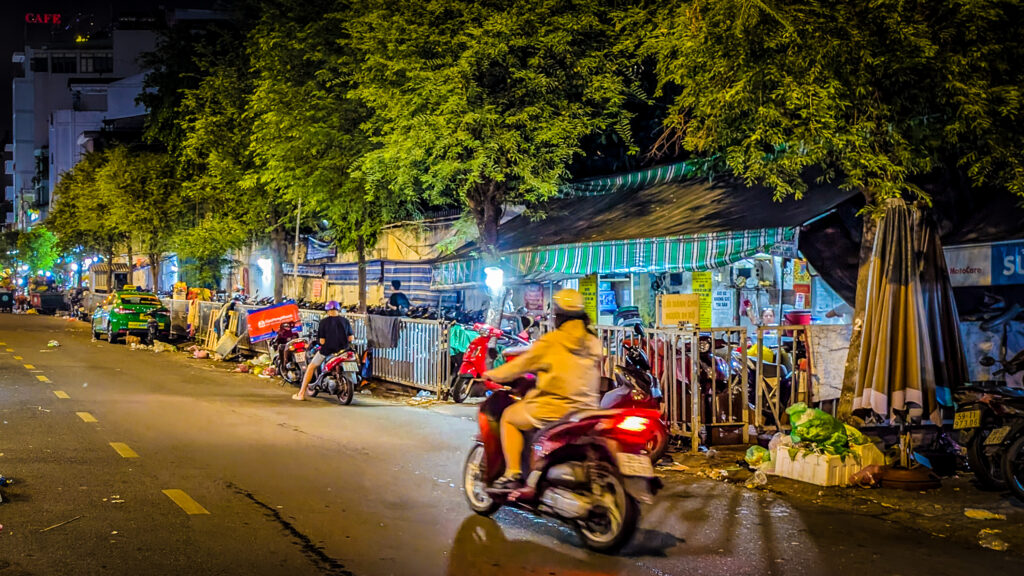
Instead of pulling up outside the hotel, he turned into a dim side street nearby, stopped the car, and locked the boot with all our luggage inside.
“Fifty dollars.”
At that point, it was clear:
— we were stuck
— our bags were the leverage
— we were no longer in control
Once the car stopped and the boot stayed closed, we weren’t deciding anymore — we were reacting.
So we paid — not because we agreed, but because ending the situation mattered more than winning it.
What we do differently now
In the years since, we’ve been back many times — now as a family.
And that situation has never happened again.
Not once.
Because we changed how we arrive.
We don’t guess anymore.
At the airport, we go straight to the official taxi stands and speak to the staff managing the queue. They assign the driver, and the meter is expected to be used.
If we’re not using a taxi, we book through Grab — the Southeast Asia version of Uber — where the price is set before you get in.
And if something doesn’t feel right, we don’t negotiate.
We get out. Immediately.
It’s led to awkward moments.
Once in Ha Long, when our daughter was just under two, a driver refused to start the meter.
We asked again.
He didn’t.
So we told him to stop.
He drove about 100 metres, pulled over, and told us to get out.
It wasn’t comfortable.
It wasn’t ideal.
But it was still better than staying in a situation we didn’t control.
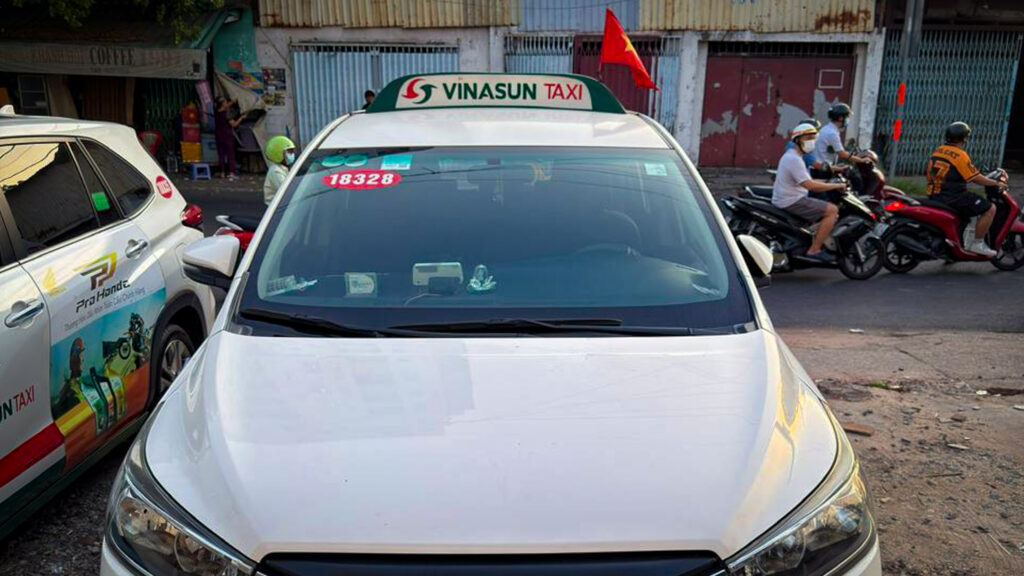
How to get into Saigon without getting scammed.
🛂 Use the official taxi queue
You’ve just landed — and everything in you wants the fastest way out.
Inside the airport arrivals area, follow signs for the taxi rank.
Don’t stop when someone approaches you.
Don’t engage.
Don’t second-guess it.
Walk straight through to the managed queue and deal only with the staff assigning drivers.
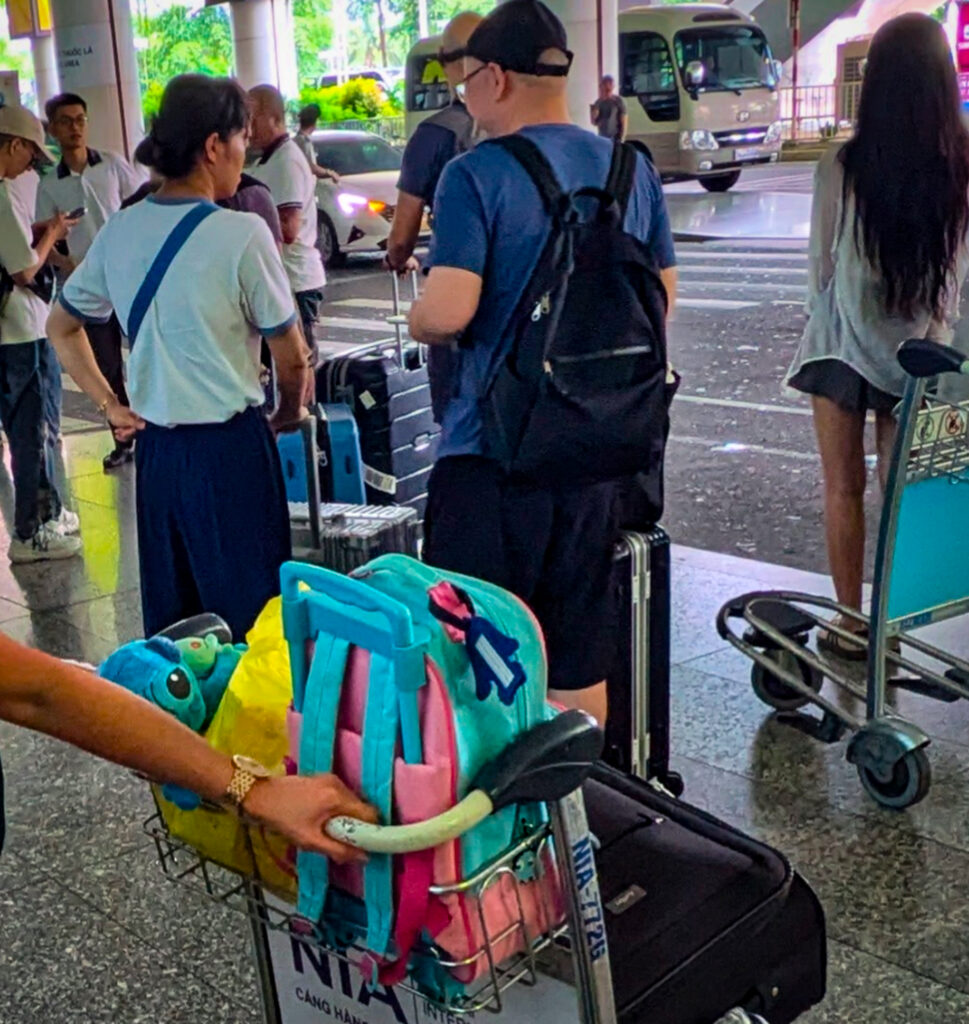
👉 That one decision removes the moment where most people go wrong.
🚖 Choose the right companies
We were told this — and ignored it.
We were told this — and ignored it.
Look for:
- Vinasun Taxi (white with green/red stripes)
- Mai Linh Taxi (green)
Not “something similar.”
Not “close enough.”
Fake taxis don’t stand out — they pass just enough to be accepted when you’re not thinking clearly.
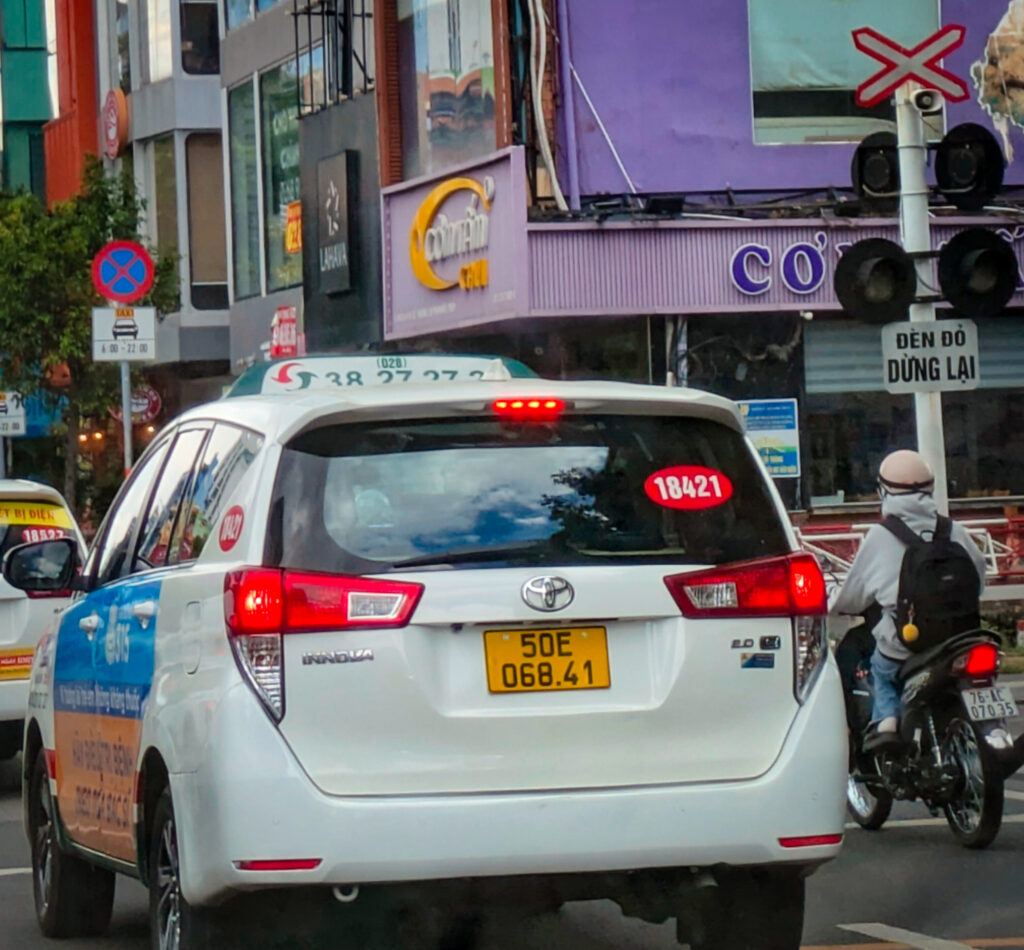
👉 The difference is small visually — but massive in outcome.
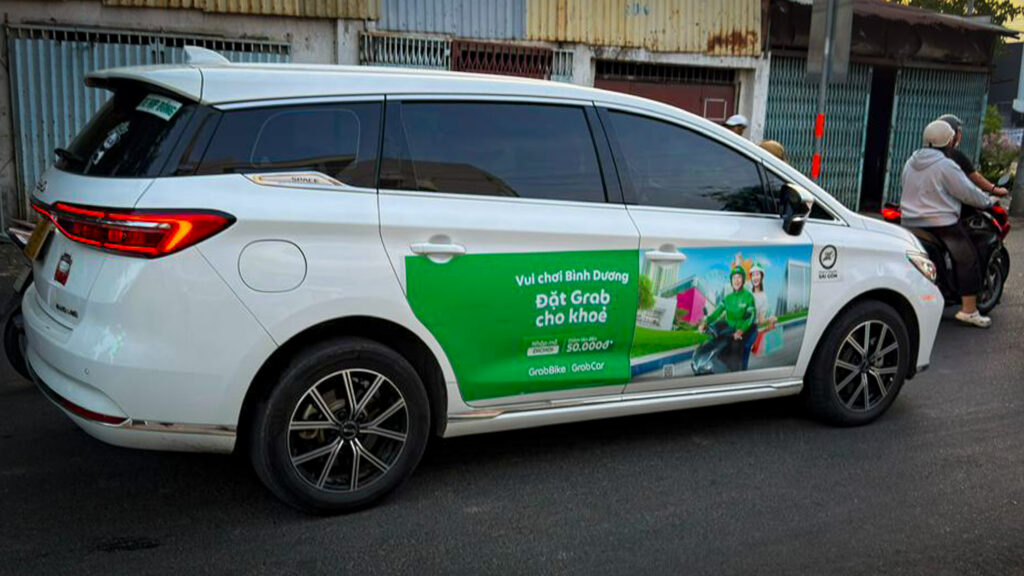
📱 Use Grab if you want zero uncertainty
Grab is Southeast Asia’s version of Uber — but more importantly, it removes the need to figure anything out when you land.
You book in the app, follow the pickup point, and get into the exact car assigned.
- price is set before you get in
- no negotiation, no “extra charges”
- driver is tracked in real time
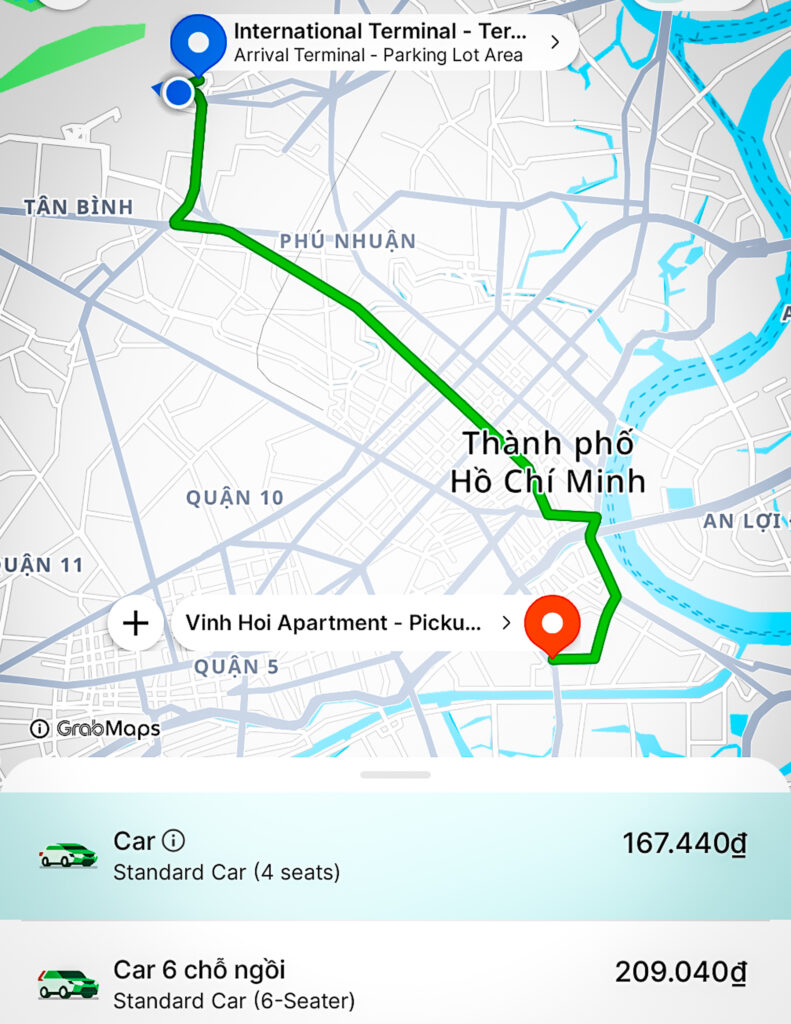
The key difference isn’t convenience — it’s clarity.
You know what you’re paying.
You know who you’re getting.
And you’re not making decisions in that arrival fog.
👉 When you’re exhausted, removing decisions is more valuable than saving a few euro.
🏨 Hotel pickup = no decisions at all
🏨 Hotel pickup = no decisions at all
Especially with kids, late arrivals, or when you’re running on empty.
Your hotel sends a driver.
They’re waiting with your name.
You walk straight out and go.
No searching.
No negotiating.
No second-guessing.
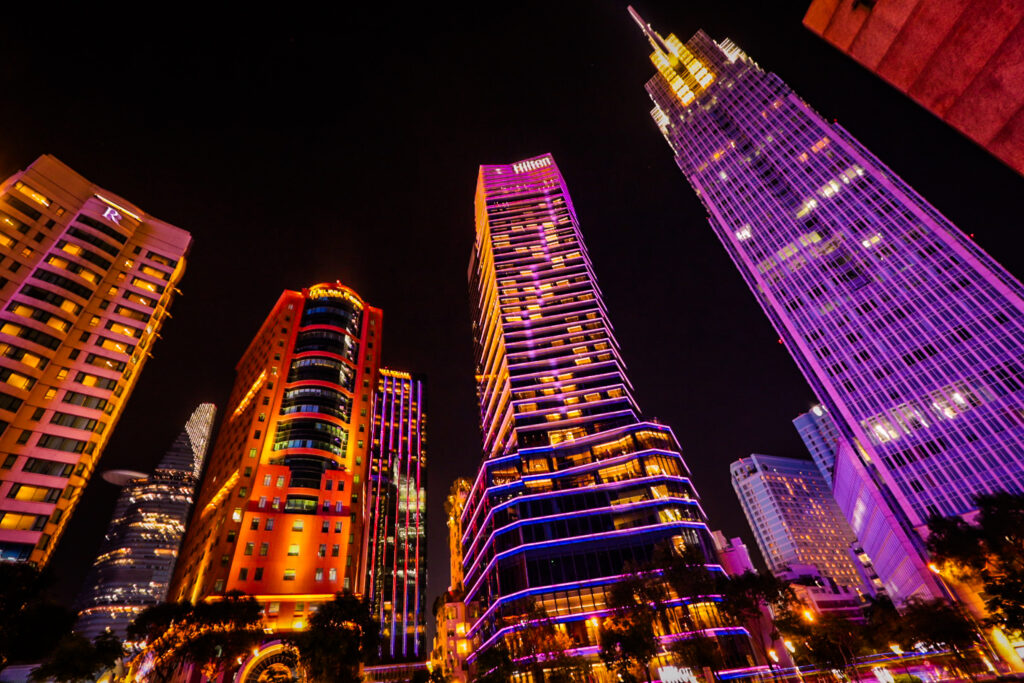
Trade-off:
It will cost more than a standard taxi or Grab.
But what you’re paying for isn’t the ride —
it’s removing uncertainty at the most vulnerable point of the trip.
👉 It’s not about luxury — it’s about removing the one moment most likely to go wrong.
How the journey should happen
💸 Know what a normal journey looks like
Airport to District 1:
- ~150,000–250,000 VND
- ~10,000 VND airport toll to add onto the meter fare
If numbers start jumping or feeling unclear, they’re not normal
⛔ If the meter isn’t on, get out early
A legitimate taxi will:
- start the meter
- not negotiate mid-journey
- not apply pressure
If that doesn’t happen: don’t wait — leave while you still can.
🧳 Keep control of your luggage
Your bags are leverage.
Don’t let anyone:
load bags into a car you haven’t committed to
rush you
separate you from your luggage
The shift that changed everything
That first taxi didn’t ruin anything.
But it showed us exactly where trips start to go wrong.
Not in the big moments —
but in the small decisions made when you’re tired, overloaded, and trying to finish something instead of thinking it through.
We don’t try to handle that moment better anymore.
We remove it.
Because once you do, everything that follows — the city, the pace, the experience — settles into place the way it should.
And Saigon does that better than most.