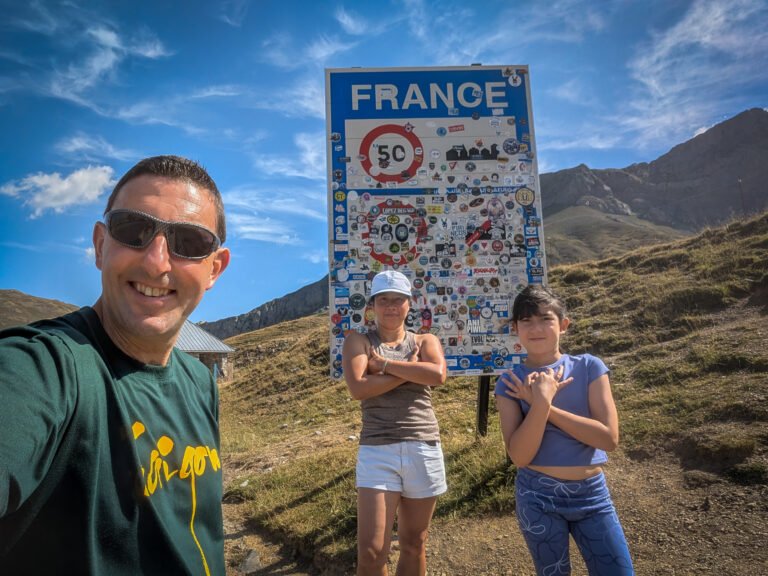
We had one thing we couldn’t change — a total solar eclipse — but everything around it had to adapt when cancellations and changing plans forced us to rethink the route.
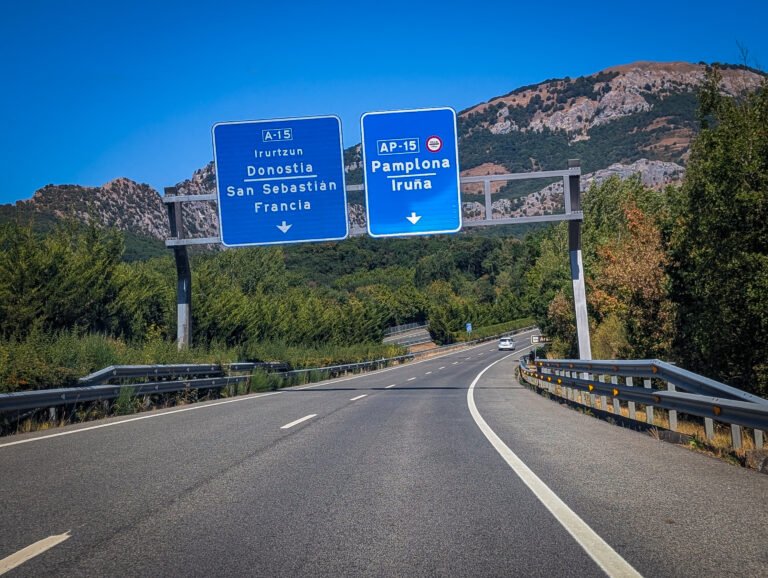
When the First Booking Fell Through
Two weeks before we were due to leave, the plan we’d spent months putting together suddenly changed.
Our host Air Bnb Hosts for the first two nights in Spain cancelled on us. No reason given.
It sounds like one booking disappearing from a month-long road trip shouldn’t be a big deal, but it immediately meant another day of planning. Where would we stay? Did we still want to use the route we’d built around the eclipse? Could we make the driving work with our daughter without turning the first few days into one long push from one booking to the next?
The problem wasn’t just our budget either. With the eclipse approaching, a lot of the affordable accommodation in the area had already gone, which was exactly why we’d booked well in advance in the first place. The cancellation therefore had a bigger knock-on effect than simply replacing one booking. The new route meant our second planned destination no longer worked either, so we had to cancel that booking ourselves and start looking for two new places that would fit both our budget and the route we were now trying to build.
This was the point where the plan could have started dictating the trip rather than the other way around.
Instead, we went back to the map and reconsidered the Ordesa option I’d originally ruled out because of the extra driving and the possibility that we might need to head back towards Palencia for the eclipse. That meant accepting a longer first drive, but in return we could stay for three nights, recover after the ferry and spend some proper time somewhere we actually wanted to explore.
That became the pattern for this trip. We had one thing we couldn’t move — the total solar eclipse on August 12th — but within the route we’d carefully built, there was room to change individual parts if circumstances required it. Because it was August and holiday season, we had locked in most of the Airbnb accommodation ahead of time, generally with free cancellation up to the day before arrival. The planning was therefore quite deliberate; the flexibility came from building enough room into that plan to make changes if something no longer worked.
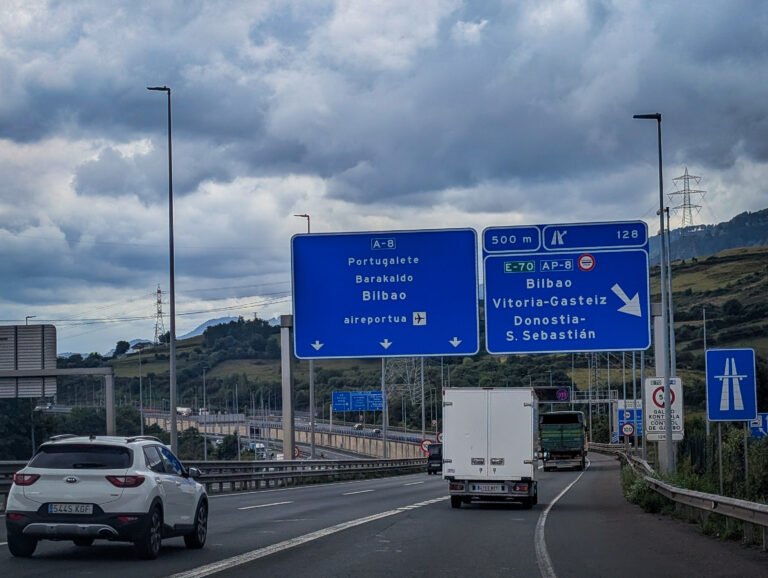
One Fixed Point, Everything Else Flexible
The one fixed point in our whole month was the path of totality of a total solar eclipse on August 12th, a band of geography we had to be inside of rather than a single named town. We hedged that months out by booking two places with free cancellation, one near Palencia and one near Borja, and didn’t actually settle on which one we’d use until about five days before the eclipse itself.
The reason for booking so far ahead wasn’t just the eclipse. August is holiday season, and we knew accommodation would become harder to find as the date approached. With the eclipse adding another reason for people to be in the area, the affordable places were disappearing early. Having those two cancellable options meant we could protect the most important part of the trip without having to make the final weather decision months in advance.
The rest of the route wasn’t completely flexible once we had locked it in. We had a clear plan for where we wanted to travel and the general direction we wanted the month to take, including eventually spending time in the south of France around the Carcassonne and Castelnaudary area. What remained flexible was the exact accommodation and smaller decisions within that route. We didn’t need to stay in one exact town; we could look for somewhere in the right area that fitted the route and what we needed.
That also meant that if a host cancelled, we had some room to make a small change without having to abandon the whole route. The flexibility wasn’t about leaving everything open until the last minute. It was about carefully locking in a route that still had enough movement within it if something went wrong.
The accommodation also had to work for us as a family. A pool for our daughter was a major consideration, as was outdoor space or access to nature, while the price still had to fit within the overall cost of the trip.
That was the distinction for us. Flexible didn’t mean having no plan. We had spent a lot of time planning the route. It meant building the route carefully enough that, if one part changed, we had somewhere to move without having to throw everything else away.
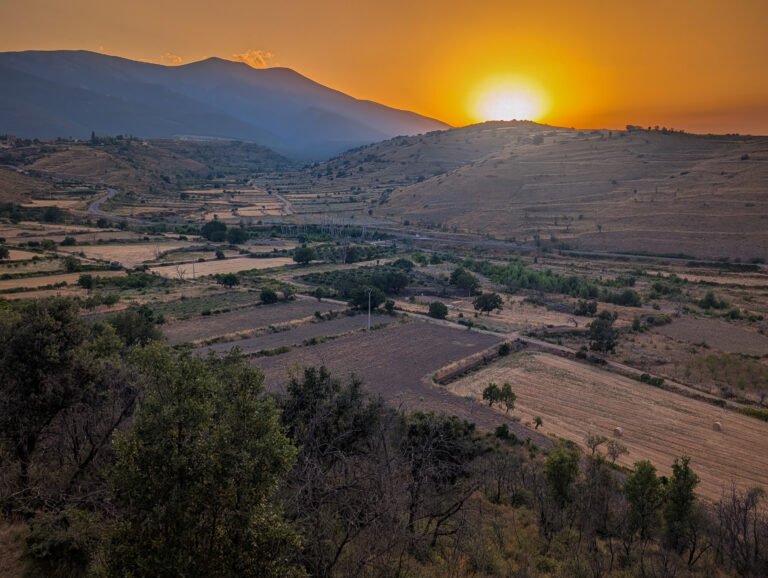
When Affordable Accommodation Started Dictating the Route
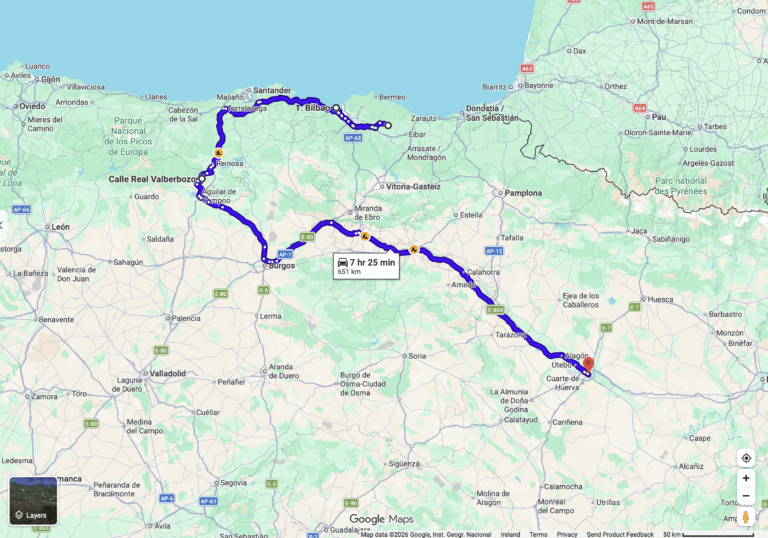
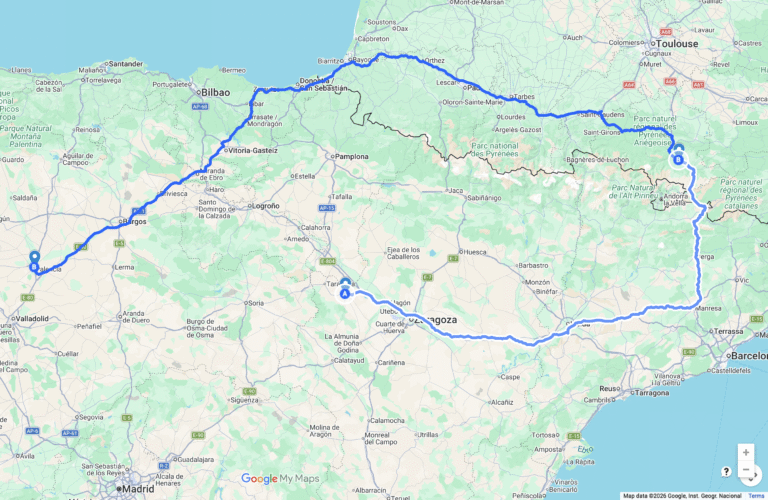
Our first version of the route had us basing ourselves just to the east of Bilbao for two nights, then working our way back west to accommodate affordable accommodation before heading back east or south east for the eclipse, either near Zaragoza or Palencia. Continuing onwards to the south of France and eventually heading back to the ferry at Cherbourg.
On paper it looked sensible. In practice, sitting with it for a few days, it started to feel like we’d be marking time in the west before the trip properly began near the eclipse zone. We didn’t want to spend the opening part of a month-long trip simply waiting for the main event.
Why We Ruled Out Doubling Back
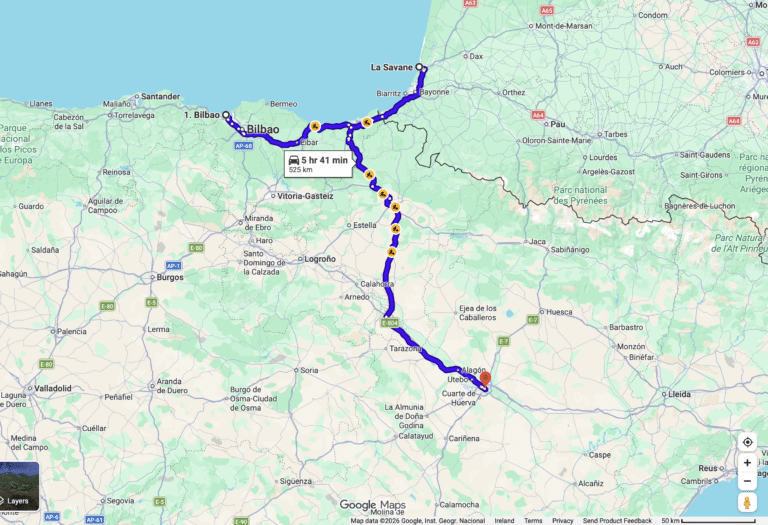
The alternative we floated was heading into southwest France first and then doubling back into Spain for the eclipse afterward.
We also considered heading east towards the mountains, but the concern there was the amount of driving involved for what would only have been a two-night stay. We’d be putting long miles into the day, arriving somewhere, unpacking, settling in and then packing everything back into the car almost immediately.
With our daughter in the back seat, that meant more time sitting in the car and less opportunity for everyone to properly settle into a place before moving on again. It wasn’t just about the number of miles on the map; it was what those miles would do to the rhythm of the trip.
The same problem applied to the idea of heading into southwest France first and then doubling back into Spain. Retracing the same stretch of road doesn’t give a child anything new to look at, and it adds hours of driving simply to accommodate where affordable accommodation happens to be rather than because that direction actually fits the wider trip.
The accommodation might have been affordable, but if taking it meant adding long stretches of driving and then only staying two nights, the saving wasn’t necessarily a saving once we considered the extra fuel, time, wear on the car and the effort of moving everyone and everything again so quickly.
With a young child, those extra hours don’t simply disappear into the itinerary. They take energy from somewhere else, whether that’s time at the next stop, the willingness to explore when you arrive or the patience available later in the day.
We didn’t want to let the availability of an affordable bed dictate the shape of the whole route. If the accommodation only worked by making us drive further, sit in the car longer and then move again almost immediately, it wasn’t solving the problem we were trying to solve.
The Cancellation Gave Us a Chance to Rethink the Route
What we’d landed on originally was a much gentler start: an Airbnb barely forty-five minutes from the ferry port for two nights, about as easy a way into a month-long trip as you could ask for.
That held right up until two weeks before we left, when the host cancelled on us. Because August availability around the eclipse was already tight, we weren’t simply looking for another place close to the ferry at a similar price. The change to the route also meant that our second planned destination was no longer viable, so we had to cancel that booking ourselves and find two new places that would work with the revised plan.
Rather than simply trying to replace the cancelled booking, we went back to the route itself and looked again at the options we’d previously ruled out.
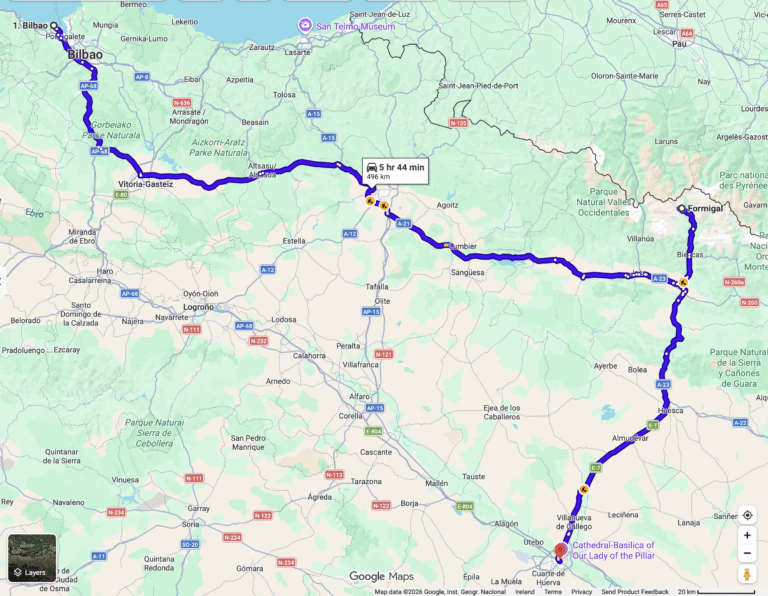
Ordesa was actually where I’d wanted to go from the start, but I’d talked myself out of it because of the four-hour drive, and because if we ended up needing Palencia instead of Borja for the eclipse, backtracking out of Ordesa made me uneasy.
With the second booking now cancelled, we had five nights to play with before our eclipse accommodation in Borja or Palencia. That meant we could spend three nights near Ordesa, which gave us a better trade-off. We could accept the longer drive after the ferry, then have two days where we weren’t immediately packing the car again. The longer drive was the cost of getting there, but once we arrived the pace of the following days would be much easier.
The Ordesa mountains were also somewhere we genuinely wanted to see for their own sake, rather than simply somewhere that happened to have accommodation available. If Borja came through as our eclipse spot, basing near Formigal turned the route into a sensible loop without adding unnecessary miles.
And then, almost as if it had fallen into place, we found an Airbnb in a small rural Spanish village about 20 km south of Borja to fill the remaining two nights before our eclipse accommodation. It was more expensive, but it worked particularly well because we were still on a route that would allow us to head towards Palencia if the weather meant we needed to. It also meant we were already in the area of the path of totality a few days before the eclipse rather than arriving at the last minute.
The cancellation had created more work, but it also gave us the opportunity to revise the route around the places we actually wanted to visit. Instead of simply replacing what we’d lost, we could reshape those first few days into a route that fitted the trip we wanted to make.
Why Borja Ultimately Won Out Over Palencia
To be clear, we weren’t choosing Borja because we didn’t care about the length of totality. Longer totality near Palencia was obviously attractive, and twenty extra seconds is twenty extra seconds.
It just wasn’t worth adding a longer drive simply to chase those extra seconds. Our bigger concern was cloud cover and whether we would actually have a clear view during the period of totality. There was little value in driving much further for more totality if the conditions meant we couldn’t see it.
Our mindset was that as long as we could see the eclipse at all, we would be very grateful, no matter how long it lasted.
The real reason Borja made sense was that it fitted the rest of our route far better, particularly the drive on to France the following day, which became much more manageable from there than it would have been from Palencia.
There was still a clear trade-off. Choosing Borja meant accepting less totality, but it also meant avoiding the additional miles, fuel, wear on the car and driving time that would have come with pushing further north. More importantly, it meant we weren’t using another long driving day immediately around the eclipse simply to gain a relatively small amount of extra totality.
Keeping Palencia bookable and cancellable right up to the day before meant we could still respond if the weather made the decision for us. We weren’t locked into one location simply because we’d chosen it months earlier.
Booking both did mean carrying some uncertainty in the overall plan, but that was deliberate. We were paying for the option to change our minds later rather than paying the much higher cost of discovering too late that our original choice no longer worked.
The Fifteen Euros That Bought Us Margin
That four-hour drive on arrriving into bilboa off the ferry needed its own small adjustment too.
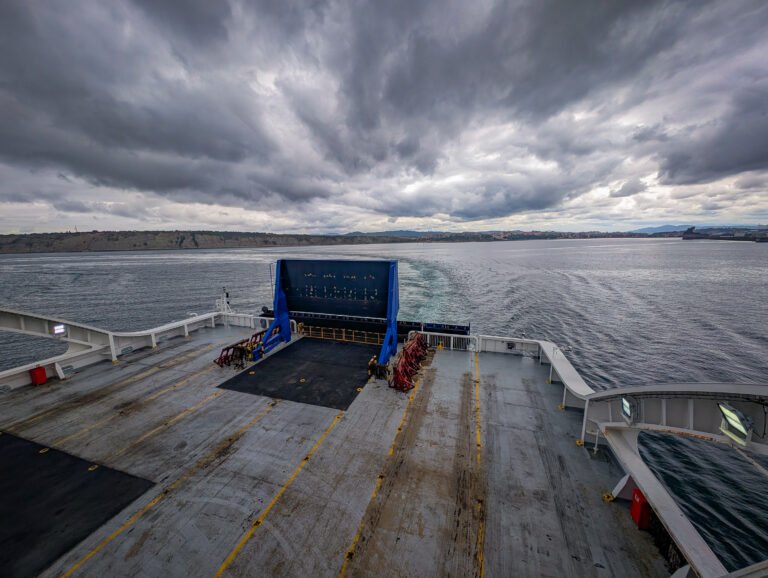
We paid €15 for priority exit off the ferry, since our sailing was due to dock at 13:30 and we needed to get moving quickly to reach Fomingal without losing too much of the afternoon.
The important part wasn’t simply getting out of the port a little earlier. With priority exit, we could be among the first vehicles off the boat, get through passport control before the main flow of passengers arrived and start the drive before the larger numbers of vehicles had worked their way off the ferry.
The €15 didn’t make the four-hour drive any shorter. What it did was protect the time we had available to complete it. Once we were on the road, the day was moving again. Without that priority, a delay getting off the boat and through passport control could have pushed the whole afternoon later, with four hours of driving still ahead of us.
On a spreadsheet, €15 is just another cost. On a ferry day followed by a four-hour drive with a young child, it was a small amount of money spent to keep control over how the first afternoon of the trip unfolded.
What We’d Do Again
| Decision | Why It Worked |
|---|---|
| Pick one non-negotiable, let everything else bend around it | Kept the eclipse at the centre of the trip while allowing the route around it to change |
| Build the route first, then leave room within it | We knew the direction we wanted to travel without needing every individual accommodation choice to be permanent |
| Avoid backtracking routes | Extra hours added driving, fuel and wear without adding anything useful to the trip |
| Build in genuine, cancellable accommodation options | Gave us room to respond to changes and weather without losing the ability to find affordable places |
| Put the hardest drive where you have the most usable time | Ours landed on ferry day, and priority exit helped protect the afternoon |
| Choose the option that simplifies the wider journey | Borja fitted the route better even though Palencia offered longer totality |
Planning Beyond the Map
Looking back, I don’t think the lesson from this trip was that we found the perfect route. We didn’t. The route changed because circumstances changed, and sometimes those changes forced us to look again at decisions we’d already made.
The host cancellation meant we weren’t simply replacing one booking. We had to reconsider the route, cancel another destination ourselves and find two new places that still fitted our budget and what we needed as a family. The fact that we’d already built the wider route carefully meant we had something to work from rather than starting again from scratch.
The eclipse gave us a fixed point, but even there we left ourselves an option. Palencia offered longer totality, Borja fitted the wider route better, and the weather could ultimately make the decision for us. The €15 priority exit was another small choice, this time protecting the afternoon we’d need for the four-hour drive after the ferry.
None of those decisions was particularly dramatic on its own.
The important part was what each one could create afterwards.
A long drive followed by only two nights could mean packing again just as everyone had settled. An affordable accommodation choice could become less attractive once the extra fuel, driving and wear on the car were considered. A small delay getting off the ferry could push a four-hour drive further into the afternoon and change how the evening started.
That is what changed the way I looked at planning this trip. I stopped looking at each decision in isolation and started looking at what that decision would create later. The cheapest room wasn’t necessarily the cheapest option if it added hours to the route. The shortest drive wasn’t necessarily the best option if it meant moving again two days later. The longer eclipse wasn’t necessarily worth the extra journey if cloud cover was going to be the bigger risk and a longer drive.
We still planned the trip carefully. We had our route, our bookings, our timings and our fixed point.
The difference was that we didn’t expect the plan to survive untouched.
For us, the eclipse was the part that couldn’t move. Everything around it could be adjusted if circumstances demanded it, provided the change still served the reason we were taking the trip in the first place.
That is what I took from planning this month on the road with a young child. You don’t need to remove uncertainty from a family trip. You need to make sure there is enough room in the plan to deal with it when it arrives.
Because sometimes the change that looks like a problem two weeks before you leave is actually the change that makes the whole trip work better.