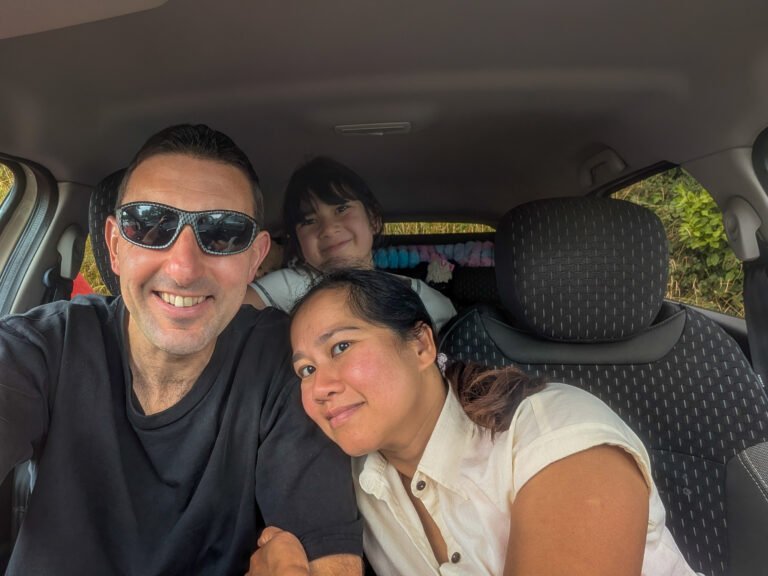
A family trip can start going wrong before the car has even left the driveway. The pressure builds in small ways — what to take, what might go wrong, how much you can realistically fit in, and whether the plans will even survive the journey.
For this trip, there was more uncertainty than usual. We couldn’t control all of it, but we could control how much unnecessary pressure we carried with us.
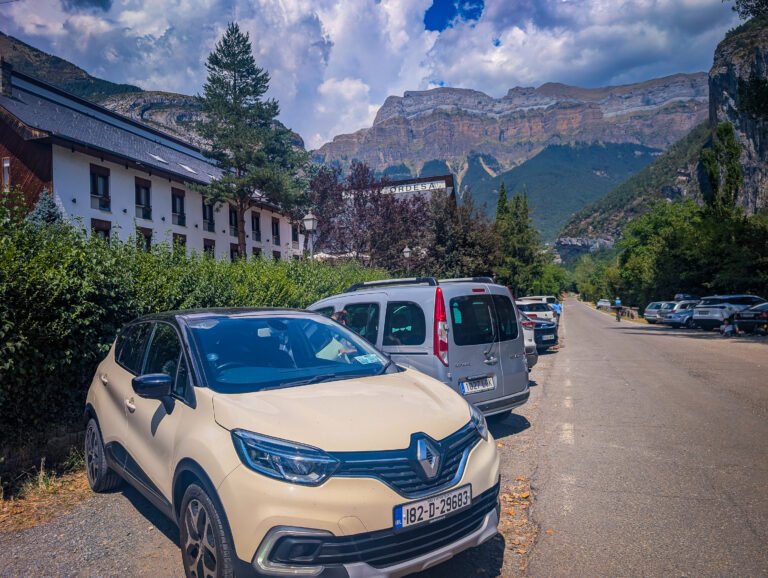
Before the journey: deciding what needed sorting
Every big trip starts long before you actually pull out of the driveway. Sometimes it starts with a decision made months beforehand, sometimes with a problem that needs sorting, and sometimes with standing beside a packed car wondering how on earth everything is going to fit.
This trip had more uncertainty behind it than most. For a long time, we genuinely didn’t know if we’d be able to make it at all, due to our circumstances this year, so there was little point in pretending we could plan everything perfectly. What we could do was deal with the things we could see coming, one at a time, and make a few decisions that would stop small pressures building before we’d even left Ireland.
That became the approach to the whole preparation. We weren’t trying to remove uncertainty because that wasn’t possible. We were trying to make sure the things we could control weren’t adding to it.
Deciding what to control early
One of the first things we needed to settle was the car.
On a previous road trip to Cork, we’d picked up a puncture. It was repaired and the tyre pressures were checked afterwards, but on the way home the sensors flashed up again. We had checked the pressures, but that clearly hadn’t answered the question for us.
With a month-long road trip ahead, I didn’t want to simply check them again and hope for the best. With visions of a warning appearing somewhere in Spain, after we’d already left the ferry and were a long way from home, I knew that was exactly the sort of small problem that could quickly become a much bigger one.
So we took the car for a proper test run up to Banbridge for supplies and back. It was around a three-hour round trip, turning it into a useful father-daughter day out as well as a test of the car.
The point wasn’t just to see whether the tyre pressure stayed where it should. We wanted to put real miles on the car and see whether the problem actually stayed fixed. It did.
That three-hour run cost us part of a Saturday, but it removed one uncertainty before we left. By the time we got home, we weren’t carrying that tyre question into the final days of preparation.
That was important because there were going to be plenty of other things to think about.
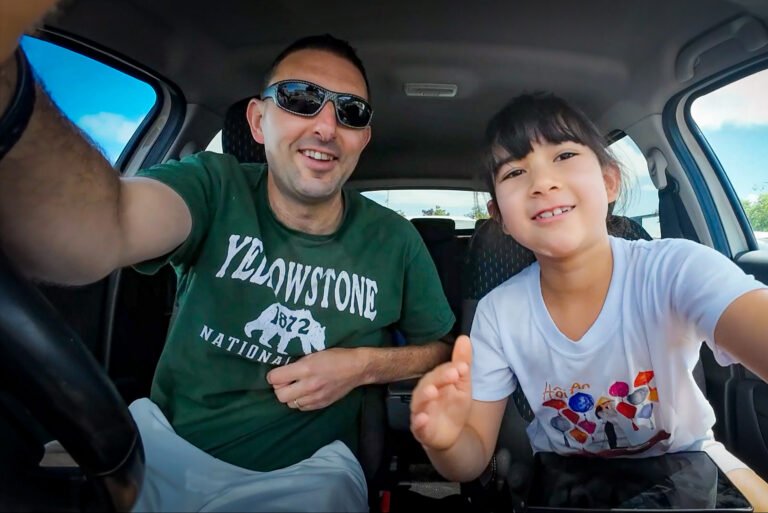
The packing problem nobody plans for
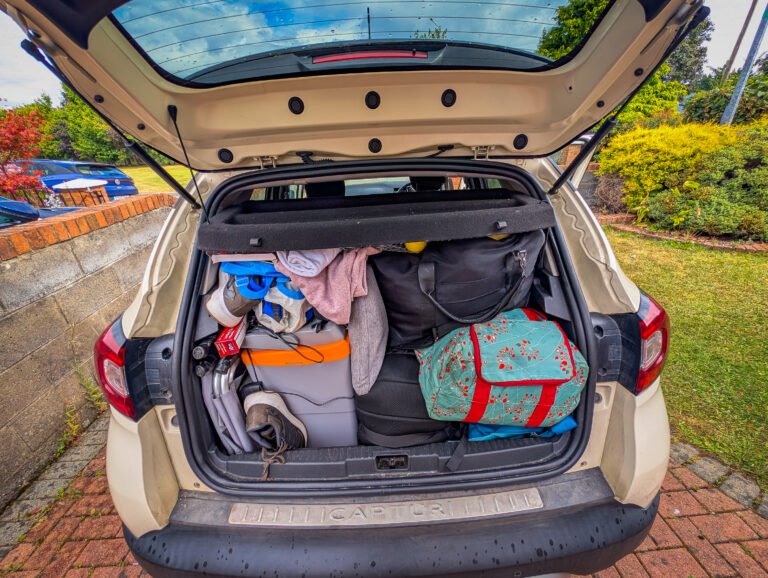
Then came the packing. Our instinct was to bring everything that might be useful, but we also had to leave room for what we’d inevitably want to bring home. With a car rather than a suitcase, it would have been easy to keep saying, “It’ll fit,” but I wanted to take a more ruthless approach to what actually earned its place.
The picnic table became the first casualty.
We tried it in the boot, and technically we could have made it work, but it wasn’t fitting the shape of the boot properly and would have made everything around it awkward. That was enough. It came back out and went back to the shed.
Instead, we took a smaller table and three camping stools.
It wasn’t quite the same setup, but it fitted the boot properly and gave us back useful space. That became the rule for the rest of the packing: if something was going to be awkward, we weren’t bringing it just because we could squeeze it in. We’d find an alternative.
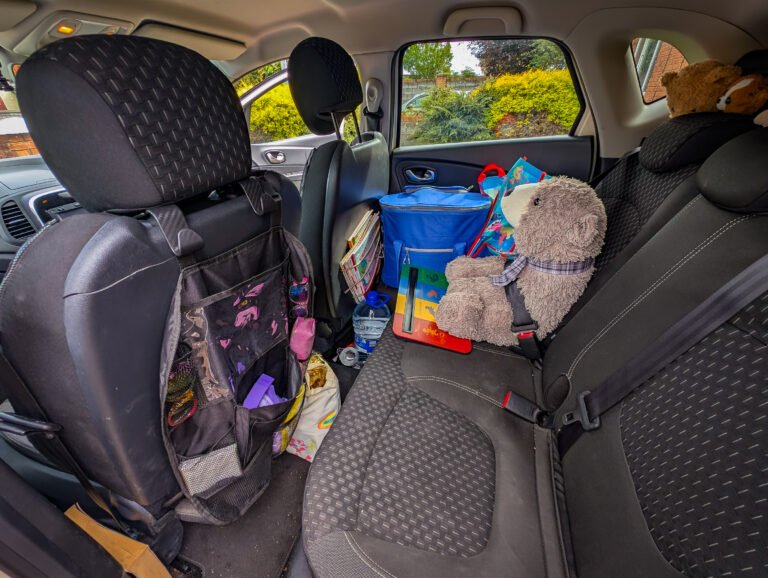
That mattered because we weren’t simply packing for the journey out. We knew we’d be bringing things home with us, and starting the trip with a boot packed to the roof made little sense. We also wanted to keep the back seat clear and comfortable for our daughter rather than filling every gap around her with gear.
The air fryer was another deliberate compromise. We had a smaller travel oven, but decided to take the larger air fryer instead. It took up more room, but we thought having a reliable way to cook would be worth the space if somewhere we stayed had limited facilities.
Before putting everything in, we also used the space around the spare wheel. Hiking boots, pots, pans and other awkward items could live down there rather than taking up more accessible boot space.
Then came the clothes and everything else.
After about an hour of moving things around, taking things out and putting them back in different places, the boot was full but the back seat was still reasonably clear, with only a few items around us.
We had two main clothes bags between us, but because the first night was at a hotel, the second at a B&B and the third on the boat, we’d packed separate bags for those first few nights. That meant we wouldn’t have to drag all the luggage into each place or open everything just to get what we needed for one night.
The smaller table and three stools weren’t the first choice. They were the better compromise.
Choosing to go offline
Another decision we made before leaving was to try to go offline as much as possible.
We packed lots of family games with us because we knew there would be plenty of downtime on a trip like this. There would be ferry time, evenings, wet afternoons and periods where we simply wouldn’t have anything planned.
The easier option would have been to rely on phones and tablets when those moments appeared. Instead, we wanted the games there before we needed them.
That sounds like a small decision, but that was exactly the point. Once everyone is tired or bored, reaching for a screen is easy. Having something else already sitting in the bag meant we had made that choice before the pressure arrived.
There was a trade-off. We were deliberately leaving some empty space in the day rather than filling every quiet moment, but that was what we wanted. After a long year, the idea was to give ourselves a chance to step away from the normal online noise and actually be together.
We took the same approach with food.
We packed things for the first few unpredictable days: instant noodles, rice cakes and other simple food that didn’t need much preparation. We weren’t trying to bring enough food for the whole trip. It was more about having something available while we worked out our surroundings and settled into the first few days.
The cooking equipment mattered as much as the food. We had a camping stove, gas, a small pot and a travel kettle, meaning we had a way of boiling water and preparing something simple if we needed it.
That gave us another small bit of control.
If we were tired after a long drive or didn’t know where the nearest shop or restaurant was, we didn’t immediately have to solve that problem. We already had something in the car.
It wasn’t about planning every meal. It was about making sure hunger didn’t become another decision we had to deal with when everyone was already tired.

Getting to the ferry without the rush
Even getting to the ferry needed some thought.
Originally, we had planned to leave on the Tuesday, with the ferry sailing on Wednesday morning. But we finished work on the Friday and had the bank holiday Monday, and after a long year there was a growing feeling that we just wanted to get on the road.
An extra night in Ireland suddenly made sense.
A deal for the Ferrycarrig hotel near Wexford appeared on Agoda, and it had a pool. Instead of driving down on Tuesday and then having the pressure of an early ferry the following morning, we could leave on Monday, drive the roughly four hours to the south-east, and actually relax that evening.
It meant paying for another night, but the trade-off was a much calmer start.
The next night we stayed at the B&B near Rosslare Harbour. That was the practical night. From there, the ferry terminal was only around two kilometres away.
Wednesday morning therefore became a very different proposition. Rather than starting the day with a long drive towards the ferry, we had a short trip to the terminal and plenty of time for the 7am check-in for the 9am sailing.
There was also the question of what the alternative would have looked like. We could have got up at around 2am on Wednesday morning and driven straight down to Rosslare for the ferry. On paper, it would have saved us a night’s accommodation. In reality, we’d have started the biggest trip of our year by waking in the middle of the night, putting our daughter straight into the car and driving for hours before even getting onto a 28-hour ferry crossing.
That was a trade-off we didn’t want to make. The extra night wasn’t really about the hotel. It was about how we wanted the trip to begin.
The extra night hadn’t given us more holiday time. It had changed where the effort happened.
Instead of putting the driving and ferry check-in pressure into the same morning, we’d absorbed the drive the previous day and left ourselves a much easier start.
Then there was the other side of the ferry.
Brittany Ferries still had priority exit available, so we paid the extra €15 for it. Normally, €15 to get off a ferry a little quicker might not seem particularly important.
But we knew what was waiting for us.
The ferry was due into Bilbao at 13:30, and from there we had a near four-hour drive to our apartment near Formigal in the Pyrenees. After a 28-hour crossing, we didn’t want to spend additional time sitting in a queue before we could even start that drive.
Again, it wasn’t about spending money to make everything easier. It was about deciding where the money actually changed the experience.
The €15 was a small cost compared with the time and tiredness it could save at exactly the point where we’d already spent most of a day travelling.
The decisions, the compromises and what we’d change
| Decision | What happened | What we’d do next time |
|---|---|---|
| Test the car properly | A three-hour Banbridge run gave us real miles on the car after the repeat tyre warning | If something has already gone wrong, test it with real miles rather than another quick check |
| Be ruthless with packing | The full-size picnic table was awkward, so it was replaced with a smaller table and three stools | If something doesn’t fit properly, find an alternative rather than forcing it |
| Protect the back seat | We kept the space around our daughter reasonably clear for the long drives | Pack around the people who have to live with the decision, not just around the available boot space |
| Take the air fryer | It used more space than the travel oven but gave us a more useful cooking option | Decide whether the extra space is justified by how useful something will actually be |
| Go offline | Family games gave us something to reach for during downtime without automatically reaching for screens | Make the alternative available before boredom arrives |
| Carry simple food | Noodles and rice cakes gave us a backup during the early, less predictable part of the trip | Backup food works best when the means to prepare it comes with it |
| Split the journey to Rosslare | An extra night near Wexford and the B&B near Rosslare meant Wednesday morning was only a short drive to the ferry | Don’t measure a route only by distance; consider what condition you’ll be in when you arrive |
| Pay €15 for priority exit | We reduced the delay before the near four-hour drive from Bilbao to Formigal | Look at what happens immediately after each major travel stage |
What we learned from preparing for this trip
If you’re planning a trip like this, I’d spend your preparation time looking for the small things that could create pressure later rather than trying to script every day.
If a warning light or a niggle has shown up on the car before, get it properly sorted and put real miles on it before you leave with the family in the back. A quick check might tell you something is okay at that moment; a proper run gives you a better idea of whether it stays okay.
When packing a car, don’t just ask whether something might be useful. Ask what space it takes, who has to live around it, and whether the benefit is worth the compromise.
Our full-size picnic table could probably have been forced into the boot, but that would have made everything else more awkward. The smaller table and three stools solved the same problem without creating another one.
That became our approach to packing: if it fits properly, fine. If it is going to be awkward, find another solution.
If you’re bringing backup food, bring a simple way of preparing it too. A couple of days’ worth of noodles and rice cakes can take the pressure out of a changed plan, but only if you can actually make them.
If you want to spend some time offline, make that decision before you need it. Having games in the boot meant they were there when we needed something to do, rather than having to make the decision when everyone was already tired or bored.
And when you’re working out how to get to a ferry or an early flight, don’t just look at the departure time.
Look at what happens before it and what happens immediately afterwards.
For us, the preparation wasn’t about making the trip predictable. It was about making the start manageable, leaving room for changes and being ruthless enough to remove things that would create unnecessary pressure.
The tyre test, the smaller table, the games, the emergency food, the extra night in Ireland and the €15 priority exit were all small decisions. None of them would have mattered much on their own.
Together, they shaped how we started the trip.
And that was the real lesson before we’d even left Ireland: you can’t control everything that happens on a family trip, but you can decide which small pressures you carry with you.