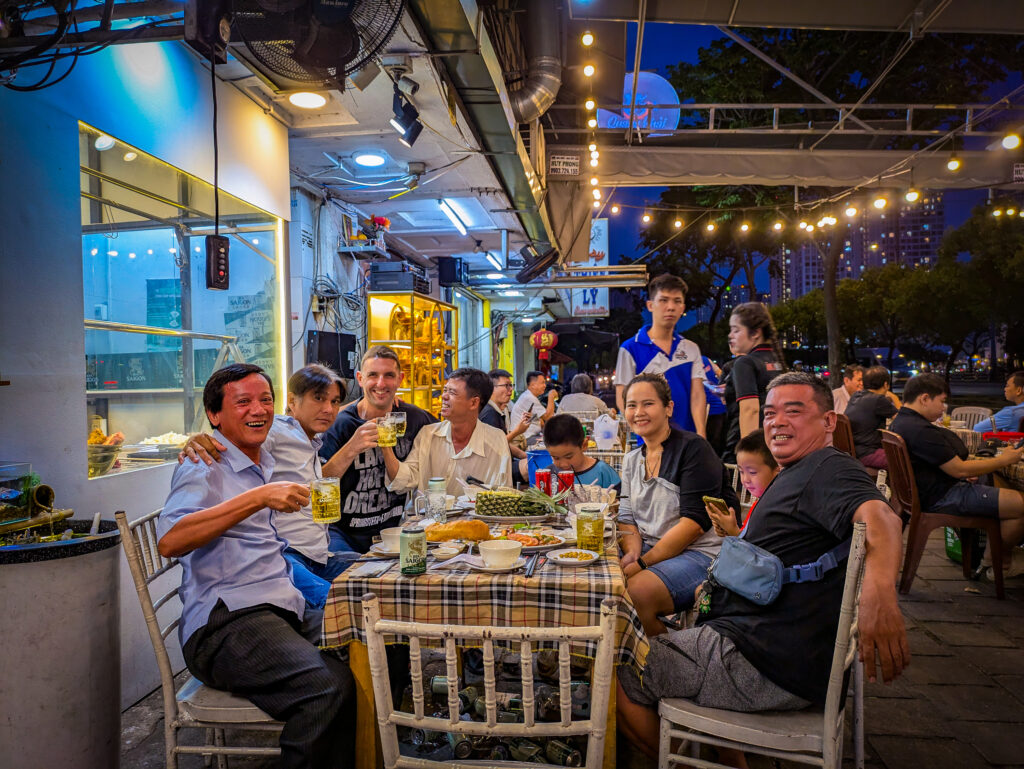
How to Eat Street Food in Saigon Without Feeling Intimidated: A Family Guide
Street food is one of the best parts of visiting Saigon, but knowing where to start can feel overwhelming. Here’s how we learned to eat like locals and the small decisions that made every meal easier.
How to Eat Street Food in Saigon Without Feeling Intimidated
The first few times we visited Saigon, eating street food always seemed like something we’d do later.
We would spend the day walking through District 1, passing stalls with smoke rising from grills and hearing the constant clatter of bowls and metal utensils, telling ourselves we’d stop at the next place. Then we’d walk past that one too.
Part of it was simple uncertainty. We didn’t know what dishes we were looking at, how ordering worked, or whether we’d end up pointing at something completely different from what we thought we were getting. But when you’re travelling as a family, uncertainty has a way of speeding up. A decision that might feel mildly awkward on your own suddenly becomes more urgent when somebody beside you is asking if you’re eating yet because they’re hungry.
I can still remember stepping out of a queue at one stall because I couldn’t make a decision quickly enough. Nothing was actually wrong. Nobody was being impatient with us. But it felt as though everyone knew what they were doing except us.
We walked another thirty metres down the street, found a much smaller place with only a few dishes on offer and sat down almost immediately.
The food hadn’t changed.
The situation had.
And looking back, that was the first time I realised that street food in Saigon rarely becomes enjoyable because you’re suddenly more adventurous. It becomes enjoyable because you learn how to reduce the small pressures that make everything feel more complicated than it really is.
Quick Answer ✅: Start with Familiarity, Not Confidence
You don’t need to understand every dish or speak Vietnamese before sitting down to eat. The easiest way to enjoy street food in Saigon is to reduce the uncertainty, not increase your confidence.
| Start with… | Why it works |
|---|---|
| 🍜 Familiar dishes like phở, cơm tấm or bánh mì | You’ll spend less time wondering what to order and more time enjoying the meal. |
| 👥 Busy stalls full of local customers | High turnover usually means fresh food and a smoother experience. |
| 👀 Watching what others order | It’s one of the quickest ways to understand how a stall works without needing to ask questions. |
| 🔁 Returning to places you enjoyed | Familiarity builds confidence far faster than constantly searching for somewhere new. |
That’s exactly how we learned. We didn’t try to understand every dish on our first visit. We simply repeated small, familiar experiences until ordering street food became part of every trip to Saigon.
Keeping a Safe Distance
Before I understood how street food worked in Saigon, I admired it far more than I actually ate it.
I’d slow down as I passed stalls, watching pork fat drip onto glowing coals while woks crackled somewhere behind the crowds. The smells were impossible to ignore, yet I’d still drift back towards restaurants with laminated menus and neatly printed photos beside every dish.
At the time, that felt like the sensible option. Restaurants removed uncertainty. I didn’t have to work out what anything was, how ordering worked, or whether I was about to embarrass myself by asking for the wrong thing.
Looking back, I wasn’t avoiding the food.
I was avoiding the decisions that came before it.
The trade-off was easy to miss because nothing ever felt like it had gone wrong. We still ate well, but we were experiencing Saigon from a comfortable distance instead of becoming part of its everyday rhythm.
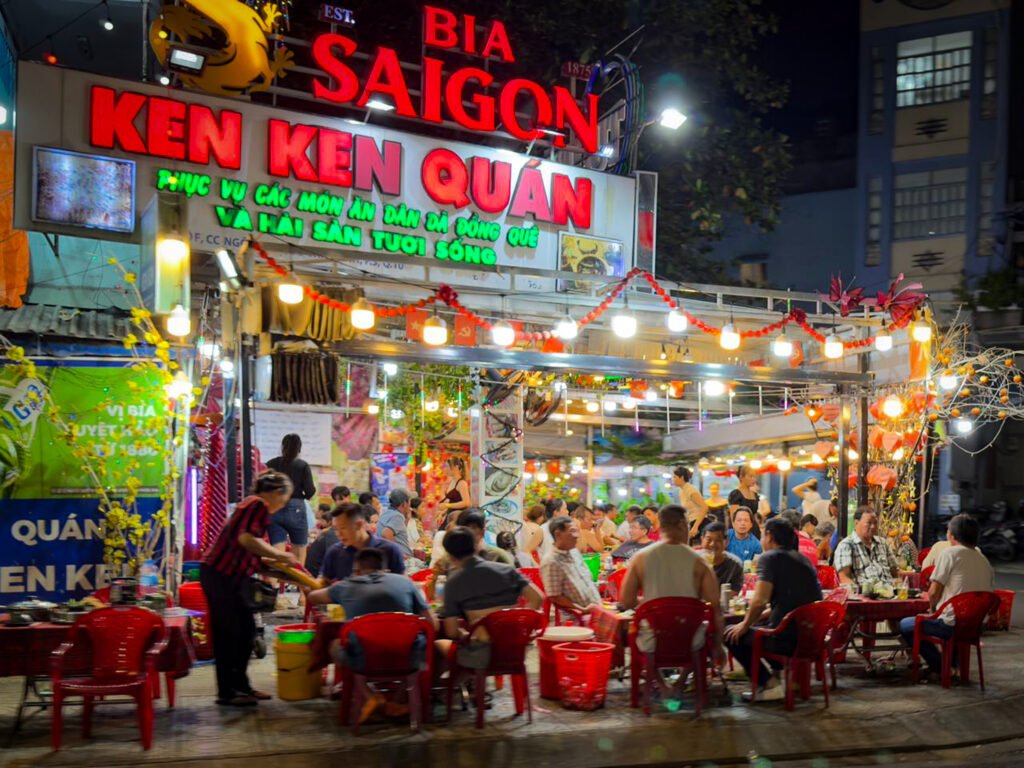
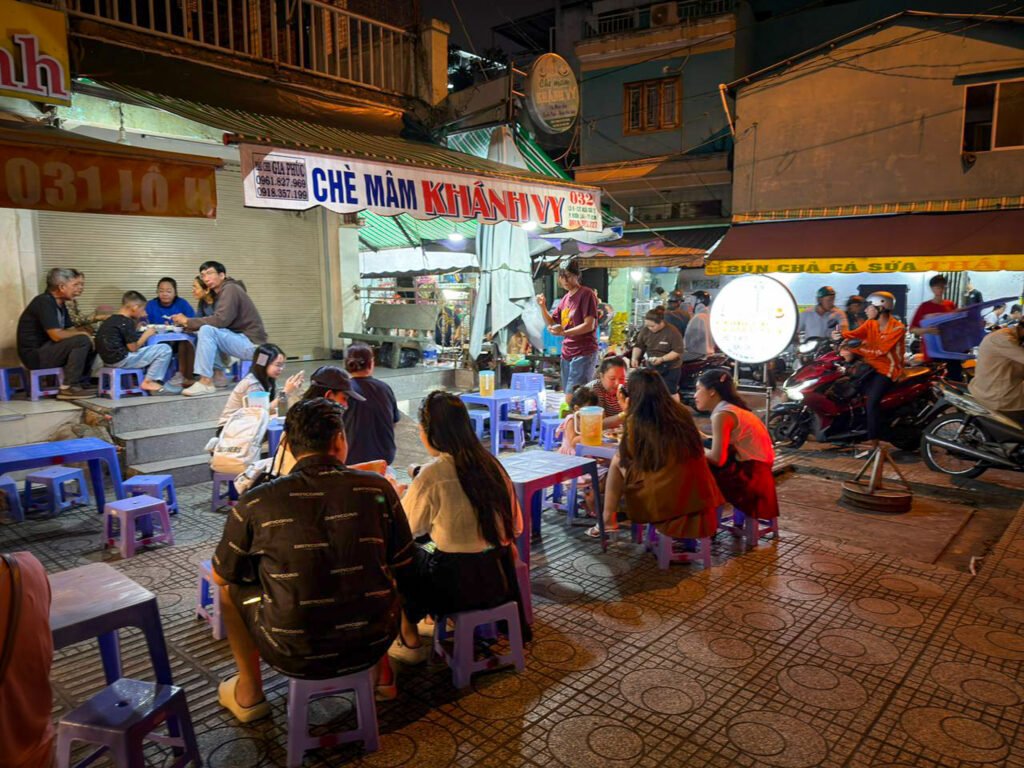
Street food isn’t hidden away for adventurous travellers to discover. It’s how much of the city eats. Breakfast appears on plastic stools before sunrise. Lunch spills onto pavements as office workers gather around familiar stalls. By evening, quiet corners transform into busy outdoor kitchens filled with families, neighbours and friends.
I was comfortable.
I just wasn’t participating yet.
The Shortcut I Didn’t Realise I Had
Everything changed when I met my wife, who grew up in Saigon.
One of the first places she took me was a small duck-and-prawn restaurant tucked just off a busy street in District 1. There was no English menu, no pictures on the wall and no tourists looking just as confused as I was. Under different circumstances, I would almost certainly have kept walking.
Instead, I sat down and let her take the lead.
She ordered without hesitation. Plates began arriving within minutes, and before I had time to wonder whether I’d made the right choice, we were already eating.
That was the moment I realised the intimidating part had never been the food itself.
It was everything that happened before the first bite.
Choosing a stall. Finding a seat. Wondering whether you were ordering correctly. Trying to read a menu that suddenly felt far more complicated than it probably was.
She removed all of those decisions without even thinking about them because, for her, this wasn’t an experience to navigate.
It was simply dinner.
That meal quietly changed how I looked at street food. I stopped treating it as something that required confidence or bravery and started seeing it for what it really was — an ordinary part of everyday life in Saigon.
The more often we ate like that, the more I realised confidence wasn’t something you arrived with.
It was something that grew naturally once the small decisions stopped feeling like obstacles.
How I Gradually Taught Myself
After that first meal, I didn’t suddenly start searching for hidden food spots or trying the most adventurous dishes on every street.
If anything, I became less ambitious.
I returned to the same stalls, ordered many of the same meals and slowly built familiarity instead of chasing variety. Looking back, that probably taught me more than trying somewhere different every day ever could.
At first, I still watched what other people ordered before making my own choice. Sometimes my wife’s family wrote the names of dishes in Vietnamese for me, so all I had to do was hand over a small piece of paper and smile. Other times, I simply pointed at a plate that looked good and hoped for the best.
Little by little, those small crutches disappeared.
The stalls became familiar. I started recognising dishes before I read their names, remembered roughly what things should cost and knew how ordering usually worked.
Without really noticing, the uncertainty faded into routine.
That’s probably the biggest change most visitors experience.
Street food doesn’t suddenly become easier because you know everything. It becomes easier because fewer things feel unfamiliar each time you sit down.
The Dishes That Became Our Defaults
One of the biggest mistakes I think visitors make is believing they need to understand the entire menu before they can enjoy street food.
You don’t.
You only need a handful of dishes that become familiar enough to order without hesitation.
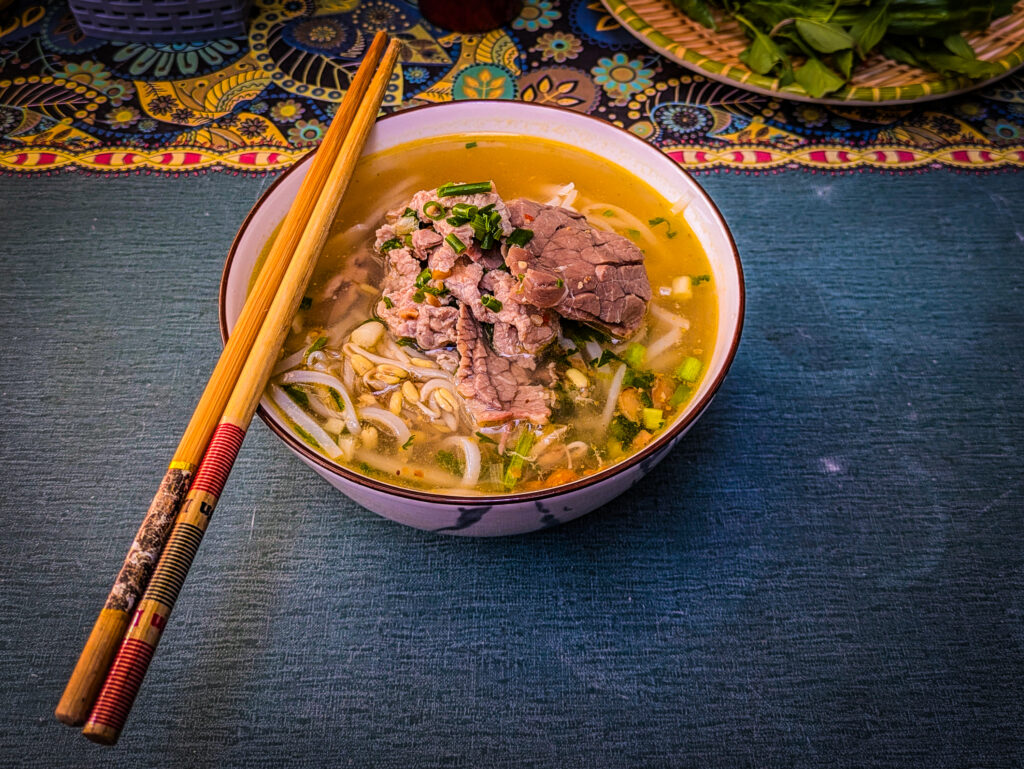
For me, cơm tấm quickly became one of those meals. Grilled pork, broken rice, pickles and a fried egg made it filling after long days exploring the city. Phở worked almost any time of day, whether it was breakfast or a late lunch after wandering around District 1. When everyone was suddenly hungry, bánh mì was usually the easiest answer—quick to buy, easy to carry and ready within minutes.
As our visits became more frequent, bánh xèo, bánh cuốn and dumplings naturally joined that list as well.
Those dishes became more than favourites.
They became familiar starting points.
Instead of standing on a busy pavement trying to work out twenty unfamiliar meals, I only had to decide which of the few dishes I already enjoyed sounded right that day.
It’s a small shift, but it makes street food feel far less intimidating.
Where We Start Now
People often ask us where the best street food in Saigon is.
It’s an understandable question, but over the years we’ve realised it’s not usually the one we ask ourselves anymore.
When we first started exploring the city’s food scene, we spent far too much time looking up recommendations, saving places on Google Maps and trying to work out whether one stall was supposed to be better than another. It felt like the sensible thing to do, yet standing on the pavement with a hungry family and twenty pins saved on a map often made choosing somewhere even harder.
These days, we pay much more attention to what’s happening around us than what’s written online.
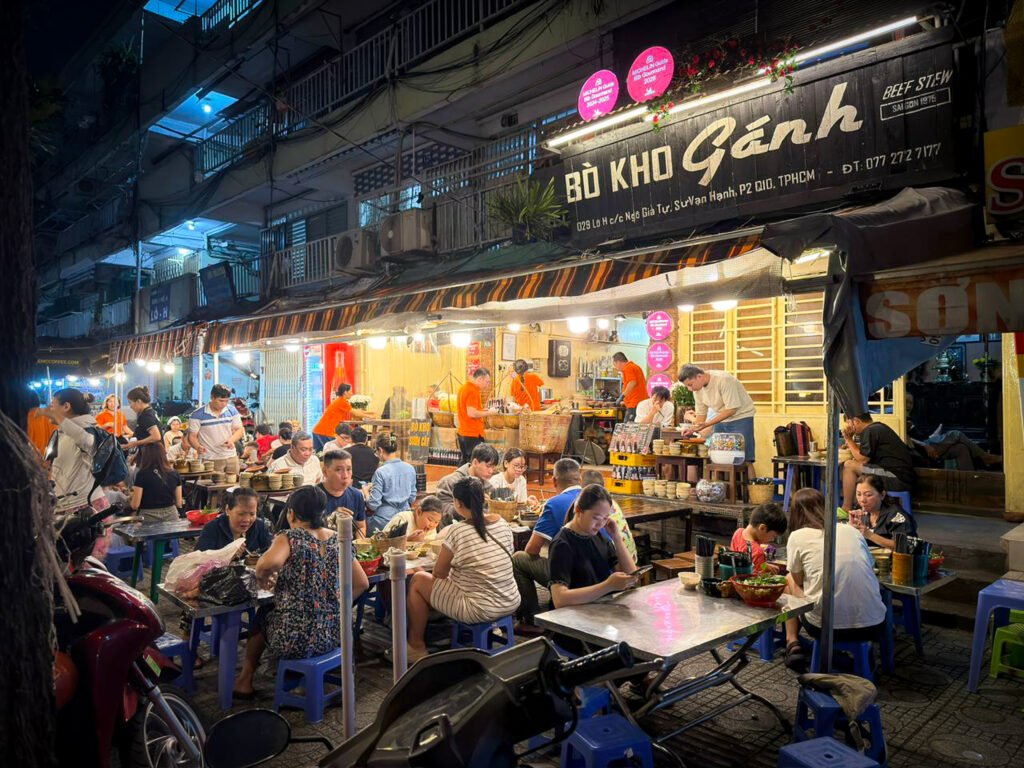
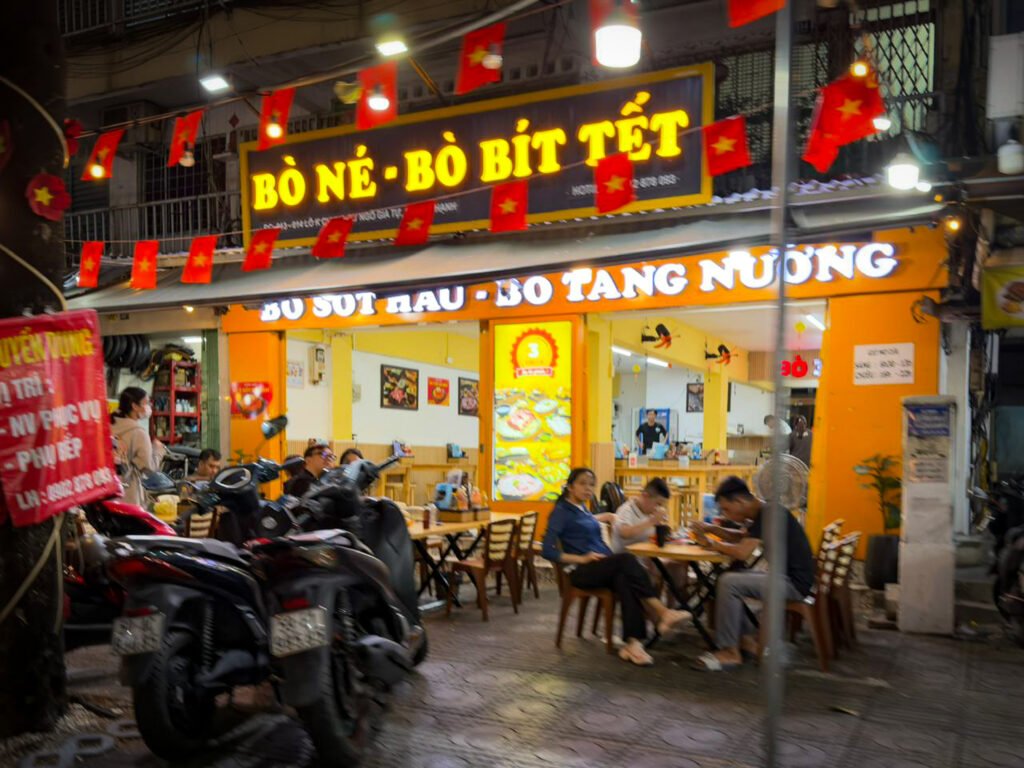
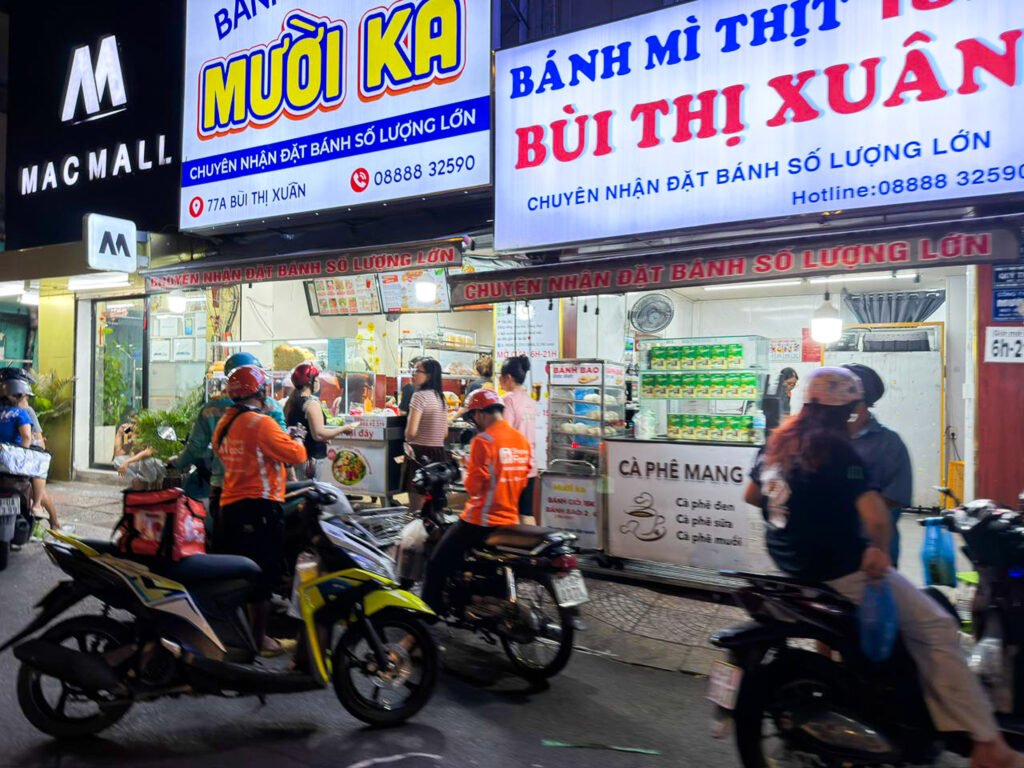
If stainless-steel tables are full, motorbikes are lined up along the kerb, and plates are constantly making their way from the kitchen to waiting customers, we’ll usually stop and take a closer look. Those are the places that already have the trust of the people who live nearby, and that tells us far more than a list of online reviews ever could.
Of course, there’s no guarantee it will become the best meal of the trip. We’ve eaten at busy places that were simply good, and quieter places that turned out to be excellent. But busy local stalls usually remove one important uncertainty: you know the food is fresh, people are returning for a reason, and the stall has settled into a rhythm that makes the whole experience feel easier.
When everyone is hungry, especially with children, that confidence is often worth far more than chasing somewhere that’s been labelled “the best” by a guidebook or social media.
The dishes that became anchors (and why they matter)
Certain dishes became anchors — not just because they taste good, but because once you know them, you stop feeling lost.
Cơm tấm
Broken rice soaking up the drippings from a freshly grilled pork chop, edged with a crisp egg and sharp pickles that cut through the richness.
Bánh xèo
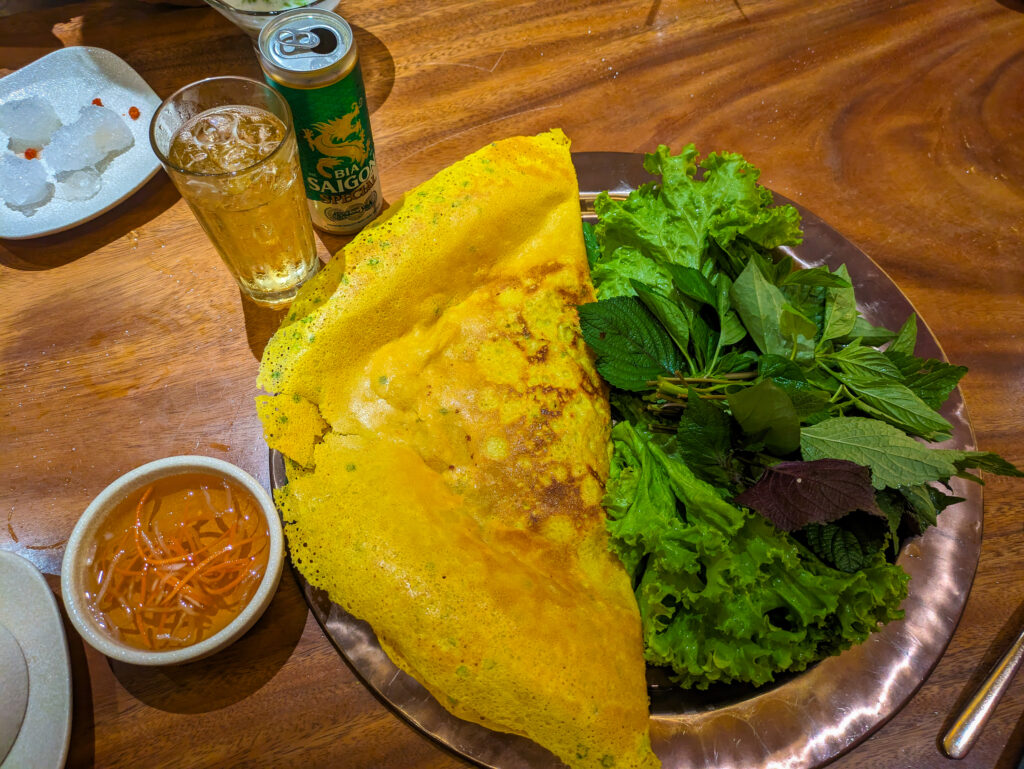
Arrives crackling hot — turmeric pancake torn apart, wrapped in herbs, dunked in sauce, messy and loud and completely worth it.
Bánh cuốn
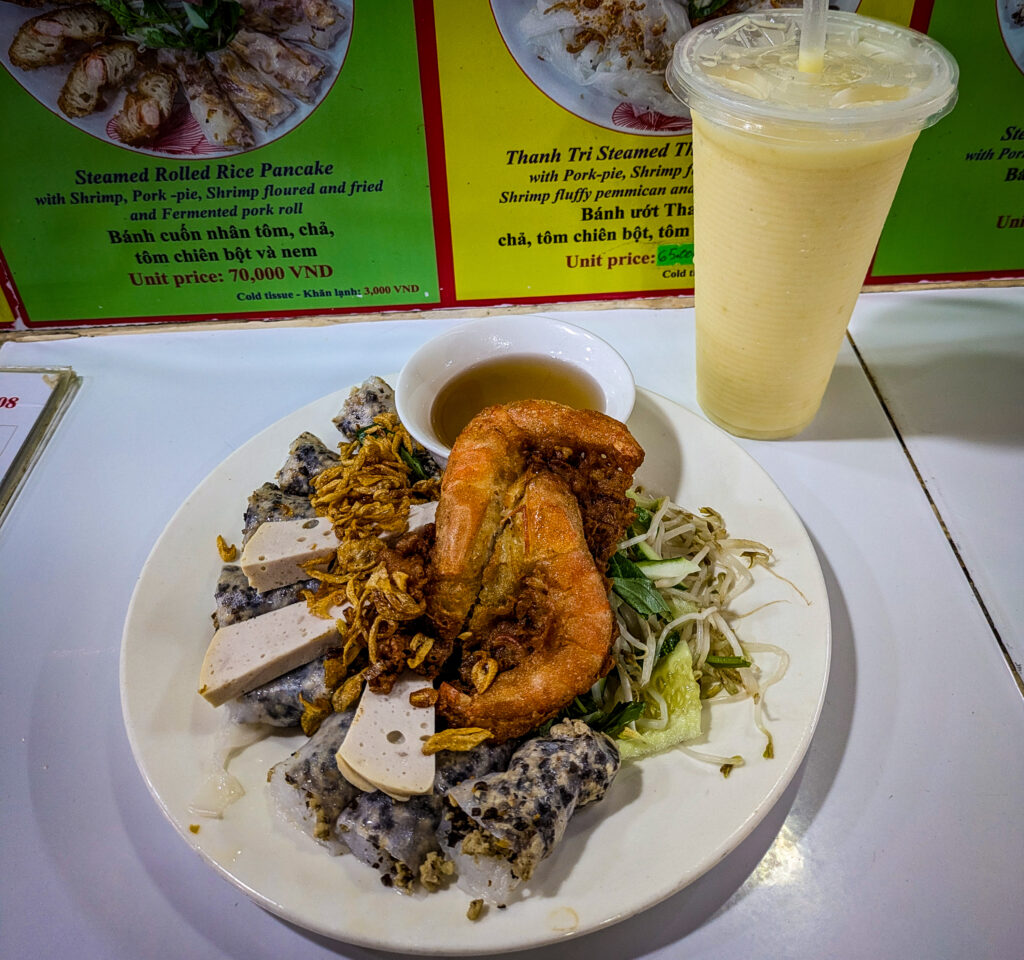
Silky and delicate, steamed rice sheets rolled around pork and topped with fried shallots you can smell before the plate hits the table.
Phở
Always triggers the familiar question: northern broth — clean and restrained — or southern, richer and slightly sweet.
Bánh mì
Breakfast in Saigon can be a 20-second transaction: crisp bread, soft centre, pâté, herbs, meat, and whatever mood the vendor happens to be in that morning.
Dumplings
Small parcels of pork and broth from pavement steamers, fogging my glasses as I leaned in too close.
What We Do When It Isn’t Working
Even after years of visiting Saigon, there are still evenings when things don’t quite fall into place.
Sometimes we’ve wandered further than planned and everyone is ready to eat at the same time. Sometimes the street we’ve been looking forward to feels busier than expected, or our daughter reaches that point where hunger has overtaken curiosity and every suggestion is met with “I don’t want that.”
We’ve learned not to fight those moments.
Instead of standing on the pavement trying to rescue the original plan, we make the next decision easier. That might mean choosing a stall with only a couple of dishes on the menu, pointing at whatever the family beside us is eating, or simply walking another thirty or forty metres until somewhere feels calmer.
Years ago, I probably would have seen that as giving up too quickly.
Now I see it differently.
Those small resets often shape the rest of the evening. Five extra minutes spent finding somewhere that feels right is usually far better than forcing a meal that nobody is really enjoying. More often than not, the food is just as good, everyone relaxes once they’ve eaten, and the evening finds its rhythm again.
Eating with Kids: Flexibility Beats Perfection
Travelling with children adds a completely different layer to eating street food.
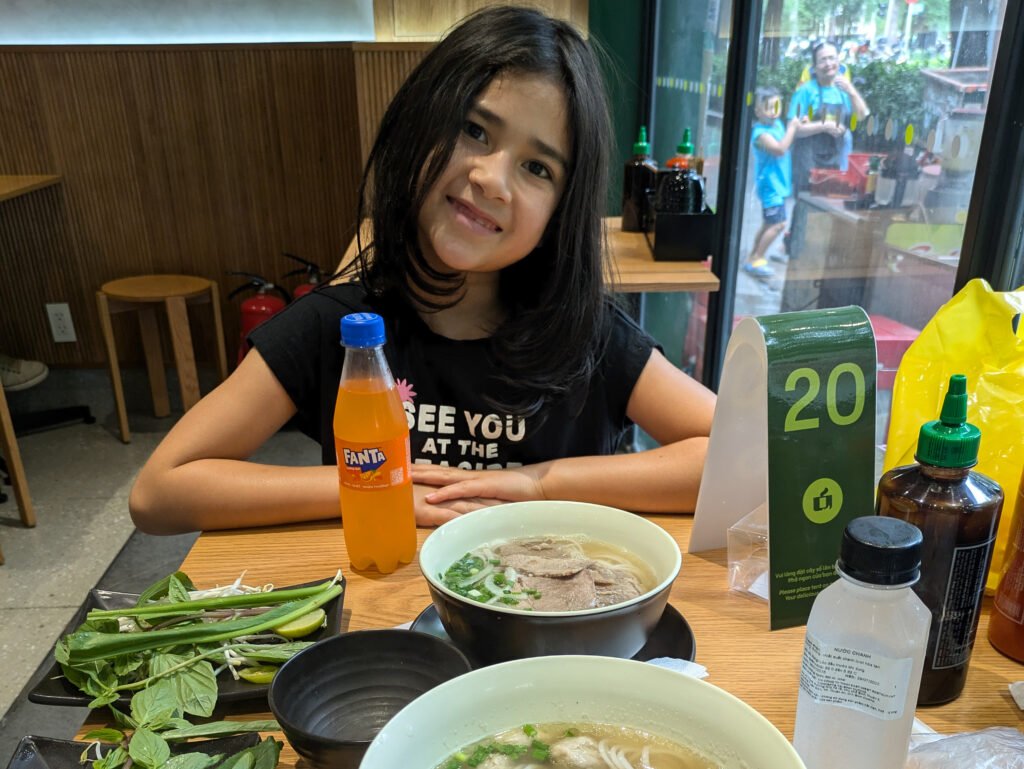
Our daughter has been travelling to Vietnam since she was very young, but her relationship with Vietnamese food has never followed a straight line. Like most children, what she’s happy to eat changes from one trip to the next, and we’ve learned that trying to force the “perfect” food experience usually makes things harder rather than better.
When children are hungry, they’re rarely thinking about trying something new or creating lasting travel memories. They’re simply hungry, and that changes the mood of everyone surprisingly quickly.
Over the years, we’ve stopped treating every meal as an opportunity to introduce another Vietnamese dish and started focusing on something much simpler: keeping everyone fed and happy.
That has looked very different depending on the trip.
In 2022, she would happily have lived on pizza alone. During our 2024 visit, McDonald’s became such a regular stop that the staff started recognising us. By 2025, everything seemed to settle into a much more natural balance. Phở, dry noodles, soups and street snacks all found their way back into the rotation, while McDonald’s returned to being an occasional treat rather than the default option.
One of the things we’ve always appreciated in Vietnam is how understanding people are towards families. As long as the adults are ordering food, we’ve never had any issues bringing something separate for our daughter while she was going through one of those fussy phases. We’ve walked into busy street restaurants carrying bread, pizza slices and even McNuggets. A polite explanation has always been met with a smile.
We’ll also give her a light snack beforehand if we know dinner might involve deciding where to eat, and we always like knowing there’s a simple backup nearby if plans change. Taking that pressure away means nobody feels forced into trying something new simply because they’re hungry.
Ironically, we’ve found that giving our daughter the freedom not to eat Vietnamese food at every meal has made her far more willing to try it over time. Once hunger and pressure disappear, curiosity usually takes over on its own. And when all else fails, Grab will happily deliver almost anything you can think of, balanced on the back of a scooter somewhere in the traffic.
Lessons Learned the Hard Way
Not every lesson has come from getting things right.
One of the mistakes that has stayed with me happened at a wedding, where I drank a drink with ice that, looking back, I probably should have questioned.
At the time it seemed completely harmless.
Over the following few days it became obvious that it wasn’t.
What I remember most isn’t actually feeling unwell. It’s how quickly one small decision affected everything else. We became more cautious about where we ate, less flexible with our plans and far less willing to wander without thinking ahead.
Since then, we’ve kept our approach deliberately simple.
| 🍜 Situation | ✅ What We Do Now | 💡 Why It Helps |
|---|---|---|
| 🧊 Drinks with ice | Choose drinks with clean, reputable ice or skip the ice if unsure. | Reduces the risk of turning a great trip into several difficult days. |
| 💧 Drinking water | Stick to sealed bottles or filtered water. | A simple habit that’s easy to follow throughout your trip. |
| 🥗 Fresh salad or herbs | Eat them at busy places with high turnover where ingredients are constantly being prepared. | Fresh ingredients are replenished regularly, giving you more confidence in what you’re eating. |
| 🍖 Street food stalls | Look for busy stalls serving local customers rather than empty ones. | High turnover usually means fresher food and meals prepared continuously throughout the day. |
| ❤️ Common sense | If something doesn’t feel right, simply choose somewhere else. | Saigon has thousands of places to eat—there’s no reason to force one that doesn’t give you confidence. |
None of these habits take much effort, and none of them guarantee that nothing will ever go wrong. What they do is remove a few unnecessary risks, allowing us to enjoy the food and the city without constantly worrying about what might happen next.
Final Thought
When people ask me whether street food in Saigon is intimidating, I usually tell them that the food itself rarely is.
What feels intimidating is everything happening around it. You’re trying to choose from dishes you’ve never heard of, people are ordering confidently beside you, your family is ready to eat, and you’re worried about making the wrong decision. It’s easy to mistake that feeling for “street food isn’t for me”, when in reality you’re simply experiencing what every first-time visitor experiences.
Looking back over the years, I don’t think we became more adventurous.
We simply became more familiar.
The dishes became recognisable. The faces at neighbourhood stalls became friendlier. Ordering stopped feeling like a test and started feeling like part of an ordinary evening. Somewhere along the way, the uncertainty quietly disappeared without us even noticing.
That’s probably the biggest lesson we’ve taken from eating our way around Saigon.
You don’t need to arrive knowing how everything works.
You don’t need to understand every dish on the menu.
You don’t even need to get every meal right.
You just need to start.
Choose somewhere busy. Order something that looks familiar. Accept that the first meal might feel a little awkward, and let the second one become easier than the first.
Because confidence doesn’t arrive before you sit down.
It grows one meal at a time until, almost without noticing, you’re pulling up a plastic stool, ordering without hesitation, and enjoying another evening in Saigon just as the people around you do.
Where exactly should you go?
With the basics of eating like a local now covered, the next question is obvious: where exactly should you go?
Click here to read https://ourpixelpassport.com/eating-like-a-local-in-saigon-street-food-locations-everyday-tips/